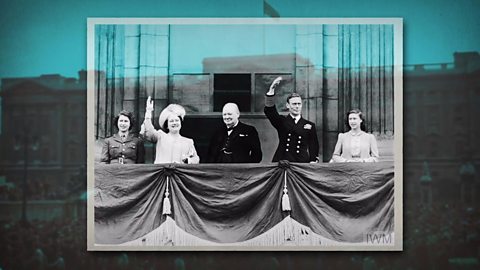
Narrator: The Second World War was the largest war every fought in human history. By the end over fifty countries had somehow been involved in the war. Because Hitler wanted to expand the size of Germany's territory, he used military force to aggressivelytake land from other countries.
The Nazis believed that they belonged to a superior race and therefore, they had the right to take other people's land.
At the height of its expansion, Nazi Germany occupied vast areas of Europe, spanning parts of France in the West, Ukraine and parts of Russia in the East, Norway in the North and Italy in the South. The Nazis also expanded as far north as the Arctic circle and south through parts of Northern Africa, like Morocco and Algeria and beyond.
Two other countries also joined sides with Nazi Germany, Italy and Japan. Together these three countries were known as the Axis powers.
When Japan attacked the naval base of Pearl Harbor in the US state of Hawaii in 1941, the US declared war on Japan. And Hitler then declared war on the US. That meant the US joined the war in both Europe and Asia. Immediately becoming one of the leading allies.
The main allies were Great Britain, the United States and the Soviet Union, which is now Russia and parts of Eastern Europe. Other allies included France, Australia, New Zealand, India, South Africa, Canada and China.
Because of the huge amount of fighting across the world, many people had to escape to other countries or move far away from their homes, in order to be safe.
Anna was born in Hungary but had to flee with her family to Austria, when bombings started in Budapest.
Anna: I was frightened, I hung on to mother. Mother tried to encourage me and put peace in me. I cried often, seeing things like,people fainting because they were hit by the guns. I was shocked.
Narrator: On their way to the countryside in Austria, they were stuck in the capital city Vienna, for several days.
Anna: In Vienna we struggled with the train, probably three days. We slept on the train. There was absolutely no way of washing or cleaning or whatever. We had sat and hugged each other and slept like that.
Narrator: Even when Anna's family made it to a safer place, where the people spoke German, their troubles weren't over.
Anna: We had been limited in language because we did not speak German. A little bit we learned. I remember just saying, 'how much the food?' And then we learned the name of the food, it was not easy.
Narrator: Did you know? One of the reasons so many countries were involved in the war was because many of the most powerfulnations at that time already controlled other lands and ruled them as colonies.
By the outbreak of the Second World War, Japan had already taken over Taiwan, Korea and parts of China, while Italy had colonised Libya and Ethiopia in Africa. But the allies had power over many areas too.
The British Empire at the time accounted for around a quarter of the world's population, including India and other parts of Asia, the Middle East, Africa and the Caribbean.
Meanwhile, at the beginning of the war, France controlled territories in South East Asia, the Middle East and huge parts of Northern, Western and Central Africa. These colonies sent millions of soldiers to fight in the war as well as becoming places where the war was fought.
Without them, the Allies may never had won the war against the Axis Powers.
Video summary
This short film provides insight into the scope of the war and how many countries were involved.
We hear from an eye-witness called Anna, who tells us how her family had to flee to Austria when the bombing started in Budapest and how frightening the whole experience was for her.
The ‘Did You Know’ section explores how the most powerful nations at the time controlled other lands and ruled them as colonies.
Created in partnership with Imperial War Museums.
Teacher Notes
This short film could be useful for teaching pupils how to make and read maps.
This falls into the following parts of the national curriculum in England, and similar parts of the Welsh, Northern Irish and Scottish curricula:
- Locate the world’s countries, using maps to focus on Europe (including the location of Russia) and North and South America, concentrating on their environmental regions, key physical and human characteristics, countries, and major cities.
- Name and locate counties and cities of the United Kingdom, geographical regions and their identifying human and physical characteristics, key topographical features (including hills, mountains, coasts and rivers), and land-use patterns; and understand how some of these aspects have changed over time.
- Identify the position and significance of latitude, longitude, Equator, Northern Hemisphere, Southern Hemisphere, the Tropics of Cancer and Capricorn, Arctic and Antarctic Circle, the Prime/Greenwich Meridian and time zones (including day and night).
Additional fact for the class:
- Despite calls for independence from Britain, a large section of India still identified with the British Empire on some level during World War Two. This led to the formation of the largest volunteer army in history. Without conscription the British Indian Army numbered 2.5 million volunteer soldiers.
Suitable for teaching history at KS2 in England, Wales and Northern Ireland and 2nd Level in Scotland.
This short film could also can be incorporated into different subjects as part of a cross-curricular lesson, especially when teaching geography at KS2 or 2nd Level.
More from World War Two:
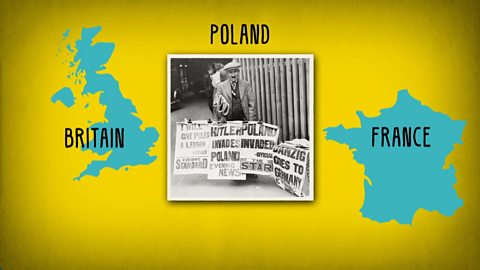
Britain declares war on Germany. video
This short film offers an overview of the events that led to Britain declaring war on Germany in 1939.
Rationing in the UK. video
This short film explains rationing in simple terms, offering a glimpse of a world that pupils may not be accustomed to.

How propaganda was used during World War Two. video
This short film explains how people were persuaded to join the war effort, and the importance of motivational campaigns.
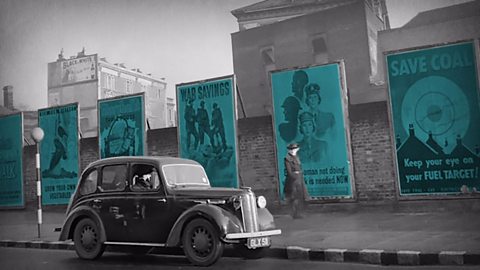
The Blitz. video
This short film offers a digestible insight into the blitz and how the British people responded.
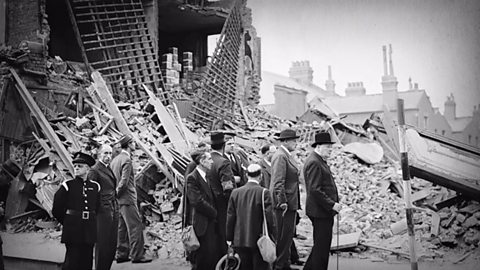
The Battle of Britain and beyond. video
This short film explains what the Battle of Britain was, who was involved and how radar was used throughout the battle.
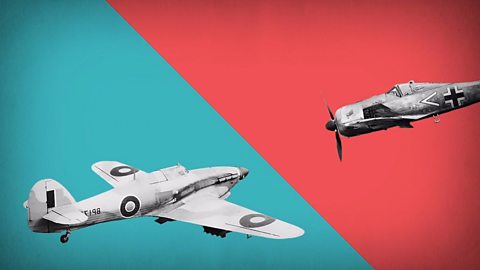
Machines of the military. video
This short film highlights the importance of technology in the war effort and the key roles that tanks, planes and ships played.
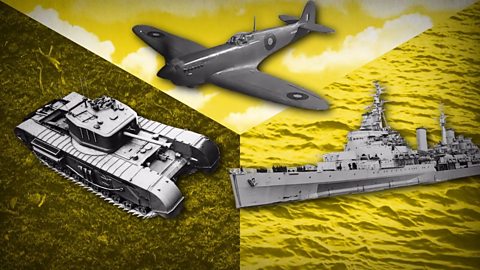
D-Day. video
This short film explores the significance of D-Day as well as highlighting what took place that day.
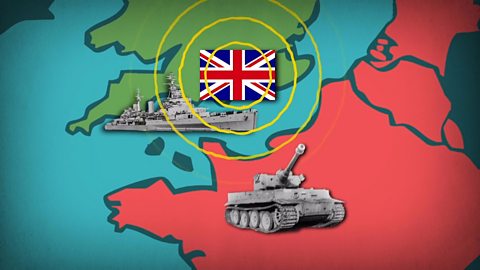
Codebreaking during World War Two. video
This short film explains how cracking Nazi Germany's coded messages helped win World War Two.
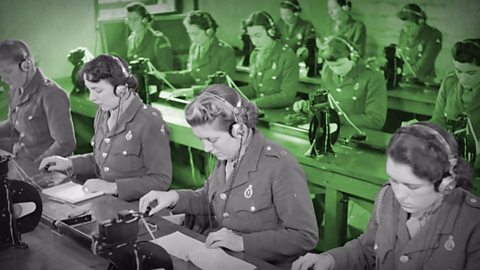
VE Day. video
This short film explains what VE Day and VJ Day were, and the events that led to the end of the war.