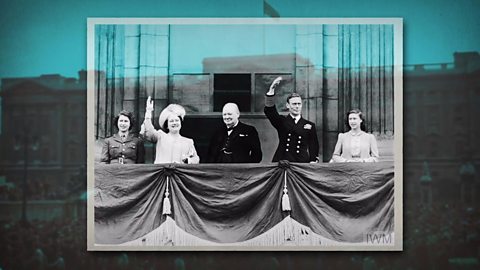
Narrator: After France was defeated in June 1940, Hitler hoped the British forces would surrender and agree to an armistice, to stop fighting. However, the British held firm and so Hitler decided to prepare for an invasion of Britain.
But first, he had to destroy the RAF, which controlled the skies above Britain.
RAF stands for the Royal Air Force and they fought the war from aeroplanes built specially for fighting. This was where the Battle of Britain was fought, in the skies over southern Britain, against the German air force, the Luftwaffe.
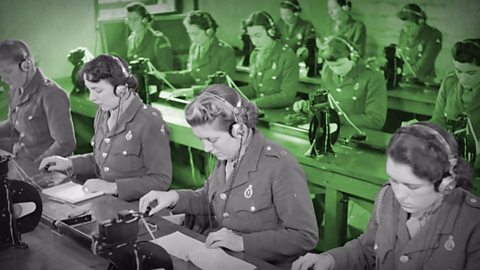
The Germans first tried to destroy British air fields, so the RAF had fewer places to fly from. To stop these attacks, Britain had to use a new and complex communication system, using radar and information from people watching on the ground, incoming German planes were spotted early.
Once they knew where they were coming from, RAF planes and anti-aircraft guns were called into action. To make this system work, over one thousand observer posts had to be continuously manned by volunteers.
Full-time soldiers, which later on included the Women's Army, could then fire the guns where needed.
The fight back worked and eventually Germany realised they had failed to gain control over the skies. The planned invasion of Britain by the Nazis was stopped.
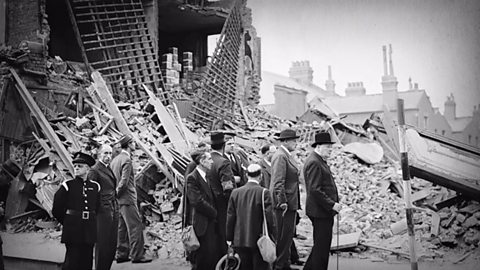
However, the Germans continued to bomb cities and other non-military targets for many more months. In what became known as the blitz.
As well as the Battle of Britain and the blitz, German aircrafts continued to attack Britain for the rest of the war. As they did this, RAF bombers were also sent to attack Germany.
Frank was a bomb aimer in a Lancaster bomber squadron, which flew on missions to Germany.
Interviewer: Which one are you?
Frank: The handsome one!
Narrator: He was responsible for insuring that the bombs accurately hit their targets. This was a very dangerous job.
Frank: On one occasion, we'd been debriefed and we were going out to the mess, a crew comes in and the bomb aimer is carrying his parachute and it's torn to ribbons. A piece of shrapnel from this anti-aircraft shell comes through, hits him in the chest, throws him off the foot of the pilot controls and he was not marked at all. On another occasion, the crew brought a bomb aimer back and he'd been hit and he was dead, he was killed, yeah. I was one of the lucky ones, came out without a scratch.
Narrator: As well as being dangerous, the job was very difficult. Frank remembers one of the missions he was sent on to destroy a bridge in Germany.
Frank: I watched those bombs go, miss the bridge, as all the others did, nobody hit the bridge on that occasion. That split second can make all the difference. If you're travelling up there at twenty five thousand feet, at two hundred miles an hour, you've just got to be on target if you possibly can.
Narrator: Did you know? As the war progressed, the RAF strategy changed from bombing strategic points like bridges and factories, to bombing cities as well, as the Germans had done. These bombings became increasingly powerful. Much heavier than those carried out by the Germans on British cities.
In the attack of the German city of Dresden in 1945, over a thousand British and American planes bombed the city.
Over three days, tens of thousands of people were killed.
Video summary
This short film explains what the Battle of Britain was, who was involved and how radar was used throughout the battle.
A veteran called Frank recalls the fear he felt as a bomb-aimer in the Lancaster bomber squadron.
The ‘Did You Know’ section explores the evolving strategy of the RAF, and the attack on the German city of Dresden.
Created in partnership with Imperial War Museums.
Teacher Notes
This short film could be used as part of a cross-curricular lesson in PE. Your pupils could direct each other using instructions to explore the role of radar in the Battle of Britain.
This falls within the following part of the national curriculum in England:
- Pupils should enjoy communicating, collaborating and competing with each other.
- Pupils should develop an understanding of how to improve in different physical activities and sports and learn how to evaluate and recognise their own success.
- Pupils should be taught to take part in outdoor and adventurous activity challenges both individually and within a team.
Additional fact for the class:
- Buckingham Palace was very nearly destroyed. RAF Sergeant Ray Holmes spotted a German bomber heading in the direction of the palace, but Ray was out of ammo to fire it down. So, instead he steered his aircraft straight into the enemy aircraft and rammed it with his wing.
Suitable for teaching history at KS2 in England, Wales and Northern Ireland and 2nd Level in Scotland.
This short film could also can be incorporated into different subjects as part of a cross-curricular lesson, specifically when teaching physical education at KS2 or 2nd Level.
More from World War Two:
Britain declares war on Germany. video
This short film offers an overview of the events that led to Britain declaring war on Germany in 1939.
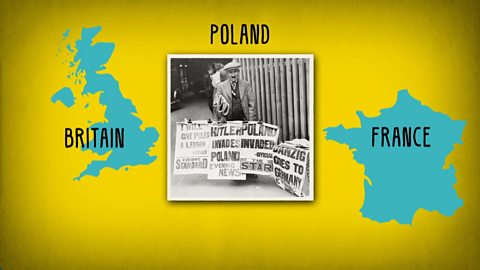
Rationing in the UK. video
This short film explains rationing in simple terms, offering a glimpse of a world that pupils may not be accustomed to.

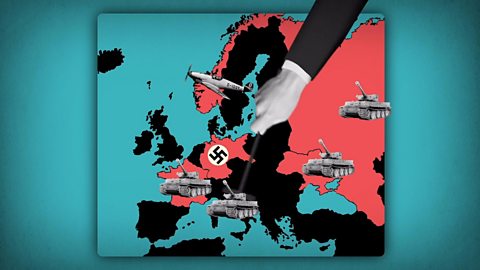
Geography of World War Two. video
This short film provides insight into the scope of the war and how many countries were involved.
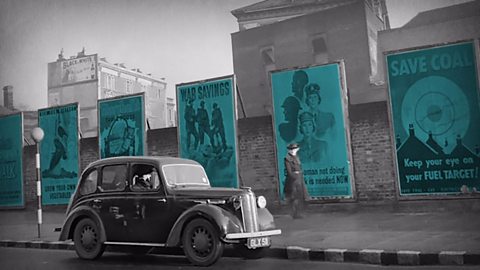
How propaganda was used during World War Two. video
This short film explains how people were persuaded to join the war effort, and the importance of motivational campaigns.
The Blitz. video
This short film offers a digestible insight into the blitz and how the British people responded.
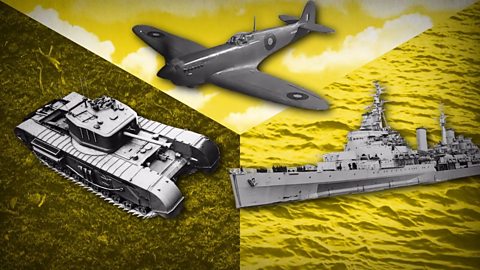
Machines of the military. video
This short film highlights the importance of technology in the war effort and the key roles that tanks, planes and ships played.
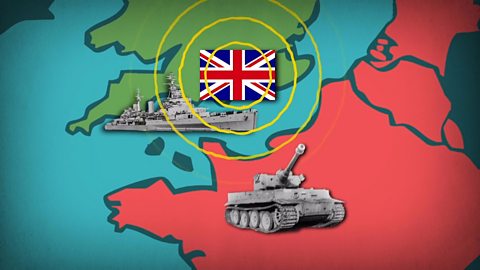
D-Day. video
This short film explores the significance of D-Day as well as highlighting what took place that day.
Codebreaking during World War Two. video
This short film explains how cracking Nazi Germany's coded messages helped win World War Two.
VE Day. video
This short film explains what VE Day and VJ Day were, and the events that led to the end of the war.