Narrator: In September 1939 Britain declared war on Germany, joining the biggest war ever fought in history.
But how did it start? Let's rewind.
Since Victorian times, Germany had been a very large and powerful country at the heart of Europe.
But when it was defeated in the First World War in 1918, Germany had to give up a lot of its land and pay harsh penalties as punishment.
It was also forbidden from having a large army or navy or any air force at all.
This made many Germans very angry. On top of that, in 1929, the Great Depression hit.
There were shortages of food and money all over the world, including in Germany. People lost their jobs and money began to run out.
In 1933, Adolf Hitler became the Chancellor of Germany.
Many Germans desperately hoped Hitler would bring change and make life better. He lead the National Socialist Party, the Nazis, and promised to make Germany a powerful country again.
But Hitler also spread hatred. This hatred would eventually lead to The Holocaust, the killing of millions of Jewish people, as well as gay people, disabled people, political opponents, and ethnic groups like the Roma people or the Poles. Simply because of who they were.
Hitler believed that the German race was naturally better than other people, and therefore were entitled to dominate all of Europe.
He planned to forcibly take back all of Germany's lost land as well as capture parts of other countries.
He started in 1938, by sending soldiers to take over, or occupy, Austria and parts of Czechoslovakia, which is now split in to Czech Republic and Slovakia.
Then in September 1939, German troops invaded Poland. Britain and France had agreed to defend Poland against German attack, so they gave Hitler an ultimatum. Withdraw his troops or they would declare war.
At eleven am on Sunday the third of September 1939, Neville Chamberlain, who was the Prime Minister of the United Kingdom at the time, went on the radio. He explained that the British government had demanded that German troops withdraw from Poland immediately.
But the Germans had not responded, meaning Britain was now at war with Germany.
Moya remembers hearing the news.
Moya: I just remembered that my mother grabbed my dad and he was standing, they were both standing as I remember it. The thing that was running through my mind all the time well, yesterday was my birthday and I'd really love that book with the shiny cover that's in Nelly's shop at the post office and will I get it? And if there is a war will you be able to do things like that?
Narrator: Did you know? When the war was announced it wasn't a surprise. The British government had been watching Hitler's advance across Europe for several years and had prepared for the worst.
Moya: People were aware that the possibility of war being declared was in the air. And the year before at school in Hammersmith, we had practiced being evacuated and had our gas masks issued and so on.
Narrator: As well as gas masks, the first air raid shelters were distributed in the year before the war. Plans were also drawn up toprepare for food, fuel and clothing rationing, limiting how much people could have to make sure there would be enough to go round.
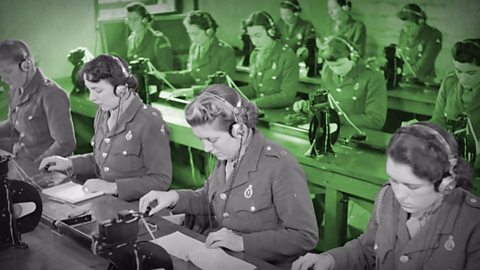
To make the war a success, everyone would have to pitch in. Many men were conscripted into the armed forces. At first, women could choose whether to join up, but from 1941 they too were made to serve either in factories or the services. Even Princess Elizabeth, who would later become Queen Elizabeth II, trained as a mechanic and a military truck driver.
However, despite the detailed preparations for war and the enthusiastic participation on the home front, nobody could have possibly have foreseen how long it would last.
Video summary
This short film offers an overview of the events that led to Britain declaring war on Germany in 1939.
We hear from an eye-witness called Moya, who recalls practicing being evacuated and being issued with a gas mask the year before war was declared.
Moya’s account of her childhood should be particularly interesting for children of the same age.
The ‘Did You Know’ section looks at how people prepared for war.
Created in partnership with Imperial War Museums.
Teacher Notes
This short film contains a number of great starting points for writing:
- Your pupils could write a diary entry from the point of view of a British child during the war.
- They could write their own announcement informing the country that Britain is at war.
- Your class could prepare a newspaper article for the day after war was announced.
These were the words Neville Chamberlain, who was UK Prime Minister at the time, spoke when announcing the war:
- “I am speaking to you from the cabinet room at 10 Downing Street. This morning the British ambassador in Berlin handed the German government a final note stating that unless we heard from them by 11 o'clock that they were prepared at once to withdraw their troops from Poland, a state of war would exist between us. I have to tell you now that no such undertaking has been received, and that consequently this country is at war with Germany.”
Statement by the Prime Minister, BBC Home Service, Sunday 3 September 1939, 11:15
This short film is relevant for teaching history at Key Stage 2 in England, Wales and Northern Ireland and 2nd Level in Scotland.
The First News, BBC National Programme, Friday 1 September 1939, 18:00. Image: Nazi forces enter Poland. Image © Library of Congress
More from World War Two:
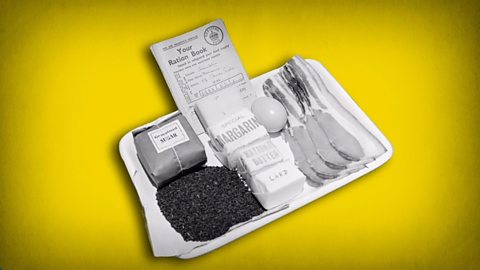
Rationing in the UK. video
This short film explains rationing in simple terms, offering a glimpse of a world that pupils may not be accustomed to.
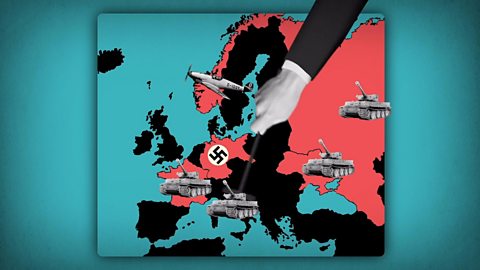
Geography of World War Two. video
This short film provides insight into the scope of the war and how many countries were involved.
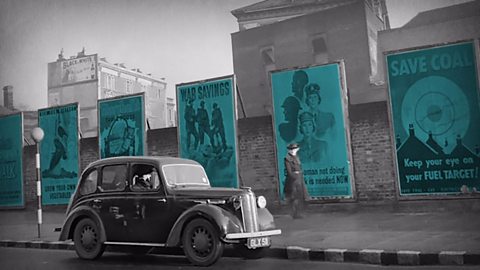
How propaganda was used during World War Two. video
This short film explains how people were persuaded to join the war effort, and the importance of motivational campaigns.
The Blitz. video
This short film offers a digestible insight into the blitz and how the British people responded.
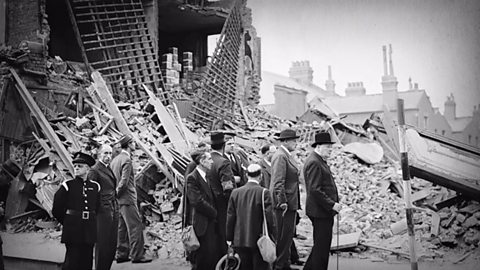
The Battle of Britain and beyond. video
This short film explains what the Battle of Britain was, who was involved and how radar was used throughout the battle.
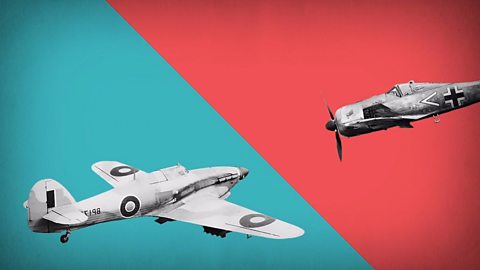
Machines of the military. video
This short film highlights the importance of technology in the war effort and the key roles that tanks, planes and ships played.
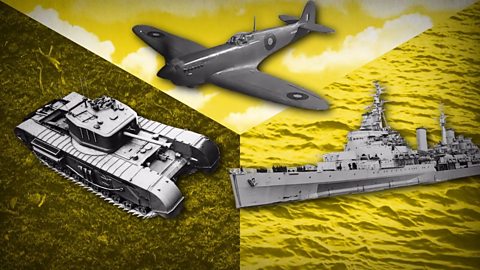
D-Day. video
This short film explores the significance of D-Day as well as highlighting what took place that day.
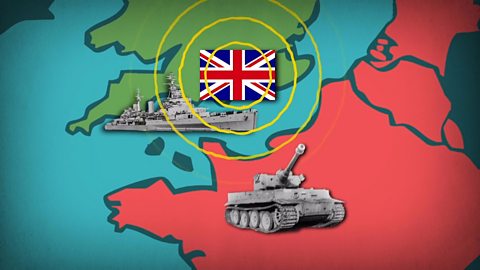
Codebreaking during World War Two. video
This short film explains how cracking Nazi Germany's coded messages helped win World War Two.
VE Day. video
This short film explains what VE Day and VJ Day were, and the events that led to the end of the war.