Fascism describes a type of far right government which emerged in the early 20th century.
The word fascism comes from the Latin word fasces - a group of sticks tied together. While it is easy to break one stick, it is much harder to break a bunch of sticks. In the same way, fascists believe a country is stronger if everyone rigidly follows the same political ideals.
A fascist state is usually ruled by one party led by a dictator, who seizes power forcefully or achieves power by eroding democratic institutions.
The dictator creates an authoritarian regime in which many aspects of life are tightly controlled in the name of national unity.
In many fascist regimes, violence and oppression are used to crack down on opposition.
Extreme nationalism is often a feature too, with the idea of a master race and the demonisation of minorities.
The aim is to create a country that is strong, both economically and militarily.
Fascism first appeared in Italy in the early 1920s under the first of the fascist dictators, Benito Mussolini.
Mussolini's supporters were disillusioned by the economic and political difficulties in Italy after World War One, and saw fascism as a strong alternative to what they believed was the weakness of democracy.
But, the most notorious fascist regime of the 20th century, was in Nazi Germany led by Adolf Hitler.
The Nazi Party's success was due in part to the German people's resentment of the terms imposed on them after World War One in the Treaty of Versailles, and to the economic crisis of the time.
Nazi policies included the idolisation of the German Aryan race and the demonisation of other racial groups, which led eventually to the Holocaust.
Under the Nazi Party, Germany's military power grew and its nationalistic and expansionist ambitions eventually lead to World War Two.
After World War Two, fascism was mostly discredited, though fascist dictatorships continued until the 1970s in Spain and Portugal.
In recent years, neo-fascist movements have re-emerged in some European countries, taking on similar nationalist and anti-liberal views expressed by the fascist politics of the 1920s and 30s.
Video summary
An animation for KS3 history students about fascist ideology in the 20th century.
After outlining where the term ‘fascism’ comes from, the film describes the common features of a fascist regime, including an erosion of democracy, authoritarianism often accompanied by violence and oppression, extreme nationalism and demonisation of minorities. It covers the rise of fascism in Italy in the 1920s, and the rise of the Nazi Party in Germany in the 1930s. It also mentions the rise of neo-fascist movements in Europe in recent years.
Illustrative examples are chosen from popular schemes of learning so that learners can confidently apply their knowledge and appreciate the dynamic nature of the concept being explained. This short film could be used to support learners investigating:
- Challenges for Britain, Europe and the wider world, 1901 to the present day. In addition to studying the Holocaust, this could include:
- The inter-war years: the Great Depression and the rise of dictators
- The Second World War and the wartime leadership of Winston Churchill
- At least one study of a significant society or issue in world history and its interconnections with other world developments
Teacher Notes
This short film can be used for whole class direct instruction and/or with smaller groups and individuals.
Since the film is designed to help clarify understanding of fascism, it can be used as a flexible tool to help learners make connections and think about changes and causation leading to similarity and difference with other social and political systems in various parts of the world.
The film can be revisited throughout the key stage depending upon learners’ differing needs and starting points to help reinforce the umbrella term, reiterate knowledge, understanding and aid progression.
Accompanying films in this series on Government, Capitalism and Communism might also be helpful to students wishing to know more or take a more ambitious approach. Spatial and temporal differences can be explored.
Suggested activities:
Individually or in groups, students could predict the film content in advance drawing up a key word list and, whilst watching, cross check what they thought they knew with what they learned. This could help correct any preconceptions, assumptions or misconceptions.
The film can be preparatory work, with students encouraged to watch and generate questions before a sequence of learning.
Students could initially watch and then later ‘write the script’ or provide a voice over, recalling information from memory by way of retrieval practice in a ‘storyboard’ style.
Students could actively watch whilst answering a series of questions generated by the teacher tailored to the period under study. This could perhaps lead to a summarising pyramid.
Students could be encouraged to draw a diagram or story board to represent their understanding of how a fascist system of government might come about and work.
This short film is relevant for teaching history at KS3 in England, Wales and Northern Ireland and 3rd Level in Scotland.
Government. video
An animated film for KS3 students outlining what government is, and different styles of government.
Communism. video
A short animation for KS3 student about communism: its core beliefs, and its followers and critics.
Capitalism. video
A short animation for KS3 students about capitalism: its core beliefs, its followers and critics.
Revolution. video
A short animation for KS3 students about the meaning of revolution when used in history, covering some significant political and social changes.
Suffrage. video
An animation for KS3 students about the struggle for full adult suffrage in the United Kingdom.
Migration. video
An animation for KS3 students on the impact of migration to, from and within Britain over time.
Parliament. video
An animation for KS3 students about Parliament and how struggles in Britain between monarchy, church and state have changed its power over time.
Empire. video
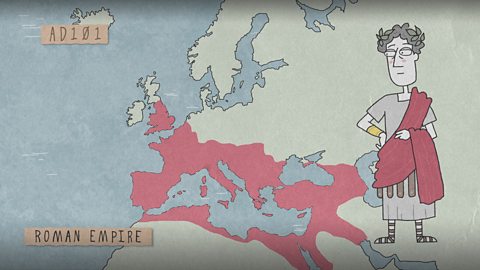
An animation for KS3 history students about the concept of empire, with a brief look at the Roman Empire and the rise and fall of the British Empire.
Industrialisation. video
An animation for KS3 history students about industrialisation: Britain's role in the Industrial Revolution and how industrialisation has spread across the globe.