Revolution is a word you'll hear a lot in history and it can mean different things in different contexts. Essentially, it means a big change has taken place.
The word revolution is often used to describe a change in the political and social structure of a country and is often associated with a change of government.
There are many reasons for a political revolution. People might feel oppressed or held back or feel there is too much inequality.
A political revolution happens when a large number of people are unhappy with the rules or restraints of their society and decide to take action. There are many examples of revolutions throughout history.
The French Revolution began in 1789, following two decades of poor harvests, drought, cattle disease and rising bread prices. This led to widespread unrest amongst the poor and working classes and resulted in the overthrow of the ruling class, and the establishment of the French Republic, which placed the power in the hands of the people.
In Britain in 1688, the so-called Glorious Revolution took place when the Catholic King James II alienated his people with his strong religious beliefs, and after fleeing the country, was replaced as monarch of England, Scotland and Ireland by his Protestant daughter, Mary, and her Dutch husband, William of Orange.
But the term revolution is often used to describe non-political changes in history.
You've probably heard of the term the Industrial Revolution. It refers to a change in the way goods were produced, thanks to new and improved technology and processes.
The term is most often used to refer to the wide-scale changes that happened across Britain, Europe and the USA between about 1760 and 1840, when new technology meant that the manufacturing of goods could happen on a much larger scale than before.
This led to people moving from rural areas into cities, to work in factories and mills, and was a time of massive economic and cultural change.
Throughout history, there have been a lot of different types of revolution. In fact, the global technological revolution is seeing a rapid change in the way people communicate and how work is carried out across the globe: a revolution that is happening right now.
Video summary
A short animation for KS3 students about the meaning of revolution when used in history, covering some significant political and social changes.
After defining the term ‘revolution’, the film describes different reasons why revolutions have occurred in history, using the examples of the French Revolution, the Glorious Revolution, the Industrial Revolution and the current global technological revolution.
This short film could be used to support learners who are investigating:
- The development of Church, state and society in Britain 1509-1745
- The causes and events of the civil wars throughout Britain
- The Interregnum (including Cromwell in Ireland)
- The Restoration, ‘Glorious Revolution’ and power of Parliament
- Ideas, political power, industry and empire: Britain, 1745-1901
- The French Revolutionary wars
- Britain as the first industrial nation – the impact on society
- The study of an aspect or theme in British history that consolidates and extends pupils’ chronological knowledge from before 1066
- A study in depth into a significant turning point: for example, the Neolithic Revolution
Teacher Notes
This short film can be used for whole class direct instruction or with smaller groups and individuals.
The film is designed to help define and develop a deeper conceptual understanding of the term 'revolution' in a broad sense.
It can be used as a flexible tool to help learners make connections and think about changes and causation, leading to similarity and difference across time periods and in different countries.
It can be revisited throughout the key stage depending upon learners’ differing needs and starting points, to help reinforce the umbrella term, consolidate knowledge and understanding and aid progression.
The accompanying film in this series on Industrialisation might also be helpful to students wishing to extend their knowledge and understanding.
Suggested activities:
Individually or in groups, students could predict what they think will come up in the film, drawing up a key word list and, whilst watching, cross check what they predicted with what they learned. This could help to correct any preconceptions, assumptions or misconceptions.
Students could categorise and make notes on different types of revolution to clarify and consolidate their understanding.
Students could watch the film and then later ‘write the script’ or provide a voice over recalling information from memory by way of retrieval practice in a storyboard style.
Students could answer a set of questions set by the teacher and relating to the period under study, leading to a summarising pyramid to consolidate their understanding of the concept.
This short film is relevant for teaching history at KS3 in England, Wales and Northern Ireland and 3rd Level in Scotland.
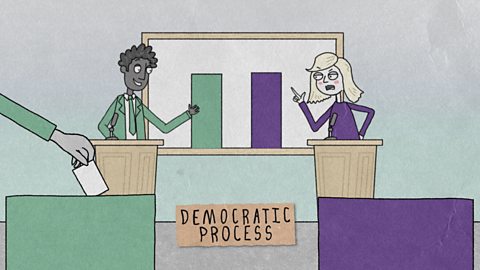
Government. video
An animated film for KS3 students outlining what government is, and different styles of government.
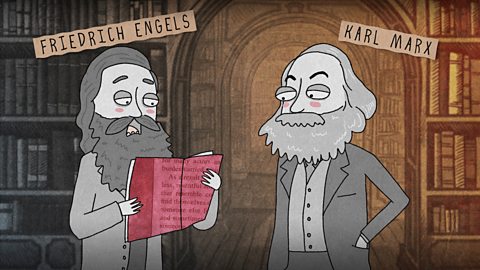
Communism. video
A short animation for KS3 student about communism: its core beliefs, and its followers and critics.
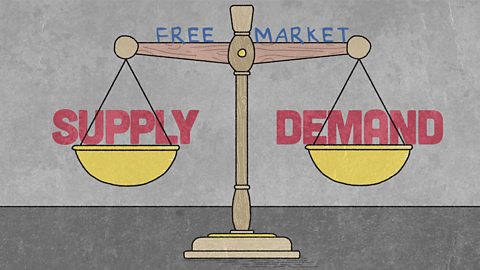
Capitalism. video
A short animation for KS3 students about capitalism: its core beliefs, its followers and critics.
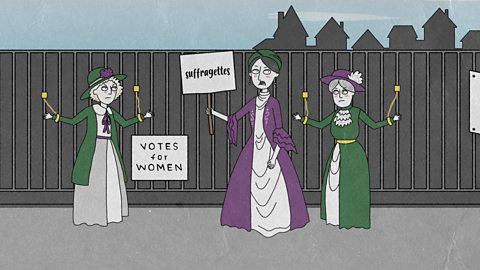
Suffrage. video
An animation for KS3 students about the struggle for full adult suffrage in the United Kingdom.
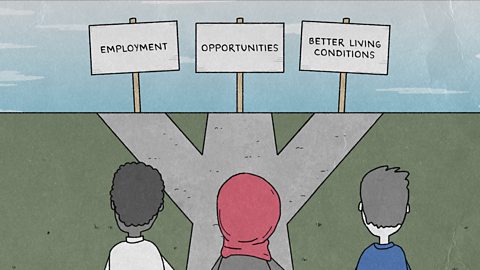
Migration. video
An animation for KS3 students on the impact of migration to, from and within Britain over time.
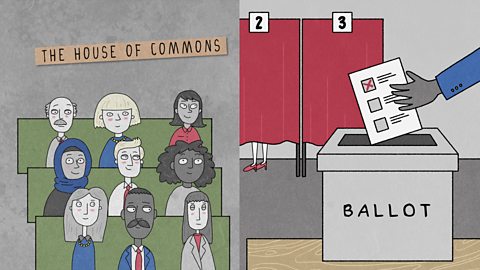
Parliament. video
An animation for KS3 students about Parliament and how struggles in Britain between monarchy, church and state have changed its power over time.
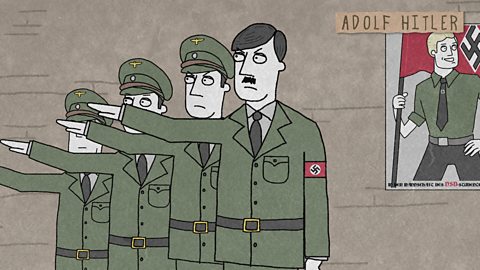
Fascism. video
An animation for KS3 history students about fascist ideology in the 20th century.
Empire. video
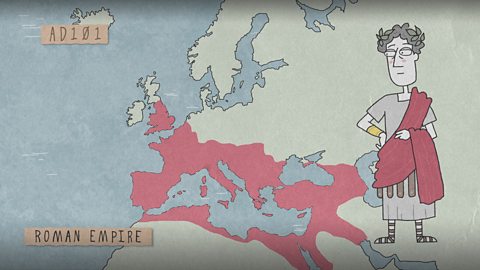
An animation for KS3 history students about the concept of empire, with a brief look at the Roman Empire and the rise and fall of the British Empire.
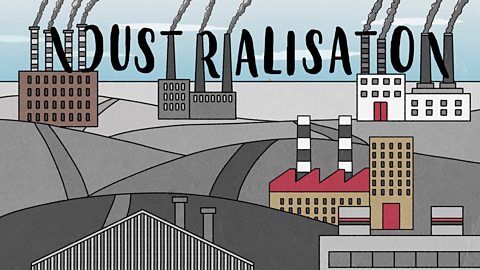
Industrialisation. video
An animation for KS3 history students about industrialisation: Britain's role in the Industrial Revolution and how industrialisation has spread across the globe.