Migration is the movement of people from one place to another.
It has happened all around the world, throughout history.
Immigration describes the movement of people into a country and emigration describes the movement of people out of a country.
There are many different reasons that motivate individuals or groups to leave the country where they were born. These are called push and pull factors.
What pushes someone to leave where they are and what pulls or attracts them to a new location?
Often people are seeking out employment, economic opportunities or better living conditions. Or as in the case of refugees, people could be fleeing extreme circumstances like war, drought or an oppressive political regime and seeking safety in a new country.
There has been a continual process of migration into and out of Britain throughout history.
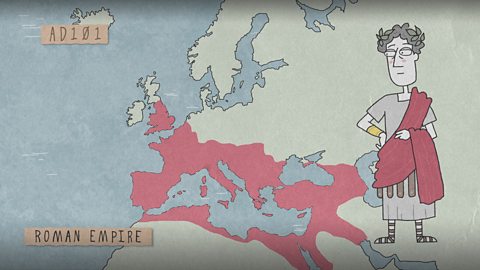
By the time the Romans invaded in AD43, Britain was inhabited by a number of Celtic tribes, each with their own language and culture and had trading links with Europe.
And when the Romans themselves arrived, coming from all over the Roman Empire, they brought with them a wide range of new influences.
In 1066, the Normans invaded making huge changes to England's system of government, architecture and language, and we can still see their influence around us today.
Whatever period of migration you're studying, be it the Romany people of the 16th century who migrated across Europe to Britain from North West India;
The Irish of the 19th century, who following a period of famine, left their homelands by the thousands;
The Caribbean and Asian people who came to Britain in the 20th century;
Or migrants from Poland and other Eastern European countries who've come to Britain in the last 20 years;
You will see how influences from across the globe have shaped modern Britain into the multi-cultural society we live in today.
Video summary
An animation for KS3 students on the impact of migration to, from and within Britain over time.
After defining ‘migration’, ‘immigration’ and ‘emigration’, the film details some of the push and pull factors that influence people to migrate and start a new life elsewhere. The film then goes on to talk about migration into Britain over history, and how subsequent waves of migration have shaped the multicultural society of modern Britain.
Illustrative examples are chosen from popular schemes of learning so that learners can confidently apply their knowledge and appreciate the dynamic nature of the concept being explained. This short film could be used to support learners investigating:
- The study of an aspect or theme in British history that consolidates and extends pupils’ chronological knowledge from before 1066
- A study of an aspect of social history, such as the impact through time of the migration of people to, from and within the British Isles
- A local history study
- A depth study linked to one of the British areas of study listed
- A study over time, testing how far sites in their locality reflect aspects of national history
- At least one study of a significant society or issue in world history and its interconnections with other world developments
Teacher Notes
This short film can be used for whole class direct instruction and with smaller groups and individuals.
Since the film is designed to help clarify the process of migration primarily with reference to Britain, it can be used as a flexible tool to help learners make connections and think about cause and effect leading to similarity and difference at different times in various parts of the world.
The film can be revisited at a later key stage, depending upon learners’ differing needs and starting points, to help reinforce the umbrella term, consolidate knowledge and understanding and aid progression.
It can also be used as initial stimulus material for local studies.
Students could be helped to understand how we know what we know specifically about migration, exploring the types of sources used to reach conclusions. There is an opportunity to consider the diverse range of views of those involved.
Accompanying films in this series on Industrialisation and Empire might be helpful to students wishing to widen their studies or take a more ambitious approach.
Suggested activities:
Individually or in groups students, could predict the film content in advance, drawing up a key word list and, whilst watching, cross check what they've listed with what they learned. This could help to correct any preconceptions, assumptions or misconceptions.
Students could look at local and personal experiences of migration and use these as a starting point to make regional, national and international comparisons.
Students could watch the film and then later ‘write the script’, teach others or provide a voice over, recalling information from memory by way of retrieval practice in a ‘storyboard’ style.
Students could actively watch the film whilst completing a ‘Plus, Minus and Interesting’ (PMI) table to assess the potential for positive and negative effects of migration on different groups of people in society. This could be widened out to examine the rate, pace of change, differences and similarity of experience in different parts of the world.
This short film is relevant for teaching history at KS3 in England, Wales and Northern Ireland and 3rd Level in Scotland.
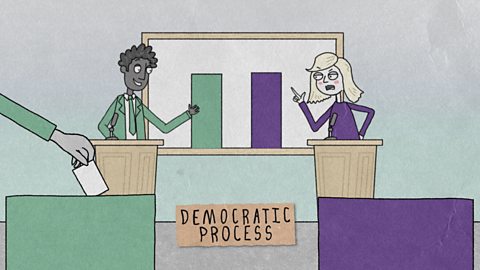
Government. video
An animated film for KS3 students outlining what government is, and different styles of government.
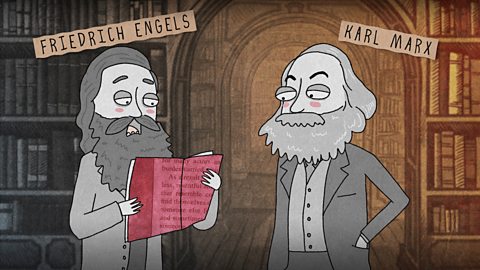
Communism. video
A short animation for KS3 student about communism: its core beliefs, and its followers and critics.
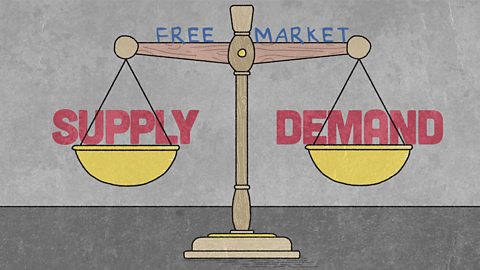
Capitalism. video
A short animation for KS3 students about capitalism: its core beliefs, its followers and critics.
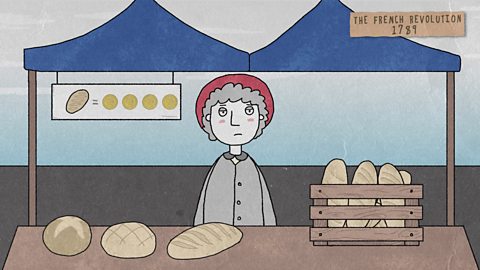
Revolution. video
A short animation for KS3 students about the meaning of revolution when used in history, covering some significant political and social changes.
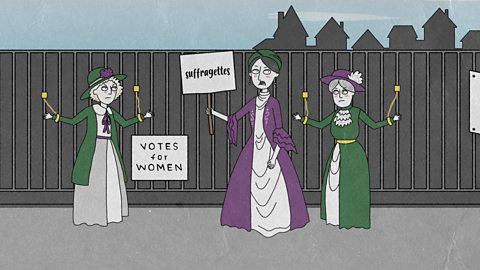
Suffrage. video
An animation for KS3 students about the struggle for full adult suffrage in the United Kingdom.
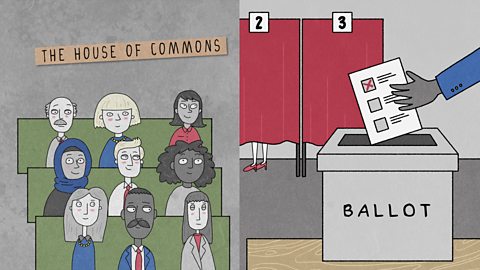
Parliament. video
An animation for KS3 students about Parliament and how struggles in Britain between monarchy, church and state have changed its power over time.
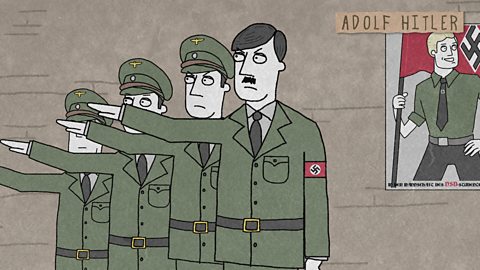
Fascism. video
An animation for KS3 history students about fascist ideology in the 20th century.
Empire. video
An animation for KS3 history students about the concept of empire, with a brief look at the Roman Empire and the rise and fall of the British Empire.
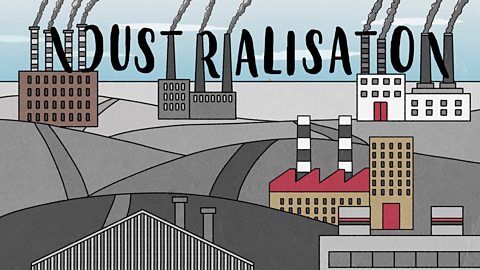
Industrialisation. video
An animation for KS3 history students about industrialisation: Britain's role in the Industrial Revolution and how industrialisation has spread across the globe.