Industrialisation is the process of social and economic change that transforms a traditional, mainly farming society into a modern, manufacturing economy.
Industrialisation happens with the development of technology and machinery which enables goods to be produced more quicklyand in greater quantities than using traditional methods.
Manual labour is replaced by mechanised processes, such as steam powered looms, and later, assembly lines.
Places of work change from the home to textile mills, factories, steelworks and later offices.
Increased food production is vital to sustain a growing population, attracted to areas of industrialisation by the promise of better jobs and higher wages.
In many cases, industrialisation is preceded by an agricultural revolution.
Advances in technology and food production processes mean more food can be produced using less labour, freeing up people to look for jobs in industry.
Industrialisation happens at different rates and times in different parts of the world.
The Industrial Revolution began in Britain in the late 18th century, before spreading to the rest of the western world.
The steam engine was a key technological breakthrough. It powered different types of machinery, speeding up industrial processesand propelling economic growth.
Canals, railways and electric power lines were built and shipping increased to deliver raw materials and take goods to market.
People with money to invest collaborated with inventors and pioneers to lead the way in these new ways of mass production.
These people earned a lot of money from their investments, leading to the birth of capitalism.
This increased production and improvements in infrastructure allowed trade to develop.
By the end of the 20th century, many countries in East Asia, for example, Hong Kong, Singapore, Taiwan and South Korea, had become more industrialised as they moved into the high tech and services industry.
Many countries today are undergoing the process of industrialisation, for example, Brazil, Mexico and South Africa. They are experiencing substantial industrial growth, fuelled by the export of goods to countries that have bigger economies.
Urbanisation is the term we use to describe the movement of people from the countryside to towns and cities. It is linked to industrialisation, as workers migrate into urban areas for jobs in the new industries.
Economic growth associated with industrialisation leads to developments in housing, transport, communication and further population growth.
Industrialisation usually leads to increases in income and better living standards.
On the other hand, it's argued that industrialisation has contributed to problems like pollution, global warming, disparities in wealth and other social problems.
Video summary
An animation for KS3 history students about industrialisation: Britain's role in the Industrial Revolution and how industrialisation has spread across the globe.
After defining what is meant by the term ‘industrialisation’, the film describes some of the processes involved in industrialisation and how it changes people’s working lives. It talks about increased food production as a prerequisite for industrialisation, and about urbanisation which usually happens alongside industrialisation. The film then looks at the Industrial Revolution in Britain: how the steam engine was one key technological breakthrough leading to mass production, increased trade, better transport infrastructure and the birth of modern capitalism.
The film then touches on how industrialisation happens at different times in different parts of the world, using the countries of East Asia as an example of industrialisation due to the high tech and service industries, and countries like Brazil, Mexico and South Africa which are emerging as countries of mass production, selling to other countries.
The film ends by saying industrialisation usually leads to higher wages and better living standards, but it has also been charged with causing social problems like pollution and wealth inequality.
Illustrative examples are chosen from popular schemes of learning so that learners can confidently apply their knowledge and appreciate the dynamic nature of the concept being explained. This short film could be used to support learners investigating:
- Ideas, political power, industry and empire: Britain, 1745-1901
- Britain as the first industrial nation – the impact on society
- A local history study
- A depth study linked to one of the British areas of study listed
- A study over time, testing how far sites in their locality reflect aspects of national history
- At least one study of a significant society or issue in world history and its interconnections with other world developments
Teacher Notes
This short film can be used for whole class direct instruction or with smaller groups and individuals.
Since the film is designed to clarify the process of industrialisation, primarily with reference to Britain, it can be used as a flexible tool to help learners make connections and think about cause and effect, leadering to similarity and difference at different times in various parts of the world.
The film can be revisited at a later key stage, depending upon learners’ differing needs and starting points, to help reinforce the umbrella term, consolidation knowledge and understanding and aid progression.
Points for discussion:
Students could be helped to understand how we know what we know about the process of industrialisation, exploring the types of sources used to reach conclusions.
The film provides initial stimulus material and provides an opportunity to consider the views of those who may have been marginalised during the industrialisation process.
Accompanying animations from this series on Capitalism, Empire, Migration and Revolution might also be helpful to students wishing to extend their knowledge.
Suggested activities:
Individually or in groups, students could predict what they think will come up in the film, drawing up a list of key words, and whilst watching, cross-check what they thought they would hear with what they learned. This could help to correct preconceptions, assumptions or misconceptions. This could be a national or global perspective.
Students could watch and then ‘write the script’, teach others or provide a voice over, recalling information from memory by way of retrieval practice in a ‘storyboard’ style.
Students could actively watch whilst completing a ‘Plus, Minus and Interesting’ (PMI) table to assess the positive and negative impacts of industrialisation on different groups of people in society.
This could be widened out to examine the rate, pace of change and differing experiences of industrialisation in different parts of the world.
This short film is relevant for teaching history at KS3 in England, Wales and Northern Ireland and 3rd Level in Scotland.
Government. video
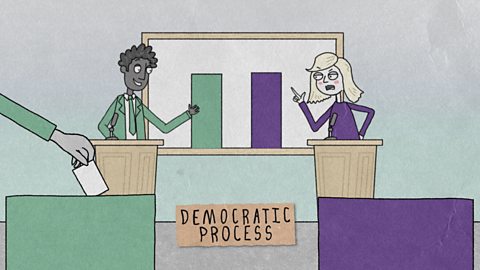
An animated film for KS3 students outlining what government is, and different styles of government.
Communism. video
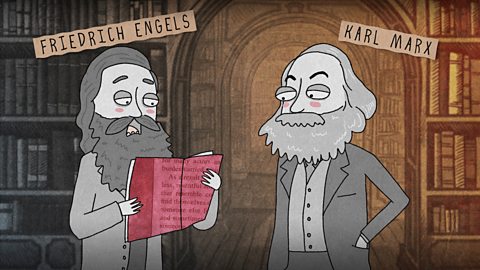
A short animation for KS3 student about communism: its core beliefs, and its followers and critics.
Capitalism. video
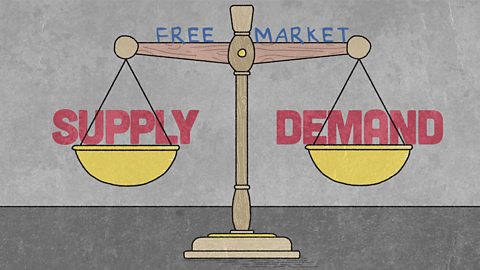
A short animation for KS3 students about capitalism: its core beliefs, its followers and critics.
Revolution. video
A short animation for KS3 students about the meaning of revolution when used in history, covering some significant political and social changes.
Suffrage. video
An animation for KS3 students about the struggle for full adult suffrage in the United Kingdom.
Migration. video
An animation for KS3 students on the impact of migration to, from and within Britain over time.
Parliament. video
An animation for KS3 students about Parliament and how struggles in Britain between monarchy, church and state have changed its power over time.
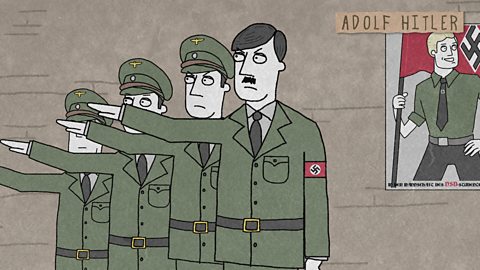
Fascism. video
An animation for KS3 history students about fascist ideology in the 20th century.
Empire. video
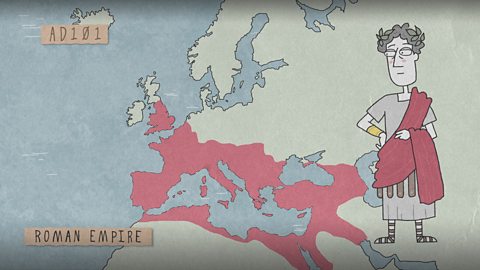
An animation for KS3 history students about the concept of empire, with a brief look at the Roman Empire and the rise and fall of the British Empire.