Suffrage means the right to vote.
It's granted to citizens who live in democracies, once they reach the eligible voting age. In the United Kingdom, the voting age is 18 and everyone has the right to vote in all elections from their eighteenth birthday.
In Scotland, 16 and 17-year-olds have been able to vote in Scottish parliamentary and local elections since 2015.
But people have not always had the right to vote.
Historically in Britain, the right to vote was dependent on the value of your property. This meant that until the mid 19th century, less than two percent of the population had the vote, with the working class and women excluded from the democratic process.
People fought hard for the right to vote in Britain.
In 1819, a large crowd of working class people gathered in Manchester to demand political representation.
The day ended in tragedy when local authorities ordered the cavalry to charge on the crowd.
It's estimated that eighteen people were killed and hundreds more were injured. This became known as the Peterloo Massacre.
The working class continued their campaign for one man one vote with the Chartist Movement, which petitioned parliament on several occasions in the 1800s.
The rising influence and wealth of the middle classes meant their demands for better political representation had some limited success, and throughout the 19th century, a series of reforms extended the vote to property owning men.
But by the turn of the 20th century, men who are not property owners still had no right to vote.
Women had their own struggle for the vote.
The women's suffrage movement began in the late 19th century.Campaigners, known as suffragettes, took direct militant action for their cause. Their slogan, 'Deeds not Words', led to violence, arson attacks, imprisonment and hunger strike.
At the outbreak of World War One, the suffragette scaled back their activities to support the war effort. Many women entered the workforce taking on traditional male roles.
The horror of World War One was the catalyst for many social and political changes in British society. Women had proved themselves equal to men in the workplace, and working class soldiers returning from the war demanded better conditions.
In 1918, the right to vote was granted to all men over the age of 21 and to women over 30 who owned property.
Ultimately, in 1928, universal suffrage was granted in Britain to all adults over the age of 21. And in 1969, it was lowered to 18.
The struggle for universal suffrage continues in some parts of the world today.
Video summary
An animation for KS3 students about the struggle for full adult suffrage in the United Kingdom.
After defining the term ‘suffrage’ and what it means in contemporary Britain, the film outlines the historical restrictions on the right to vote. It then touches on some of the struggles that took place in the 19th century in the fight for ‘one man, one vote’, and the extension of the vote to property-owning men. The film goes on to talk about the extension of suffrage in Britain in the early 20th century, following the social and political upheaval of World War One, culminating in universal suffrage for all adults over 21 in 1928.
Illustrative examples are chosen from popular schemes of learning, so learners will be able to confidently apply their knowledge and appreciate the dynamic nature of the concept being explained. This short film could be used to support learners who are investigating:
- Ideas, political power, industry and empire: Britain, 1745-1901
- Britain as the first industrial nation – the impact on society
- Party politics, extension of the franchise and social reform
- Challenges for Britain, Europe and the wider world 1901 to the present day
- Women’s suffrage
Teacher Notes
This short film can be used for whole class direct instruction or with smaller groups and individuals.
Since the film is designed to help clarify the general meaning of suffrage, it can be used as a flexible tool to help learners make connections and think about changes and causation leading to similarity and difference with other social and political systems in various parts of the world.
It can be revisited throughout the key stage depending upon learners’ differing needs and starting points, to help reinforce understanding of the umbrella term, consolidate knowledge and understanding and aid progression.
The accompanying film in this series on Government might also be helpful to students wishing to extend their knowledge.
Suggested activities:
Individually or in groups, students could predict the film content in advance, drawing up a key word list and, whilst watching, cross check what they thought would come up with what they learned. This could help correct any preconceptions, assumptions or misconceptions.
Students could be encouraged to draw a timeline or diagram to represent their understanding of suffrage in its widest sense and the changes that took place at different stages along the way to universal suffrage in Britain.
Students could initially watch the film and then later ‘write the script’ or provide a voice over, recalling information from memory by way of retrieval practice. This could take a storyboard format.
Students could actively watch whilst answering a series of questions generated by the teacher that have been tailored to the subject being studied.
Students could take part in a plus/minus/interesting activity, and thereafter be encouraged to produce a piece of extended writing or an audio broadcast, making the case for or against suffrage. This could take the form of a letter to Parliament.
This short film is relevant for teaching history at KS3 in England, Wales and Northern Ireland and 3rd Level in Scotland.
Government. video
An animated film for KS3 students outlining what government is, and different styles of government.
Communism. video
A short animation for KS3 student about communism: its core beliefs, and its followers and critics.
Capitalism. video
A short animation for KS3 students about capitalism: its core beliefs, its followers and critics.
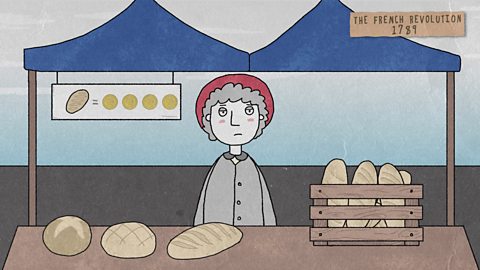
Revolution. video
A short animation for KS3 students about the meaning of revolution when used in history, covering some significant political and social changes.
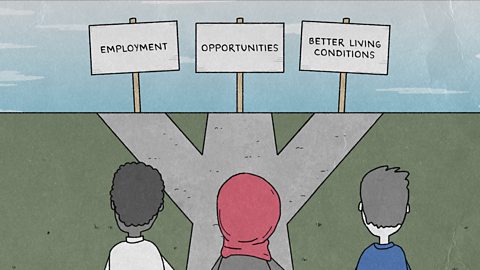
Migration. video
An animation for KS3 students on the impact of migration to, from and within Britain over time.
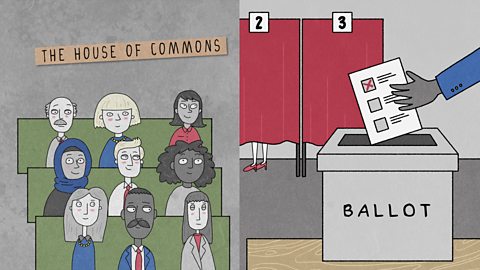
Parliament. video
An animation for KS3 students about Parliament and how struggles in Britain between monarchy, church and state have changed its power over time.
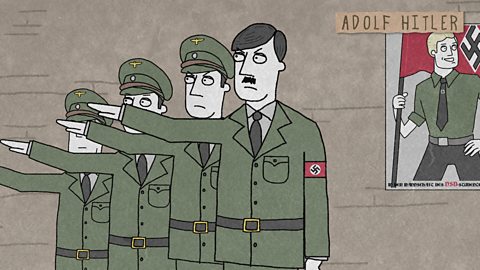
Fascism. video
An animation for KS3 history students about fascist ideology in the 20th century.
Empire. video
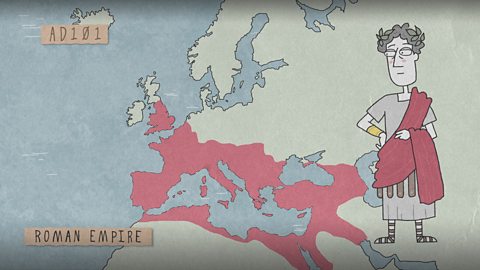
An animation for KS3 history students about the concept of empire, with a brief look at the Roman Empire and the rise and fall of the British Empire.
Industrialisation. video
An animation for KS3 history students about industrialisation: Britain's role in the Industrial Revolution and how industrialisation has spread across the globe.