NARRATOR:
What is communism? The modern understanding of communism was created in 1848 by Friedrich Engels and Karl Marx when they used the term in their famous pamphlet "The Communist Manifesto".
Communist ideology is built around a model in which all means of production such as tools, factories and raw materials are owned by the community as a whole. In this system private property does not exist. Each individual contributes according to their ability and receives according to their needs.
Since all property is owned by the community there is no hierarchy of social class. Supporters of communism believe it avoids the problems caused by differences in the distribution of wealth in other economic systems.
In modern history, communist states have been created following a revolution in which the working class or proletariat overthrew the ruling regime.
The most notable example was in Russia in 1917 when Vladimir Lenin and the Bolsheviks led a communist uprising that toppled the Russian imperial regime. The revolution's intense violence ultimately led to the execution of Tsar Nicholas II and his entire family. Their slogan "Peace, Bread and Land" struck a chord with Russian peasants tired of their country's involvement in World War I and the many inequalities of their society.
Following the revolution, new governing bodies called soviets were set up across Russia and its former empire states. This led to the establishment of the Union of Soviet Socialist Republics – or the Soviet Union – in 1922.
Of course, this system also had its critics. Some said it gave too much power to the government and took away personal freedoms. They argued it didn't reward hard work and could lead to unfair and strict rule by the leaders.
After World War II the Soviet Union became a global superpower, exerting its influence over many of the countries of Eastern Europe and further afield. But communism was seen as a rival and a threat to Western capitalism, especially by the USA. This led to great political tension for most of the second half of the 20th century and is known as The Cold War.
The Cold War was brought to an end in 1991 when the Soviet Union was dissolved. But this didn't mean the end of communism completely. Today there are just four remaining communist countries across the globe, of which China is the biggest and most powerful.
Video summary
A short animation for KS3 students about communism: its core beliefs, and its followers and critics.
After introducing the term ‘communism’ and its origins in Friedrich Engels and Karl Marx's pamphlet ‘The Communist Manifesto’, the film outlines the political ideology of communism. It covers the 1917 Russian Revolution, the foundation of the Soviet Union in 1922 and its power and influence in Eastern Europe and global politics during the Cold War.
Illustrative examples are chosen from popular schemes of learning so that learners can confidently apply their knowledge and appreciate the dynamic nature of the concept being explained. This film could be used to support learners investigating:
- Challenges for Britain, Europe and the wider world 1901 to the present day
- At least one study of a significant society or issue in world history and its interconnections with other world developments, for example, Changing Russian empires c.1800-1989
- At least one study of a significant society or issue in world history and its interconnections with other world developments - USA in the 20th Century
For further context, we've included this video in which journalist Brian Hanrahan returns to Berlin 20 years after the fall of the Berlin Wall. Our World: Fall of the Wall, BBC News, Sunday 8 November 2009, 14:30
Teacher Notes
This short film can be used for whole class direct instruction or with smaller groups and individuals.
Since the film is designed to help clarify the meaning of communism, it can be used as a flexible tool to help learners make connections and think about changes and causation leading to similarity and difference with other social and political systems in various parts of the world.
The film can be revisited throughout the key stage depending upon learners’ differing needs and starting points to help reinforce the umbrella term, consolidate knowledge and understanding and aid progression.
Accompanying films in this series on Capitalism and Revolution might be helpful to students wishing to know more.
Suggested activities:
Individually or in groups, students could predict the film content in advance, drawing up a key word list and whilst watching, cross check what they have written with what they learn in the film. This could help correct any preconceptions, assumptions or misconceptions that students have about the topic.
The film could be preparatory work, with students encouraged to watch and generate some questions about the topic before a sequence of learning.
Students could watch this film in conjunction with the video about Capitalism, and draw up a table of similarities and differences.
Students could initially watch the film and then later ‘write the script’ or provide a voice over recalling information from memory by way of retrieval practice in a ‘storyboard’ style.
Students could actively watch whilst answering a series of questions generated by the teacher which have been tailored to the period under study. This could perhaps lead to a summarising pyramid.
Students could be encouraged to draw a diagram to represent their understanding of how a communist system of government might come about and work.
This short film is relevant for teaching history at KS3 in England, Wales and Northern Ireland and 3rd Level in Scotland.
Government. video
An animated film for KS3 students outlining what government is, and different styles of government.
Capitalism. video
A short animation for KS3 students about capitalism: its core beliefs, its followers and critics.
Revolution. video
A short animation for KS3 students about the meaning of revolution when used in history, covering some significant political and social changes.
Suffrage. video
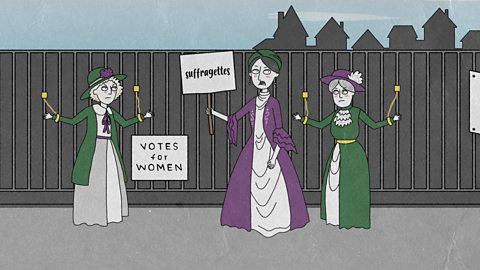
An animation for KS3 students about the struggle for full adult suffrage in the United Kingdom.
Migration. video
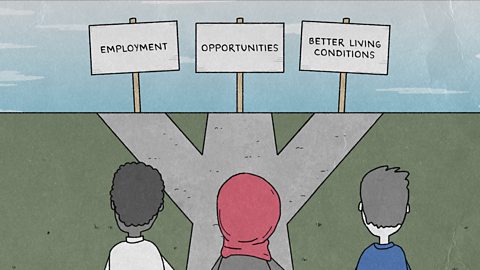
An animation for KS3 students on the impact of migration to, from and within Britain over time.
Parliament. video
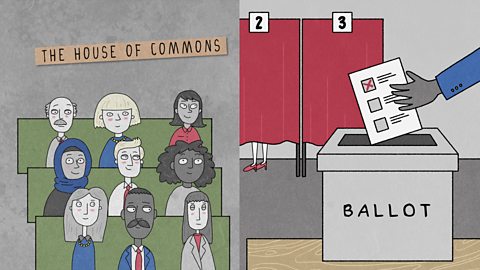
An animation for KS3 students about Parliament and how struggles in Britain between monarchy, church and state have changed its power over time.
Fascism. video
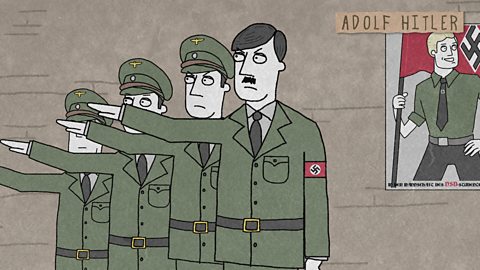
An animation for KS3 history students about fascist ideology in the 20th century.
Empire. video
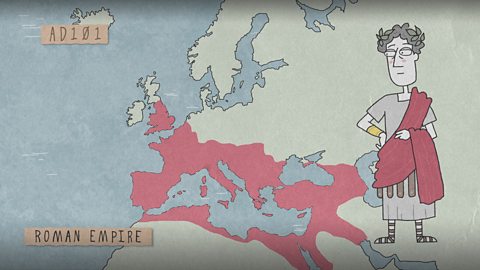
An animation for KS3 history students about the concept of empire, with a brief look at the Roman Empire and the rise and fall of the British Empire.
Industrialisation. video
An animation for KS3 history students about industrialisation: Britain's role in the Industrial Revolution and how industrialisation has spread across the globe.