NARRATOR:
An empire is a collection of communities, regions, territories or areas of land or whole countries that are ruled over and controlled by a single person, government or country. The word comes from a Latin word "imperium" meaning government or rule.History has see many empires around the world, with the Roman Empire being perhaps the best known.
From its beginning in 27BC to its division in AD476, the Roman Empire grew from its centre in Rome. At its most powerful in AD101, the Roman Empire stretched from the Mediterranean region into West Asia and reached as far northwest as Britain and Europe with a population of about one hundred million people.
Its influence can still be seen today in our roads, our calendar, our language and our legal system.
Britain ruled an empire on which it was said the sun never set. This was because the British Empire covered so much of the globe it was always daytime somewhere.
At its height it was the largest empire in history and was the foremost global power for over a century, ruling almost a quarter of the Earth's land area and over four hundred million people.
The first British empire began to take shape in the early 17th century, with the establishment of colonies on the East Coast of North America and some islands in the Caribbean.
But after the American War of Independence in 1783 these thirteen colonies declared independence, signalling the end of this period of British dominance.
But in the 19th century Britain built a second empire, taking control of India and large areas in Africa as well as its colonies in Canada and Australia. This opened up access to new sources of raw materials for the factories of Britain's Industrial Revolution.
New trading links were established and manufactured goods were shipped out across the globe, boosting Britain's wealth and status.Britain built its empire for several reasons, like wanting valuable resources such as diamonds, gold, spices and sugar and to become stronger and more powerful in the world. The empire helped Britain become richer and more important.
In the past many British people had viewed the empire as something to be proud of. They thought it was positive that the empire brought trading benefits to Britain and made the country richer. Some believed it was right to take land and teach people about Christianity.
But today people see things differently. They understand that Britain's power and wealth came from taking land and resources from indigenous peoples. In some cases, the empire resorted in the mistreatment, enslavement or destruction of the indigenous peoples who were living there long before their region or country was invaded.
The British Empire came to an end in the mid-20th century. Despite victory in World War II during which people from across the empire fought alongside Britain, the war proved costly. Its financial and economic independence – the real foundation of the imperial system – was destroyed.
Britain gave away to countries like the United States and the Soviet Union which emerged from the war with much more power than Britain.
Video summary
An animation for KS3 history students about the concept of empire, with a brief look at the Roman Empire and the rise and fall of the British Empire.
After defining the term ‘empire’, the film outlines the growth and decline of the Roman Empire. It then describes the rise of the British Empire, the foremost global power for over a century, and how it allowed British influence to spread across the globe. The film outlines different perspectives on the legacy of the British Empire, at home and for peoples enslaved or colonised by it. It describes how the British Empire came to an end after World War Two when Britain gave way to new global superpowers.
Illustrative examples are chosen from popular schemes of learning so that learners can confidently apply their knowledge and appreciate the dynamic nature of the concept being explained. This short film could be used to support learners investigating:
- Ideas, political power, industry and empire: Britain, 1745-1901
- The development of the British Empire with a depth study (for example, of India)
- Challenges for Britain, Europe and the wider world 1901 to the present day
- Indian independence and end of Empire
- Social, cultural and technological change in post-war British society
- Britain’s place in the world since 1945
- The study of an aspect or theme in British history that consolidates and extends pupils’ chronological knowledge from before 1066
- At least one study of a significant society or issue in world history and its interconnections with other world developments
Teacher Notes
This short film can be used for whole class direct instruction or with smaller groups and individuals.
Since the film is designed to help clarify the meaning of empire, it can be used as a flexible tool to help learners make connections and think about cause and effect, leading to similarity and difference at different times in various parts of the world.
The film can be revisited throughout the key stage, depending upon learners’ differing needs and starting points, to help reinforce the umbrella term, consolidate knowledge and understanding and aid progression.
Points for discussion:
Students should be encouraged to think about how different types of historical sources are rigorously used to make historical claims and discern how and why contrasting arguments and interpretations of the past are created. Spatial and temporal differences can be explored.
Accompanying films from this series on Industrialisation, Capitalism and Migration might be helpful to students wishing to extend their knowledge.
Specifically, students could be helped to understand how we know what we know about the British Empire.
The film provides an initial stimulus to help unpick different historians' views on empire, and investigate how they arrive at their interpretations. It also provides an opportunity to consider the views of those who may have been marginalised in the past.
Suggested activities:
Individually or in groups, students could predict the film content, drawing up a key word list and, whilst watching, cross check what they thought they would hear with what they learned. This could help correct any preconceptions, assumptions or misconceptions.
Students could watch the film and then ‘write the script’ or provide a voice over, recalling information from memory by way of retrieval practice in a ‘storyboard’ style.
Students could actively watch whilst completing a ‘plus, minus and interesting’ (PMI) table to assess the positive and negative effects of the British Empire.
This short film is relevant for teaching history at KS3 in England, Wales and Northern Ireland and 3rd Level in Scotland.
Government. video
An animated film for KS3 students outlining what government is, and different styles of government.
Communism. video
A short animation for KS3 student about communism: its core beliefs, and its followers and critics.
Capitalism. video
A short animation for KS3 students about capitalism: its core beliefs, its followers and critics.
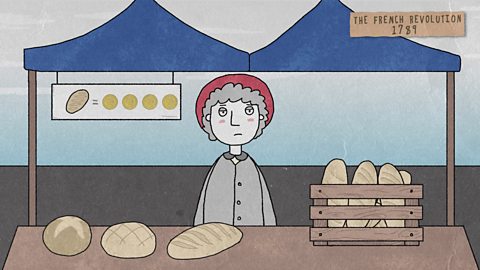
Revolution. video
A short animation for KS3 students about the meaning of revolution when used in history, covering some significant political and social changes.
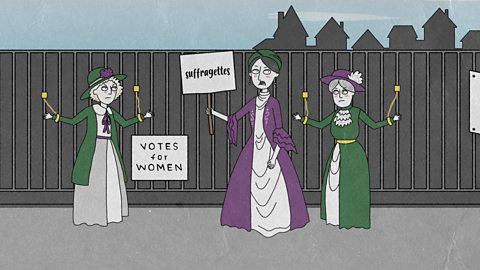
Suffrage. video
An animation for KS3 students about the struggle for full adult suffrage in the United Kingdom.
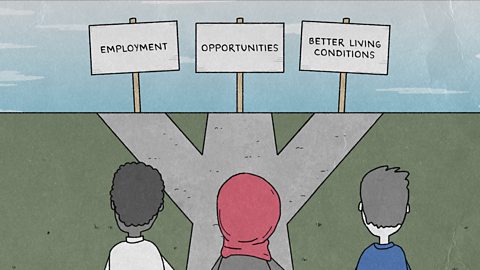
Migration. video
An animation for KS3 students on the impact of migration to, from and within Britain over time.
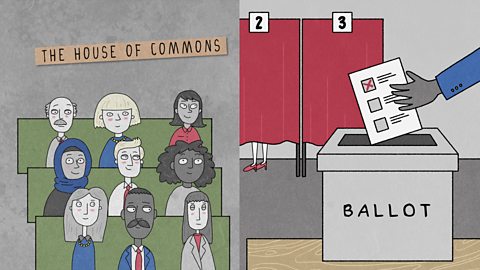
Parliament. video
An animation for KS3 students about Parliament and how struggles in Britain between monarchy, church and state have changed its power over time.
Fascism. video
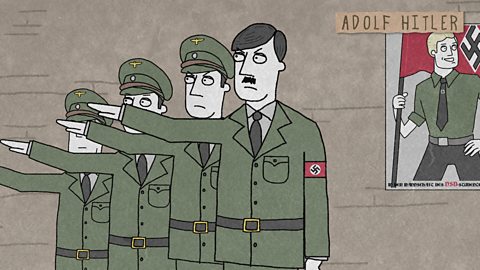
An animation for KS3 history students about fascist ideology in the 20th century.
Industrialisation. video
An animation for KS3 history students about industrialisation: Britain's role in the Industrial Revolution and how industrialisation has spread across the globe.