What is government?
The government of a place or country is the group of people who make laws and take decisions on behalf of all the people.
Governments make decisions on issues that affect everyone like education, roads and armies.
They also collect taxes, using this money to pay for… well, education, roads and armies, amongst other things.
The word government comes from a Greek word kybernan, which means to steer with the rudder.
So you could think of the government as steering the ship of the country or state.
There are three main types of government: monarchy, democracy and dictatorship.
Each of these is ruled by either a monarch, a prime minister or a president, or a dictator.
But the concept of government is different in different times and places throughout history.
Monarchy is when a country is ruled by a king or queen. Monarchs inherit their position from their family. This is called hereditary succession.
Sometimes, there is no monarch and a country is run as a republic headed by a president or prime minister.
France became a republic in 1792 when they abolished the monarchy in what is known as the French Revolution.
Dictators seize power using military force or by eroding democratic powers, making it very difficult for anyone to oppose them or disagree with their decisions.
In more recent times, many governments have been elected to their positions by a democratic process. This means most adults get to vote for who they want to rule the country.
There are many different types of democracy.
Sometimes, democracy and monarchy exist side by side, like in the UK today where we have a constitutional monarchy.
Government doesn't always mean central government making big decisions on behalf of the whole country. It can also refer to local or regional government making decisions more locally.
For example, in 16th century Elizabethan England local and regional government officials made most of the decisions that influenced people's everyday lives, with central government being far less involved.
In the United States, there has been a federal system of government since 1789. Each state has its own government which makes decisions on certain things, while other areas of law and policy are controlled by the central government in Washington DC.
So, next time you hear the word government in your history studies, think about what that means in the context of the place and time you're studying. Chances are it was a very different government from what you know today.
Video summary
An animated film for KS3 students outlining what government is, and different styles of government.
After defining the term ‘government’, the film explains how governments manage a country and how they raise and spend taxes. It describes three different forms of government – monarchy, democracy and dictatorship. It also outlines the differences in the responsibilities of local and federal governments compared to central governments. It reminds students to think about the term 'government' and what it means in the context of the period of history they are studying.
Illustrative examples are chosen from popular schemes of learning so that learners can confidently apply their knowledge and appreciate the dynamic nature of the concept being explained. This film could be used to support learners investigating:
- The development of Church, state and society in Medieval Britain 1066-1509
- The development of Church, state and society in Britain 1509-1745
- Ideas, political power, industry and empire: Britain, 1745-1901
- Challenges for Britain, Europe and the wider world 1901 to the present day
Please note that the film refers to Queen Elizabeth II as the head of state in the UK. It was made prior to the accession of King Charles III in 2022.
Teacher Notes
This short film can be used for whole class instruction or with smaller groups and individuals.
Since the film is designed to help clarify the different forms that government can take, it can be used as a tool to help learners make connections and think about changes and causation leading to similarity and difference across time periods.
The film can be revisited throughout the key stage, depending upon learners’ differing needs and starting points, to help reinforce the umbrella term, consolidate knowledge and understanding, and to aid progression.
Accompanying films from this series on Parliament and Suffrage might be helpful for students wishing to broaden their knowledge.
Suggested activities:
Individually or in groups, students could try to predict the film content in advance, drawing up a key word list and, whilst watching, cross check what they thought would come up with what they learned. This could help to correct false preconceptions, assumptions or misconceptions.
The film could be preparatory work, with students encouraged to watch and generate questions before a sequence of learning.
Students could watch the film and then later ‘write the script’ or provide a voice over, recalling information from memory by way of retrieval practice.
Students could actively watch the film whilst answering a series of questions generated by the teacher which have been tailored to the period under study.
Students could be encouraged to draw a diagram to represent the different systems of government and their associated machinery.
This short film is relevant for teaching history at KS3 in England, Wales and Northern Ireland and 3rd Level in Scotland.
Communism. video
A short animation for KS3 student about communism: its core beliefs, and its followers and critics.
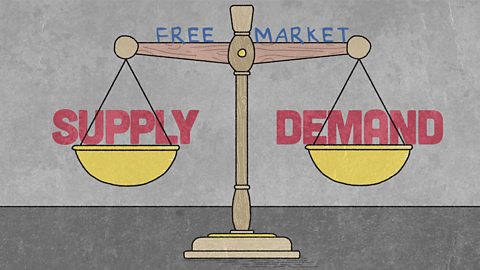
Capitalism. video
A short animation for KS3 students about capitalism: its core beliefs, its followers and critics.
Revolution. video
A short animation for KS3 students about the meaning of revolution when used in history, covering some significant political and social changes.
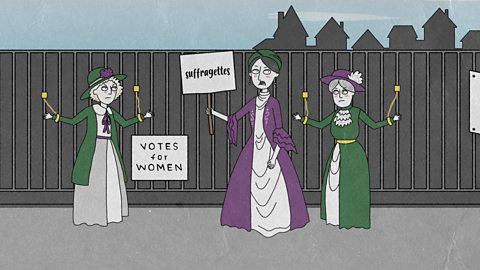
Suffrage. video
An animation for KS3 students about the struggle for full adult suffrage in the United Kingdom.
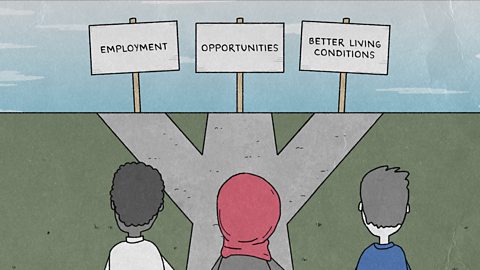
Migration. video
An animation for KS3 students on the impact of migration to, from and within Britain over time.
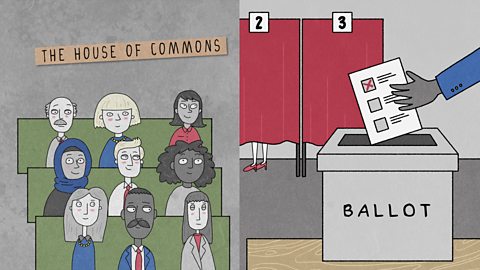
Parliament. video
An animation for KS3 students about Parliament and how struggles in Britain between monarchy, church and state have changed its power over time.
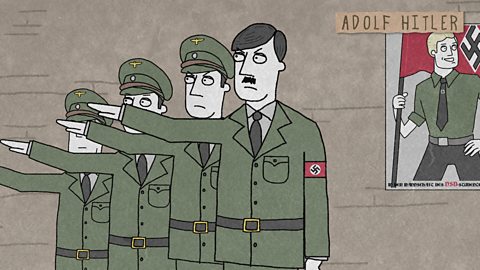
Fascism. video
An animation for KS3 history students about fascist ideology in the 20th century.
Empire. video
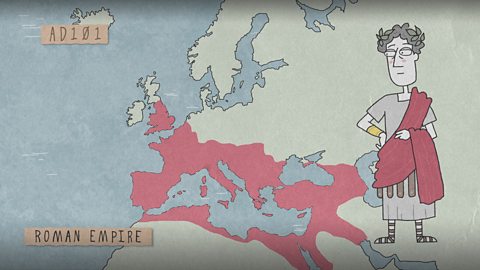
An animation for KS3 history students about the concept of empire, with a brief look at the Roman Empire and the rise and fall of the British Empire.
Industrialisation. video
An animation for KS3 history students about industrialisation: Britain's role in the Industrial Revolution and how industrialisation has spread across the globe.