Let’s go east as we explore five intriguing facts about Japan, from its ancient tradition of giving fruit as gifts to its love affair with KFC at Christmas.
Explore Japan with these five fascinating facts!
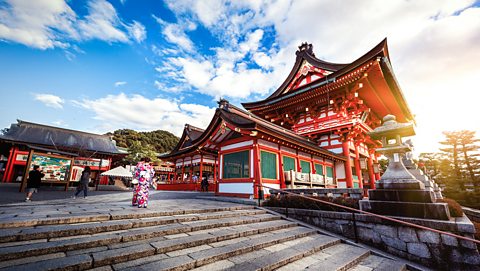
1. Japan is home to the oldest company in the world
The construction company Kongō Gumi was founded over 1400 years ago in 578 AD to construct the Shitenno-ji temple at the request of Prince Shōtoku. The ancient agency specialises in construction, restoration, and repair of shrines, temples and castles, and started work almost 350 years before England was established as one country!
In fact, Japan is home to many of the oldest companies in the world, including all five of the oldest. The reason for this is Japan’s culture of respecting tradition and ancestors, meaning that the older a business is, the more Japanese people will trust it.
2. Japan celebrates Christmas with KFC
Would you be happy with a KFC for Christmas dinner?
It might sound bizarre to Brits, who are used to tucking into turkey, but an estimated 3.6 million Japanese families treat themselves to Kentucky Fried Chicken over the festive period, in what has become a nationwide Christmas tradition.

Historically, Japan never celebrated Christmas like we do in the UK. That all changed in the 1970s when Takeshi Okawara, the manager of the first KFC in the country, came up with his campaign called Kurisumasu ni wa Kentakkii, or Kentucky for Christmas. The marketing mogul basically created a Christmas tradition in Japan, tying in KFC from the very start.
Over the years, Okawara’s plan has exploded, with the popularity of the KFC special Christmas dinner meaning that people have to order weeks in advance, and sometimes queue for hours on Christmas Day. According to KFC, the Christmas meals make up about a third of the chain’s sales in Japan for the whole year.
3. Japan has the most recorded earthquakes in the world
Japan has a long history of earthquakes and has suffered the highest number of recorded earthquakes of any country in the world. This is due to the country sitting on the densest seismic network in the world. However, including unrecorded earthquakes, Indonesia has a higher number of earthquakes than Japan, because of its larger area.
Due to its history of buildings being destroyed by terrible tremors such as the 2011 Tōhoku earthquake, Japan's architects have had to learn to adapt their building design to its seismic cities.
The many skyscrapers in Japan, especially in its biggest cities such as Tokyo and Yokohama, have a variety of different shock-absorption designs to take on the tremors. These range from complex engineering techniques to features as simple as blocks of rubber just 30-50cm thick.
4. A pair of melons in Japan can fetch up to 5 million yen
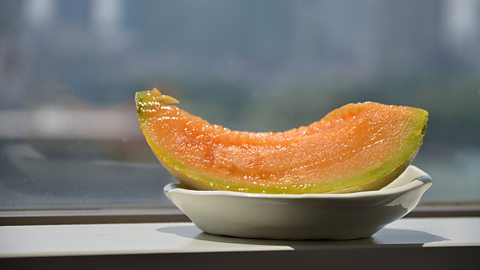
Could you imagine paying £80 for a humble cantaloupe? That’s the average price of a Yubari King melon in Japan. In fact, a premium pair of these fancy fruits fetched 5 million yen at auction in 2019, which is over £30,000! And this isn’t the only pricey piece of fruit in Japan, with a bunch of Ruby Roman grapes being sold in 2020 for 1,780,140 yen.
But why are these fruits so costly? The Japanese aren’t spending thousands on fruits just for a healthy snack. The country has a strong culture of giving fanciful fruit as gifts, dating back to the 14th century. Samurai would give fruit to their military leader, known as the shogun, as a sign of respect and gratitude. The gift of fruit also has a spiritual meaning, with fruit being the historical gift to the gods and ancestors in Japanese temples. Quite different from giving an apple to your teacher!
5. Japan is the only country in the world with a reigning emperor
The Japanese Emperor is known as the Tennō in Japanese, which literally translates as "heavenly sovereign". What makes an emperor different from a king or queen is that an emperor is the supreme leader of an entire empire, whereas a king or queen rules over a kingdom, which could be part of an empire. The emperor of Japan lives in the Imperial Palace of Tokyo.
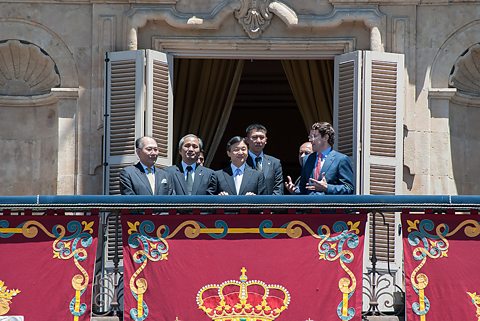
Emperor Naruhito, shown above, ascended the Chrysanthemum Throne in 2019 after his father's abdication.
Much like the monarch of the United Kingdom, the Japanese emperor has no political power, in that he has no say in what the government decides, but is seen as a symbol of Japan’s unity as a nation.
Where can I learn more about Japan?
Have our five fun facts about Japan made you keen to know more? Read these articles next:
Five more things you may not know about Japan
GCSE History: Japan and the atomic bomb
BBC Bitesize for Teachers, Primary resources: Location comparison, Tokyo and London
