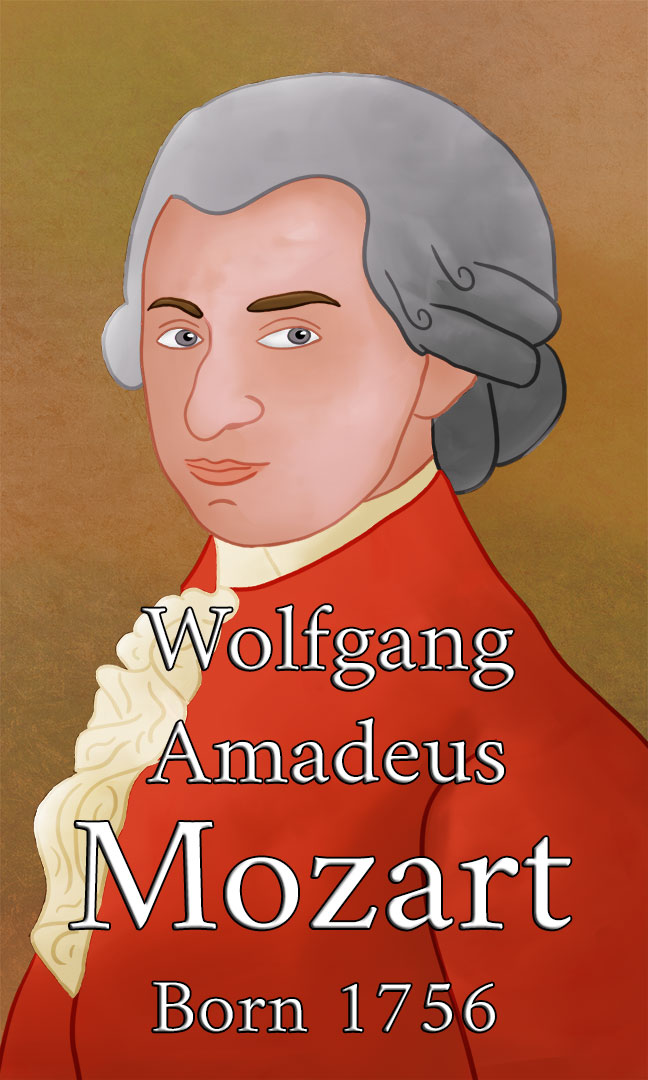
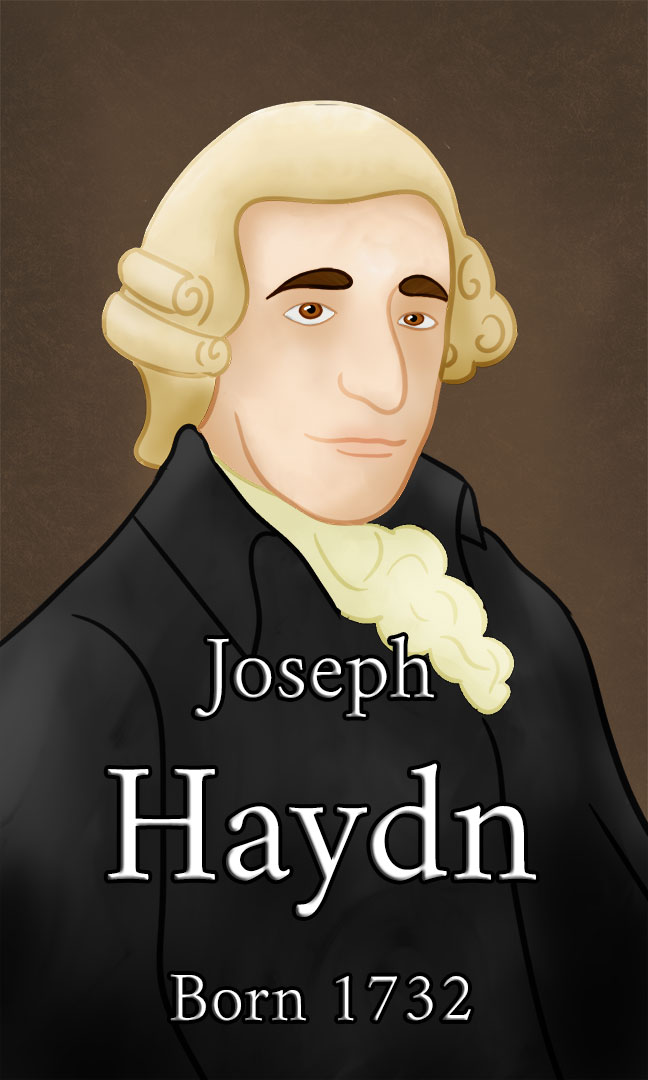
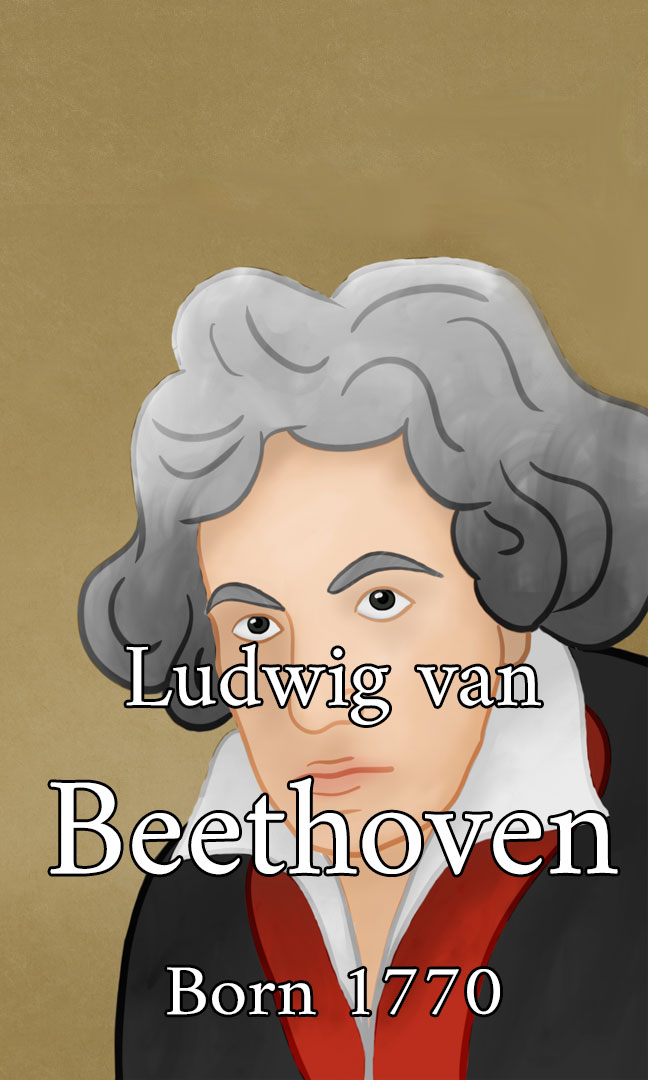
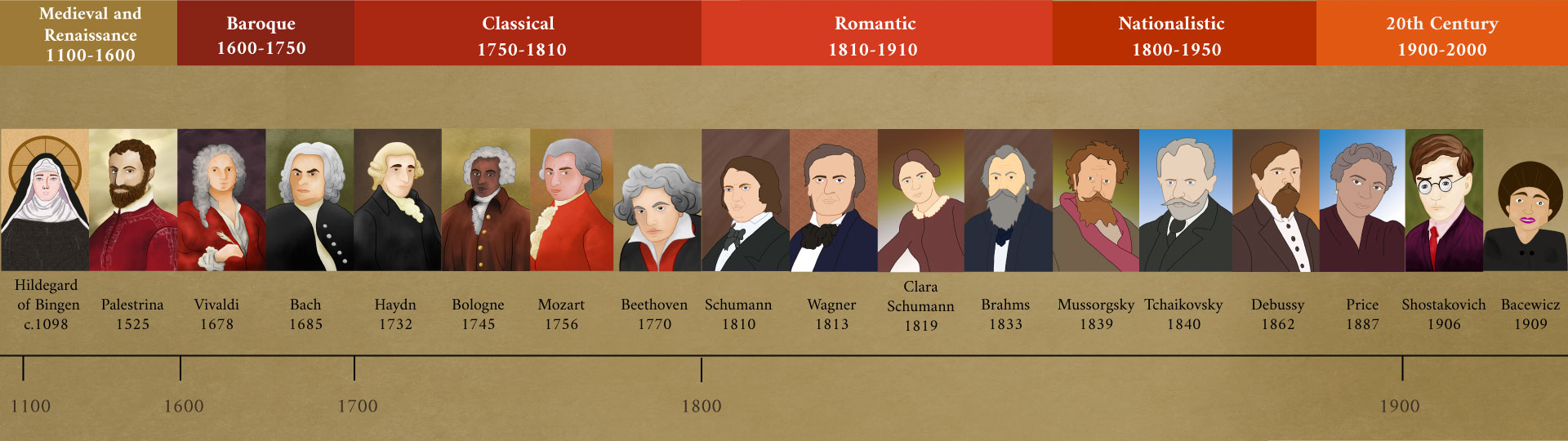
The third episode explores Classical music and its emphasis on elegance, balance and beauty. The composers included are Haydn, Mozart and Beethoven.
The video
Naomi: The Classical period of music put an emphasis on elegance, balance and beauty.
Classical composers largely worked between the years 1750 to around 1810 and this period was dominated by giants of musical history, such as Haydn and Mozart!
Many different forms of music flourished during the Classical period - works such as symphonies, concertos, solo pieces and… opera! This piece of music was written by Wolfgang Amadeus Mozart in 1791 and it’ s from his opera The Magic Flute.
Listen to the two voices - there’s a ‘baritone’, the low voice …and a ‘soprano’, the high voice. An opera tells a story and the Magic Flute is a story of light and dark.
During the Classical period some instruments underwent significant development. Harpsichords with plucked strings were evolving into pianos more like the ones we know today where hammers strike the strings. This gave the player control over the volume of each note, allowing the melody to sing out over the accompaniment. Also, new instruments were being invented - like the clarinet. These were added to the orchestra, along with additional string instruments – like more violins – so the orchestral sound became bigger and more expressive.
Another notable composer of the classical period was Joseph Bologne. Born in 1745 in the Caribbean, he moved to France at the age of 7. He was known, not only as a composer, but as a virtuoso violinist too - often writing pieces to demonstrate his skill on the instrument. This is his Symphony No.5 in G Major and it is played ‘allegro’ - meaning quick and lively.
And as we move through the Classical period, things really start to pick up. Introducing Joseph Haydn. This piece called the Rider is by Austrian composer Haydn born in 1732. It’s written for a string quartet - made up of two violins, a viola and a cello. Haydn was the father of the string quartet. He wrote over 60 of them.
Naomi: The late classical period is dominated by one of the true giants in the history of music…
Ludwig: Me - Ludwig Van Offbeaten!
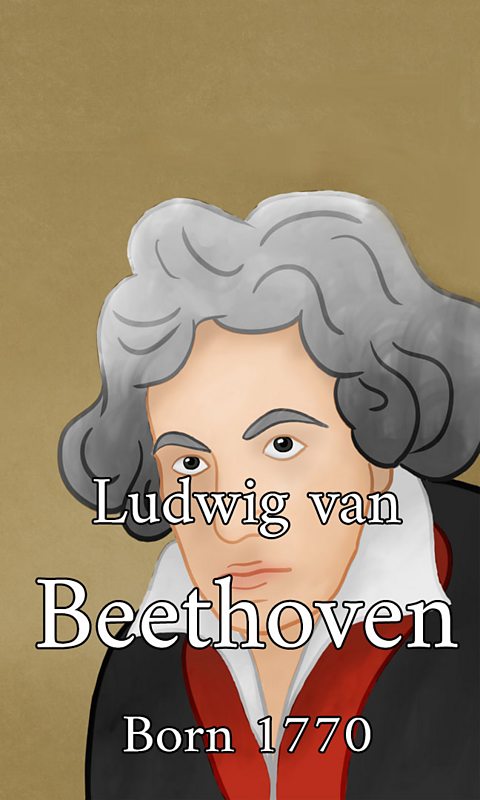
Naomi: No - Ludwig Van ‘Beethoven’ born in 1770. Beethoven’s music explores profound expressions of feeling and intellect… His famous Symphony No 5 is in a minor key, making it sound dark and fateful.
Ludwig: Danke mein mini Gruppen!
Naomi: Beethoven famously became deaf during his composing career, yet he was still able to write amazing, groundbreaking music.
Ludwig: A titan of composition - just like me!
Naomi: Hey Ludwig, before we go, what is a classical composer’s favourite game?
Ludwig: I don’t know?
Naomi: Haydn seek! Joseph Haydn…Hide ‘n’ seek.
Ludwig: What an awful joke.
Naomi: Never mind.
Ludwig: Zat was terrible! Errghhh!
3. The Classical period
The Classical period extends from about 1750 to about 1810 and two of the ‘giants’ of classical music are Haydn and Mozart. Music has developed dramatically since the Medieval period and now there are countless contrasting styles of composition such as symphonies, concertos, solo pieces, quartets and opera.
Naomi introduces an excerpt from the opera The Magic Flute by Austrian composer Wolfgang Amadeus Mozart (1756-1791). We hear two voices: a soprano (a high female voice) and a baritone (a low male voice). An opera tells a story: it is a dramatic work in one or more acts, set to music for singers and instrumentalists. Here the baritone part is that of Papageno - half man, half bird. Papageno works for the Queen of the Night, catching birds. We hear him singing with the character Papagena.
Naomi then explores the difference between the harpsichord and the piano and explains how the number of instruments available to composers expanded at this time, with the invention of new instruments such as the clarinet. The development of instrumental technology had an influence too, allowing for greater expression, a greater range of timbres and a greater contrast in dynamics. Orchestras increased in size and offered composers ever increasing opportunities for the range of sound created.
We hear a clip from a symphony by Joseph Bologne (1745-1799), a contemporary of Mozart. The symphony was a very important form during the Classical period. A symphony is a large-scale orchestral work and is usually in four movements. The clip we hear is from the first movement entitled ‘Allegro’, which an Italian musical term meaning ‘fast’.
In contrast, the string quartet has only four instruments: two violins, a viola and a cello. Franz Joseph Haydn (1732-1809) is the German composer of ‘The Rider’, a quartet beginning with a dark, dramatic gallop. Naomi explains that Haydn wroteover 60 quartets and that one of his innovations was to explore giving not just the first violin a leading role, but dividing the melodies more equally between all the instruments.
The video ends with Ludwig van Beethoven (1770-1827) and his Symphony Number 5. We discover that German composer Beethoven was a ground-breaker, who pushed boundaries. The music is powerful and emotional; the key is C minor, creating a dark, foreboding sound.
Teacher Notes
Using a piece of string marked out in centuries from 1100 to the present day, cut out the names or pictures of the composers studied and peg them onto the timeline. This will help children to form a sense of chronology. If you did this for the first and second videos, you can add to it. Also peg on the names given to the different eras of music studied so far: Medieval (1100-1400), Renaissance (1400-1600), Baroque (1600-1750), Classical (1750-1810).
Explore the resources at Ten Pieces to delve deeper into the Symphony by Joseph Bologne.
Look at the clip of the orchestra playing the Symphony by Bologne. Can pupils identify the different instruments such as violin, viola, cello, double bass, oboe, French horn?
Explore the resources at Ten Pieces to delve deeper into the Symphony No 5 by Beethoven.
The opening of the Beethoven is dominated by a short four note motif. Can pupils identify this and how it keeps recurring?
Use the musical elements/interrelated dimensions as headings. Can you select one of the pieces of music listened to and describe it using these headings? Or can you select one heading, such as dynamics, and compare the dynamics of each of themusic clips in the video. Headings you might choose to consider might include:
pitch (how high/low the music is)
dynamics (whether the music is quiet or loud)
tempo (if the music is fast or slow)
timbre (the quality of tone, or sound of the instrument - is it brassy, dull, sparkly, etc)
texture (is there one line, or many parts)
duration (can you feel a driving pulse? can you pick out a repeated rhythm?)
structure might also be relevant - although hard to pick out on such short clips - for example, in a song are there verses?
This episode will be relevant for teaching Music at KS2 in England, Wales and Northern Ireland. Also, Second Level P5-P7 level in Scotland.
It covers listening and appraising, enabling children to develop a sensitivity to and understanding of music from varied genres, styles and different times. Children are encouraged to build a sense of chronology and begin to understand how music changed over time by listening with attention to detail to a variety of music written by the great composers.
Resources
Image of Mozart
Click to display the image full size.
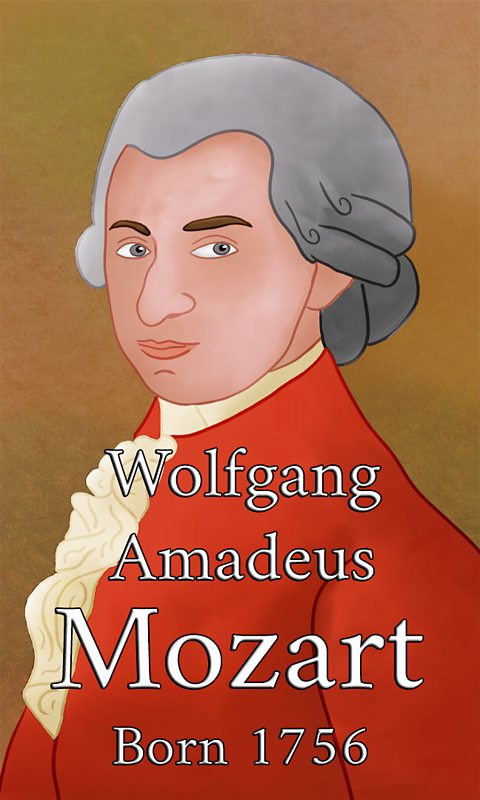
Image of Haydn
Click to display the image full size.
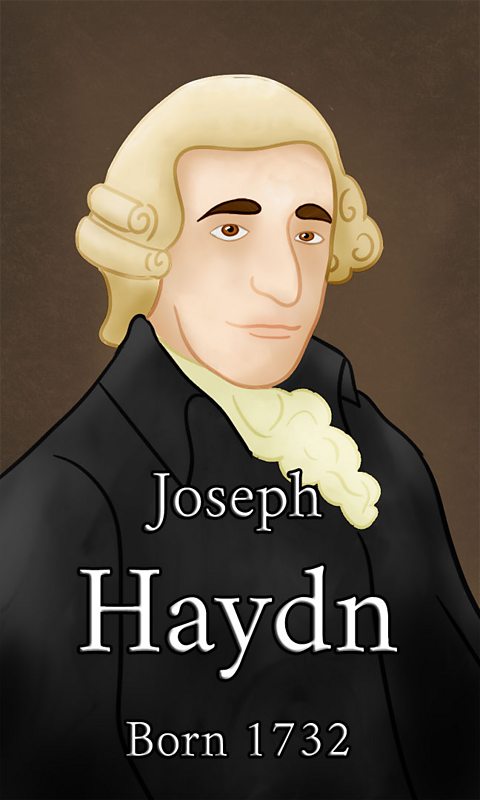
Image of Beethoven
Click to display the image full size.
A timeline of the composers
http://teach.files.bbci.co.uk/teach/music/history_of_music/composer_timeline.jpg