The sixth video explores 20th Century music and the composers include Florence Price, Shostakovich and Debussy.
The video
Ludwig: (in a robot voice) Guten Morgen, Naomi!
Naomi: Ludwig. Why are you dressed like a robot?
Ludwig: Ve are deep in the future. I’m trying to blend in.
Naomi: Er …no today we’re learning about composition in the 20th Century, which was written by people, not robots.
Ludwig: Oh. Vhat’s so special about the 20th Century then?
Naomi: The music! It was full of extremes and experimenting with sounds. The most important theme of the this period was the idea of change.
Ludwig: I don’t like change!
Naom: But change can be good! Many composers between 1890 and 1945 were fed up with the idyllic, romantic music of the previous generation, so they started experimenting, finding new techniques and exploring new sounds…it was exciting!
Ludwig: Vhat is zis lady doing?
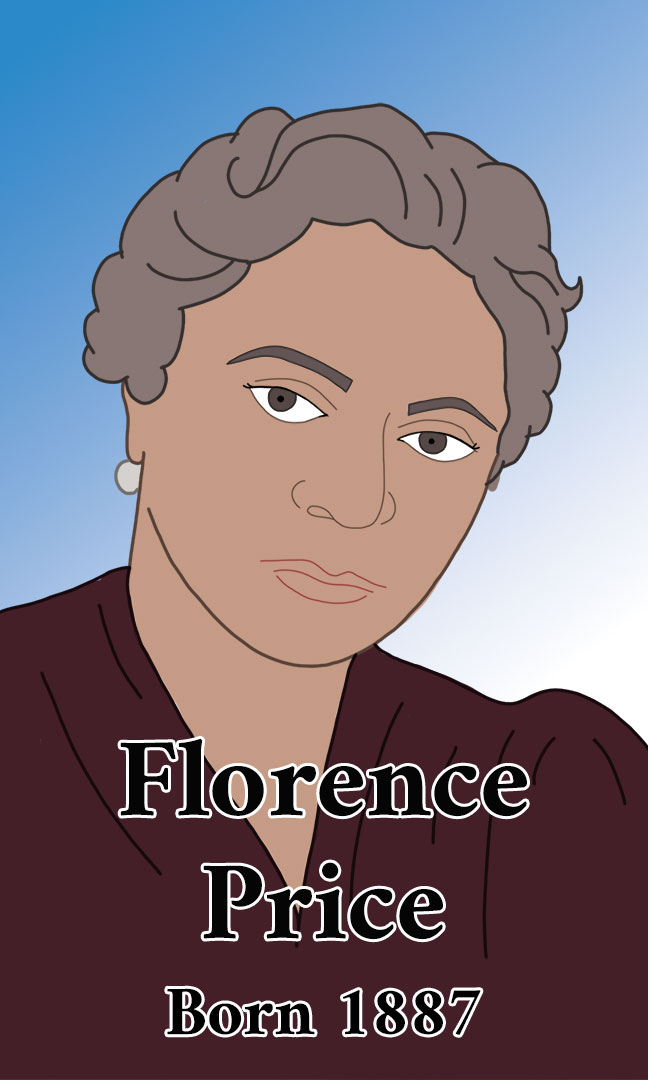
Naomi: This is music by Florence Price, an African-American trailblazer who combined the traditions of classical music with the sound and rhythms of West African dance music. And that is the Juba Dance, a type of dance created by slaves in America, who were banned from using musical instruments and only had their bodies to create music. In this section of Price’s Symphony No.1 from 1932, which is called Juba Dance - you can hear how the African drums echo patting, slapping and stamping rhythms.
Ludwig: I’ve never heard anything like it!
Naomi: Price brought two very different worlds of music together, taking part of her musical heritage and reimagining it with a classical orchestra.
Naomi: Another country with a huge influence in 20th Century music is Russia.
Ludwig: Who is zis man? Vhy so serious?
Naomi: This is Dmitri Shostakovich. Born in 1906, he was a Russian composer, who had to be very careful about the music he composed. His country was ruled by a dictator called Joseph Stalin who controlled every aspect of life in the country, including the music that was composed, but when Stalin died, Shostakovich was able to express himself freely, without fear of arrest. Listen to his 10th Symphony - said to be a musical portrait of Stalin - listen for the panic, terror and most importantly - anger!
Ludwig: Vell, vell, vell…that vas angry. Vell done Mr. Shostakovich.
Naomi: Right, I've got one more example of change and experimentation in 20th Century music.
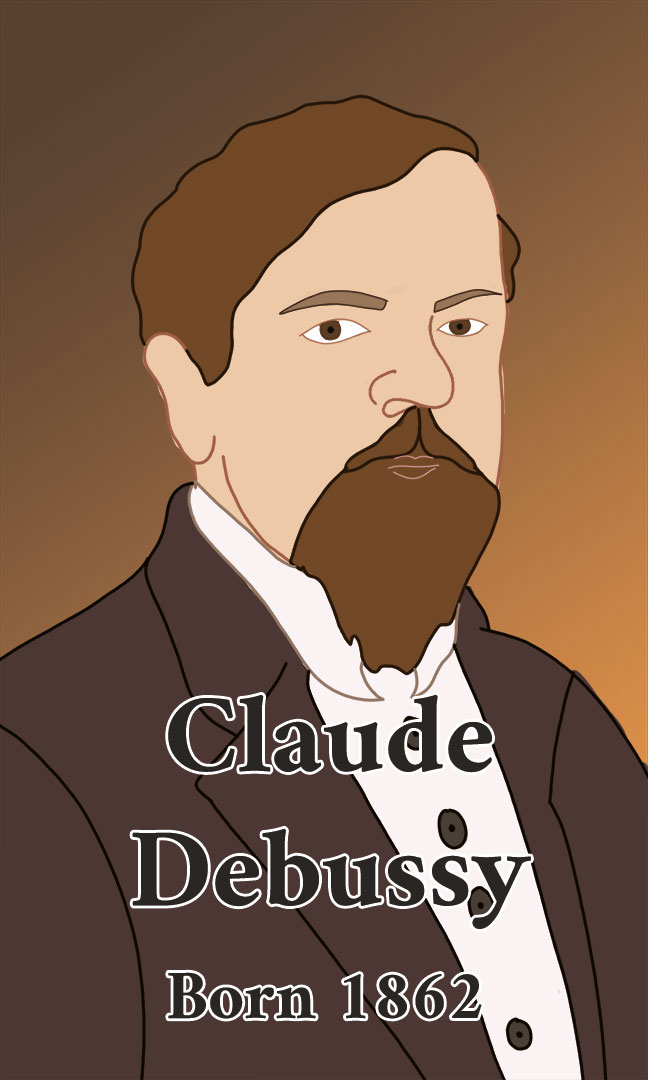
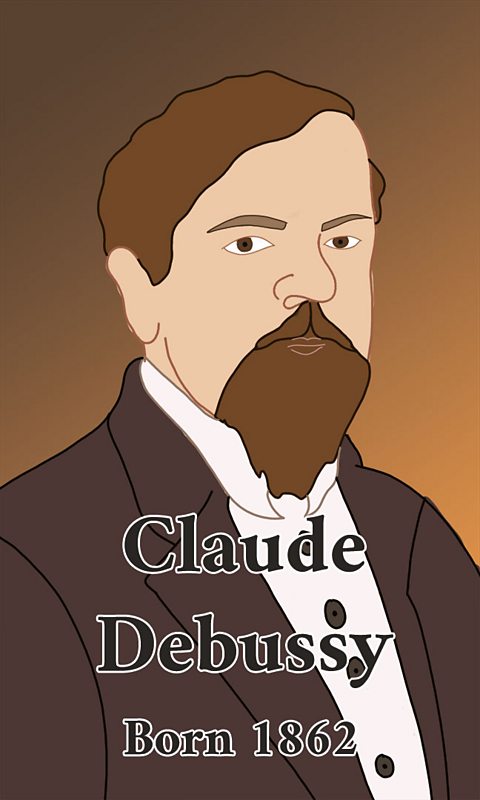
Naomi: One of the pioneers of Impressionism was the French composer, Claude Debussy. Born in 1862, Debussy tried to create musical pictures using lots of innovative techniques.
Ludwig: Yah - it’s almost like painting with music!
Naomi: This is Debussy’s famous work ‘Clair de lune’, which means ‘moonlight’. It makes me think of a peaceful night looking out over a quiet lake with a full moon high in the dark sky. What does it make you think of Ludwig?
Naomi: Ludwig? Where's he gone?
Ludwig: I’m up here Naomi - I’m just trying to get a bit more atmosphere in my music.
Naomi: Well your next composition better be out of this world.Ludwig: Das ist your worst joke yet Frau Naomi.Naomi: Sorry!Ludwig: Truly awful.
6. 20th Century music
Naomi explains that the 20th century heralded change and new ideas in music. Composers wanted to break away from Romanticism and Nationalism and were influenced by conflicts, such as the First World War. Composers were also influenced by politics, religion, arts movements and music from different cultural heritages.
We listen to a clip of music by American composer Florence Price (1887-1953) - her Symphony No 1 in E minor. Price’s music combines her African-American heritage with her training in classical music. The sound of spirituals and West African rhythms and dance are woven into the symphonic form. The ‘Juba Dance’ heard in the clip originates in West Africa and was brought to the United States by slaves forced to work on plantations. Slaves were banned from playing musical instruments, so they used their bodies to make music instead. They created repeating percussive rhythms by patting and slapping their arms, legs and chest and stamping with their feet.
Naomi reminds us that music in the 20th century pushes boundaries. We are introduced to the Russian composer Dmitri Shostakovich (1906-1975). Shostakovich lived under the dictatorship of Joseph Stalin, who controlled every aspect of life in the country, including the style of music composed. During Stalin’s life, Shostakovich had to be very careful that his compositions did not deviate from the type of art that Stalin wanted, or he might face imprisonment or worse. Anything deemed to have a ‘western’ or modern influence was considered inappropriate. After Stalin died, Shostakovich wrote his Symphony No 10 in which he is said to have portrayed Stalin himself, as a musical joke by pretending to write ‘good Russian music’. We hear some of the panic, terror and anger conveyed by the orchestra.
The French composer Claude Debussy (1862-1918) was influenced by painters of the Impressionist movement and also writers and thinkers. We listen to the opening of ‘Clair de lune’ ('Moonlight') on the piano. The piece takes its title from a poem by Paul Verlaine in which birds are inspired to sing by the sad and beautiful light of the moon. The music is extremely expressive and the piano harmonies provide a ‘wash’ of colours.
Teacher Notes
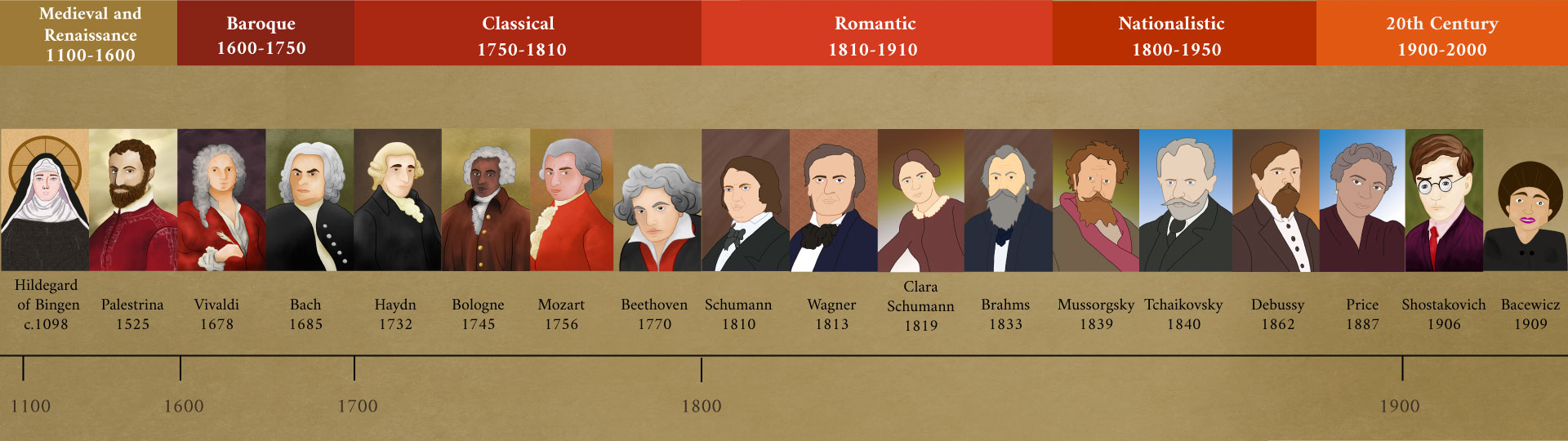
Using a piece of string marked out in centuries from 1100 to the present day, cut out the names or pictures of the composers studied and peg them onto the timeline. This will help children to form a sense of chronology. If you did this for the other videos, you can add to it. Also peg on the names given to the different eras of music studied so far: Medieval (1100-1400), Renaissance (1400-1600), Baroque (1600-1750), Classical (1750-1810), Romantic (1810-1910), Nationalistic (1800-1950), 20th Century (1900-2000).
Explore the resources at Ten Pieces to delve deeper into the music of Florence Price.
Explore the resources at Ten Pieces to delve deeper into the music of Dmitri Shostakovich.
Collect famous images from the Impressionist movement in art. Are there any parallels you can make between the art and music of the time?
Use the musical elements/interrelated dimensions as headings. Can you select one of the pieces of music listened to and describe it using these headings? Or can you select one heading, such as dynamics, and compare the dynamics of each of themusic clips in the video. Headings you might choose to consider include:
pitch (how high/low the music is)
dynamics (whether the music is quiet or loud)
tempo (if the music is fast or slow)
timbre (the quality of tone, or sound of the instrument - is it brassy, dull, sparkly, etc)
texture (is there one line, or many parts)
duration (can you feel a driving pulse? can you pick out a repeated rhythm?)
structure might also be relevant - although hard to pick out on such short clips - for example, in a song are there verses?
This episode will be relevant for teaching Music at KS2 in England, Wales and Northern Ireland. Also, Second Level P5-P7 level in Scotland.
It covers listening and appraising, enabling children to develop a sensitivity to and understanding of music from varied genres, styles and different times. Children are encouraged to build a sense of chronology and begin to understand how music changed over time by listening with attention to detail to a variety of music written by the great composers.
Resources
Image of Florence Price
Click to display the image full size.
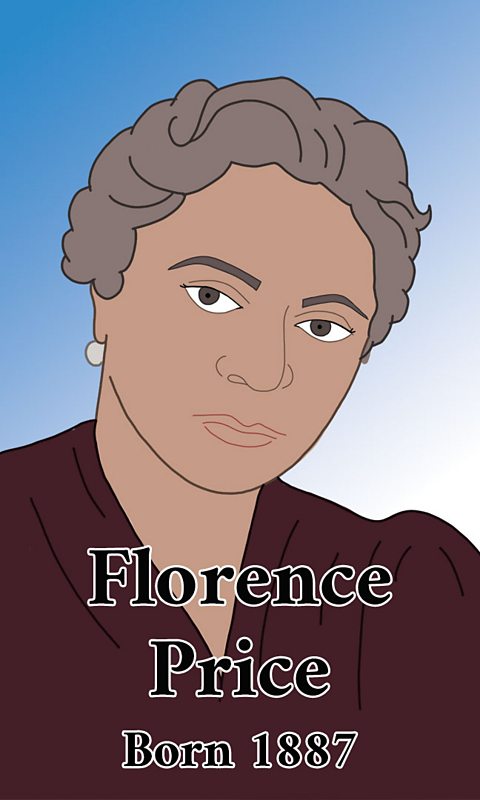
Image of Shostakovich
Click to display the image full size.
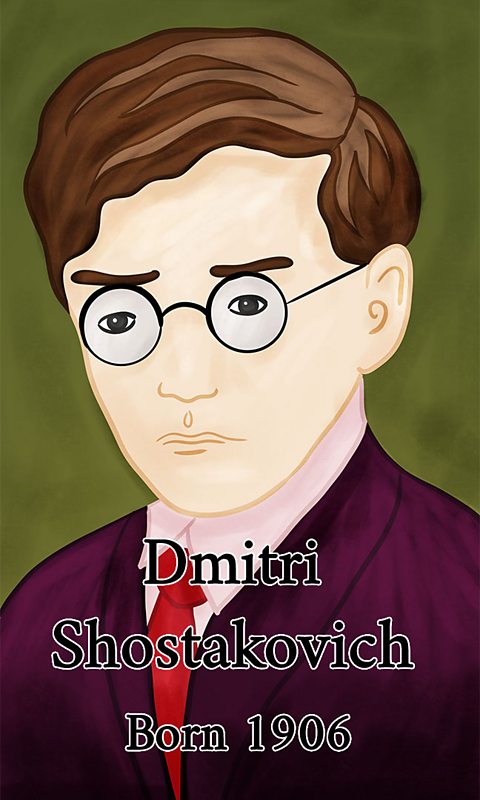
Image of Debussy
Click to display the image full size.
A timeline of the composers
http://teach.files.bbci.co.uk/teach/music/history_of_music/composer_timeline.jpg