In the fifth video of the series the focus is Nationalistic music and the composers explored include Mussorgsky, Grażyna Bacewicz and Dvořák.
The video
Ludwig: Guten Morgen, Naomi! Uh… where is your lipstick?
Naomi: My lipstick? What do you mean?
Ludwig: You said you vanted to meet to discuss ‘Fashionable Lipstick Music’, yah?
Naomi: I said I wanted to discuss ‘National-istic’ music!
Ludwig: But vhat’s ‘Nationalistic’ music?
Naomi: ‘Nationalistic’ is a type of music that emerged early in the 19th Century. At the time, a lot of countries in Europe were ruled by other, more powerful nations. And they didn’t like that. So they decided to fight for independence, which led to conflicts and revolutions - and composers wanted ‘musical independence’ too.
Ludwig: You mean freedom to write music they’re own way?
Naomi: Exactly - to write music that preserved their own country’s ideas and identity. So they turned to their own localstories, dances and landscapes to create music that was truly reflective of their own nations.
Ludwig: Trembly Trompeten! - this must have been a huge change!
Naomi: Definitely. With Nationalistic music you can identify specific countries, regions or ethnicities from the melodies, rhythms, and harmonies that are used.
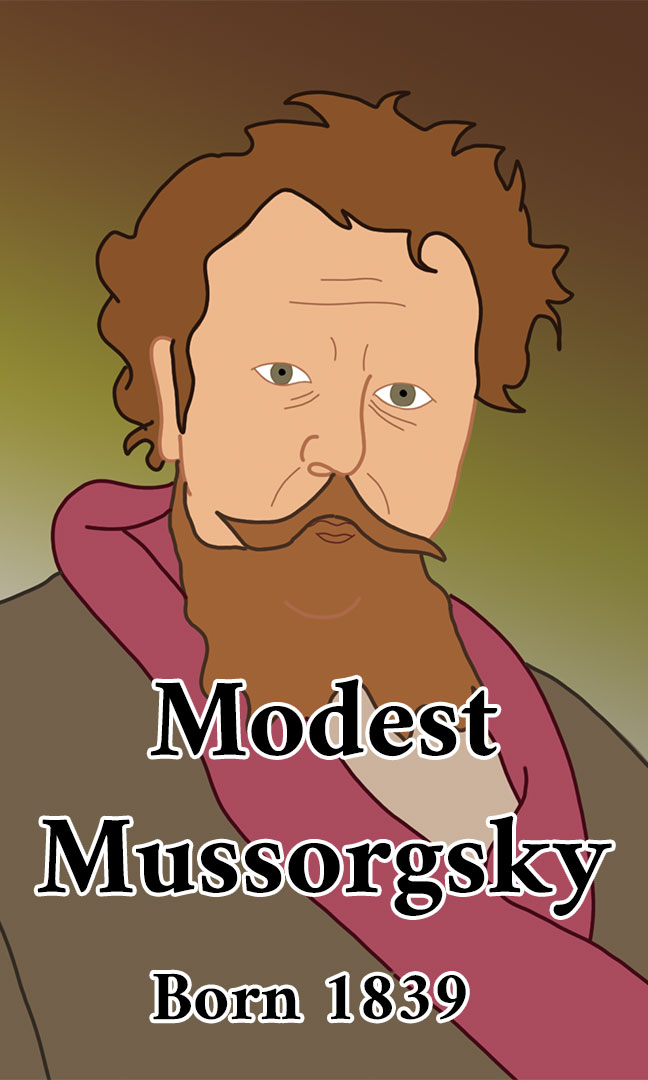
Naomi: This is Modest Mussorgsky. He was a Russian composer whose music was inspired by Russian history and folklore. This piece is called ‘A Night on the Bare Mountain’. It’s an example of ‘programme music’ - music designed to evoke pictures in the listeners mind.
Ludwig: Zat was INCREDIBLE - I vant to hear more!
Ludwig: Guten Tag, big stone lady.
Naomi: This ‘big stone lady’ is Grażyna Bacewicz, a trailblazing Polish composer who wrote some of her best-known music during World War 2, when conflict threatened to destroy her country.
Grażyna’s famous piece simply called ‘Overture’, was written in 1943, when Poland was occupied by Nazi Germany.
Ludwig: That sense of victory drives it forward like a pounding heartbeat. B'dum, b'dum, b'dum. So patriotic!
Naomi: Exactly, and patriotism – a love for your country - is a key feature of Nationalistic Music. You can really tell the influence of this in modern music too, just think of Ed Sheeran and Stormzy’s song ‘Take Me Back to London’. The message of the song is that nowhere is as good as home, which is a kind of patriotism.
This piece from the Nationalistic era is by Antonín Dvořák. Born in 1841, Dvořák incorporated folk elements from his Czech homeland into his music. Have a listen in his ‘Slavonic Dance No 8 Furiant’.
Ludwig: I never knew how much you could express the soul of your nation through music.
Naomi: Incredible, isn’t it? In just a few musical snapshots, we can see how composers captured what makes their country special in their music.
Ludwig: I think my piece of Nationalistic music vould go like zis!
Naomi: Okay. But why the lipstick?
Ludwig: Because I want to look as good as my composition sounds!
Naomi: You really do put the ‘poser’ in ‘composer’, Ludwig.
5. Nationalistic music
Nationalistic music emerged early in the 19th century. It was a time when many smaller countries were seeking independence from imperial masters, and explored how their national heritage and identity could be celebrated in music. So composers sought inspiration in the stories, landscapes and folk music of their nation as a means of promoting a sense of national identity. It was a time of instability in some European countries, and music was an important factor in promoting a desire for political change.
Often you can pick out harmonies, rhythms and melodies of Nationalistic music that give us clues as to where the music was written. Naomi introduces the Russian composer Modest Mussorgsky (1839-1881) whose music was inspired by Russian history and folklore. We listen to a clip from ‘Night on the Bare Mountain’ and Naomi explains how it creates pictures in the mind of the listener. This is called programme music.
Grażyna Bacewicz (1909-1969) is a Polish composer, best-known for her piece called simply ‘Overture’. The piece was written in 1943 when Poland was occupied by Nazi Germany and she must have been brave to continue composing when the future of her country was under such threat. Maybe she intended to send a message to other countries that Poland was strong and did this through her music. The music is often described as patriotic - showing a love for her country. As you listen, you can hear combat and struggle in the drums and the war-like fanfares. The sense of ‘fight’ in the music drives it forward like a heartbeat. Like ‘A Night on the Bare Mountain’ the ‘Overture’ is written for the orchestra and the sound is big and powerful.
Czech composer Antonin Dvořák (1841-1904) was passionate about his homeland and its traditional music. Listening to his ‘Slavonic Dance No VIII’, you can hear how the music is shaped by the dance-like rhythms. Sections of the dance are repeated, and the whirling folk-like melodies drive the music forward. Listen for the contrasts in each section: some include percussion, when you hear and see the timpani and cymbals; others use mainly wind and string melodies.
Teacher Notes
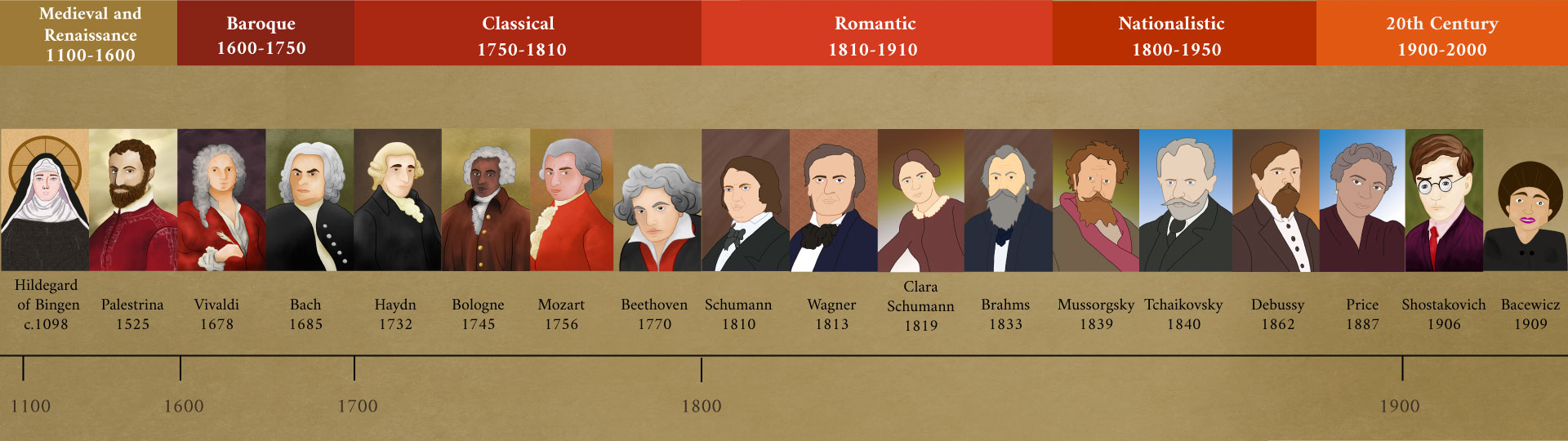
Using a piece of string marked out in centuries from 1100 to the present day, cut out the names or pictures of the composers studied and peg them onto the timeline. This will help children to form a sense of chronology. If you did this for the other videos, you can add to it. Also peg on the names given to the different eras of music studied so far: Medieval (1100-1400), Renaissance (1400-1600), Baroque (1600-1750), Classical (1750-1810), Romantic (1810-1910), Nationalistic (1800-1950).
Explore the resources at Ten Pieces to find out more about ‘Night on the Bare Mountain’ by Modest Mussorgsky.
Explore the resources at Ten Pieces to find out more about ‘Overture’ by Grażyna Bacewicz.
Explore the resources at Ten Pieces to discover more about the Symphony No 9 ‘From the New World’ by Antonin Dvořák.
Think about the immediate landscape, locality of the school or area where you live. Are there any features/buildings/recognisable places that are important to the area? If a composer was writing Nationalistic music living near where you are what localfeatures might influence them? Is there any music that has connections with your local area or any stories that a composer might try to retell as part of their composition?
Use the musical elements/interrelated dimensions as headings. Can you select one of the pieces of music listened to and describe it using these headings? Or can you select one heading, such as dynamics, and compare the dynamics of each of themusic clips in the video. Headings you might choose to consider include:
pitch (how high/low the music is)
dynamics (whether the music is quiet or loud)
tempo (if the music is fast or slow)
timbre (the quality of tone, or sound of the instrument - is it brassy, dull, sparkly, etc)
texture (is there one line, or many parts)
duration (can you feel a driving pulse? can you pick out a repeated rhythm?)
structure might also be relevant - although hard to pick out on such short clips - for example, in a song are there verses?
This episode will be relevant for teaching Music at KS2 in England, Wales and Northern Ireland. Also, Second Level P5-P7 level in Scotland.
It covers listening and appraising, enabling children to develop a sensitivity to and understanding of music from varied genres, styles and different times. Children are encouraged to build a sense of chronology and begin to understand how music changed over time by listening with attention to detail to a variety of music written by the great composers.
Resources
Image of Modest Mussorgsky
Click to display the image full size.
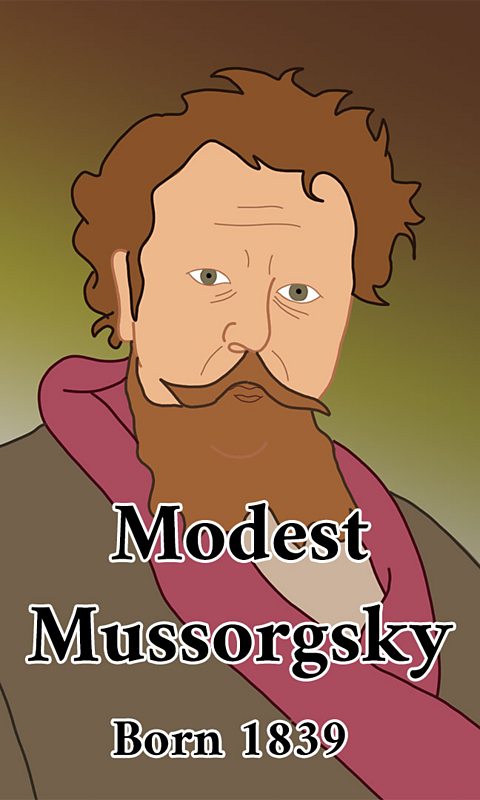
Image of Bacewicz
Click to display the image full size

A timeline of the composers
http://teach.files.bbci.co.uk/teach/music/history_of_music/composer_timeline.jpg