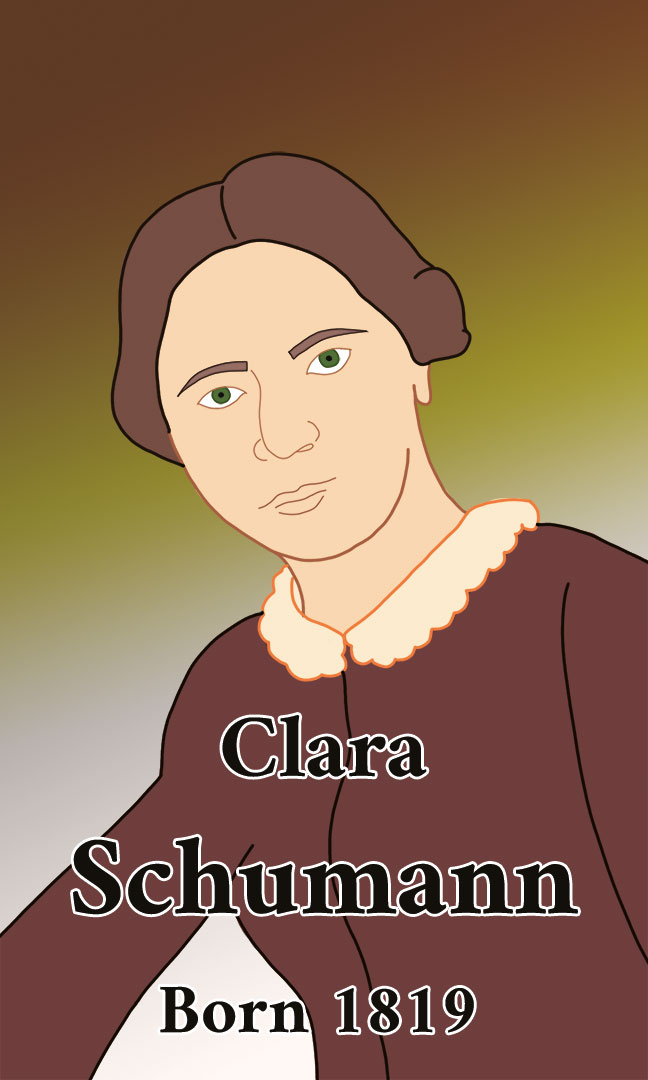
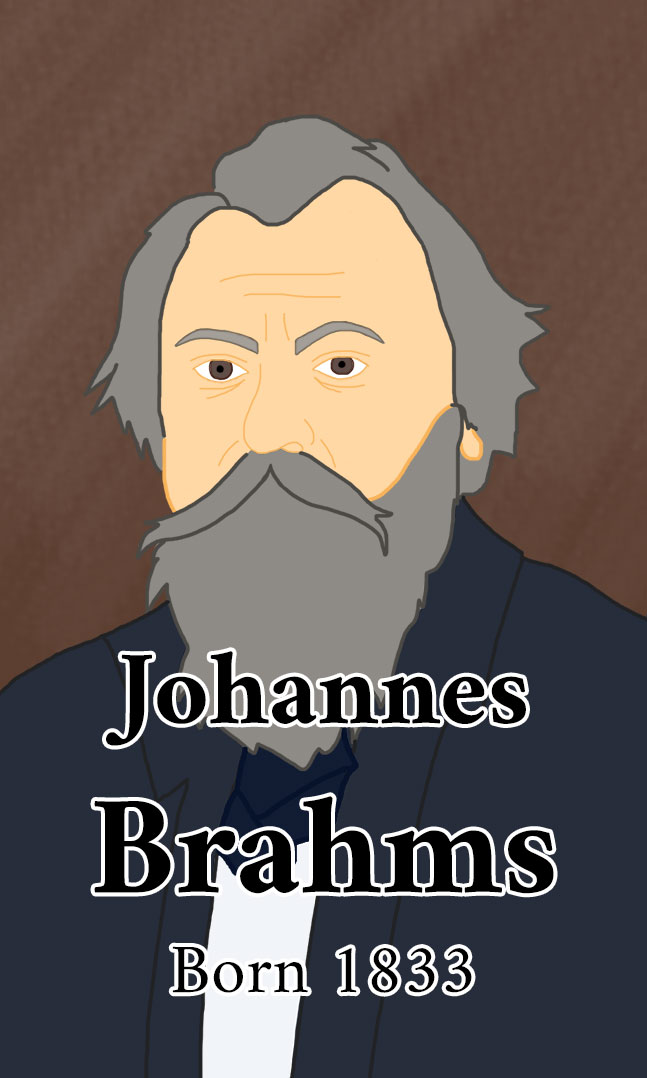
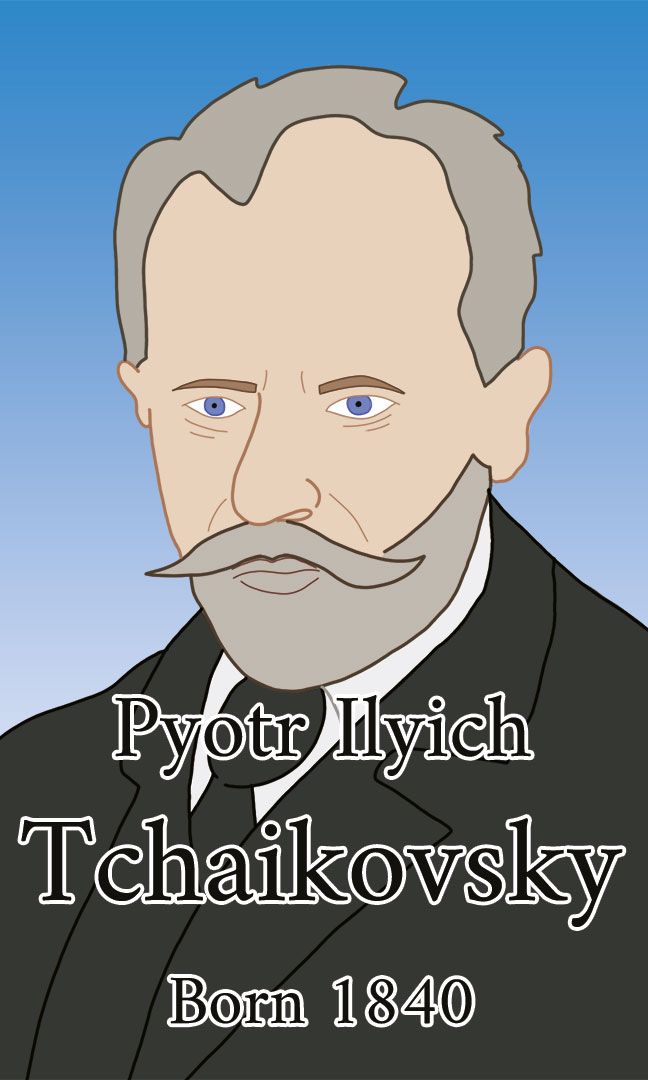
Dance, drama and emotion are the focus of the fourth video, exploring the C19th Romantic era of music. The composers include Brahms, Clara Schumann and Tchaikovsky.
The video
Naomi: Ah good morning Ludwig! I see you’ve come prepared for the period of music we’re finding out about today!
Ludwig: Zat is right Naomi… today is all about ze dance… ze drama… and ze emotion of the music!
Naomi: Oh Ludwig, you shouldn’t have! But you’re right, today we look into the 19th Century Romantic period. This era is about freedom of musical form and the expression of intense emotions. Composers began to use music to portray non-musical influences like moods, feelings, landscapes and nature, paintings, books and poems.
Ludwig: And I, Ludwig von Offbeaten, have written a poem to inspire you Naomi. ‘If music be the food of love, play on’.
Naomi: …hmmm …how original!
Many notable composers fall within this period, the list just goes on and on.
Rossini (1792-1868)Berlioz (1803-1869)Chopin (1810-1849)Mendelssohn (1809-1847)Schumann (1810-1856)Liszt (1811-1886)Verdi (1813-1901)Wagner (1813-1883)Brahms (1833-1897)Strauss (1825-1899)Grieg (1843-1907)Faure (1845-1924)Elgar (1857- 1934)Rimsky-Korsakov (1844-1908)Puccini (1858-1924)Rachmaninov (1873-1943)
…to name just a few!
And there were major improvements to the mechanism of many existing instruments. New instruments like the bass clarinet and the piccolo were created and the piano became a popular household instrument. These changes allowed composers to tell ever more dramatic stories with their music - like this piece for example, ‘The Witches Dance’, composed by Clara Schumann. Listen, can you picture some witches dancing?
From a young age, Clara was considered one of Europe’s finest pianists. She made her concert debut when she was just 11 years old and wrote this dramatic piece when she was still a teenager!
Ludwig: Another masterpiece!
Naomi: During the Romantic period, orchestras increased in size and music evolved new forms and structures. Some composers started to look towards folksong traditions of the past and incorporate those tunes into their music.
For example, Brahms, born in Germany in 1833, wrote 21 lively Hungarian dances based on existing melodies after he met and became friends with a Hungarian refugee. Notice the use of strong dance rhythms and the broad dynamic range – that’s the contrast between the loudest and the quietest notes.
And if you listen carefully you can pick out some changes in the tempo too - that’s changes in the speed of the music.
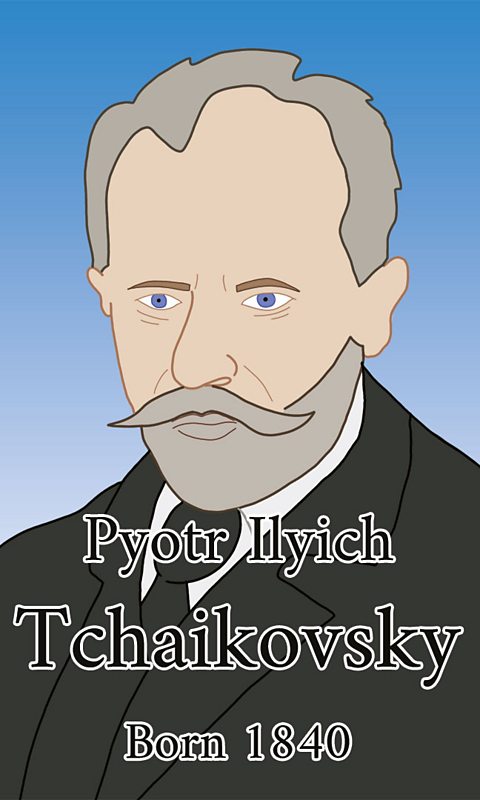
In the 19th Century, ballet became an important form of theatrical entertainment, one that we still know and love today.And one of the most famous composers of ballet music was Peter Ilyich Tchaikovsky from Russia. Tchaikovsky’s music is full of passion. He put his heart and soul into all his music. Listen to the intense drama, power and emotion in his Symphony no 5.
This music is full of contrasts. Sometimes it’s smooth and quiet, at other times it’s loud and spiky… a bit like you eh Ludwig!?
Ludwig: Me?!! - spiky???!! …NEVER!
Naomi: Hey Ludwig, why do baby swans like the music of Tchaikovsky’s ballet, Swan Lake?
Ludwig: I don’t know?
Naomi: It’s their cygnet-ure (signature) tune! Cygnets are baby swans.
Ludwig: Oh my goodness. Your attempt at comedy is truly toe-curling.
Naomi: Never mind.
Ludiwg: Awful
4. The Romantic period
Naomi introduces the Romantic period, an era when freedom of form, power and intense expression of emotions are portrayed through music. She lists many notable composers and we listen to ‘The Witches Dance’ by German composer ClaraSchumann (1819-1896), regarded from a young age as one of Europe’s finest pianists. In this era there is much more freedom of form and composers turn to other art forms for inspiration, such as paintings, books and poems.
The music of the period becomes ever more dramatic as the orchestra continues increasing in size from the Classical period. The mechanism of many instruments evolved too, allowing composers to create more musical effects. New instruments, like the bass clarinet and the piccolo, were introduced.
Folk songs were sometimes used as an inspiration by composers as they looked to the past to give them ideas for their music and we listen to a clip from one of the Hungarian Dances by Johannes Brahms (1833-1897) performed by an orchestra. The clip makes it clear that the size of the orchestra is now much larger than that of the Baroque era.
Ballet music, such as that of Russian composer Pyotr Ilyich Tchaikovsky (1840-1893), becomes a prominent genre and the symphony remains a significant musical form. All the music in this era focuses on emotion and passion and Tchaikovsky's Symphony No 5 captures this intensity. The huge forces of the orchestra can be seen with large string, wind, brass and percussion sections. The music is full of contrasts: we hear the huge crescendo of the timpani drums heralding the whole orchestra playing fortissimo (very loud), the individual melody of the oboe, and the French horn emerging from the full orchestral texture.
Teacher notes
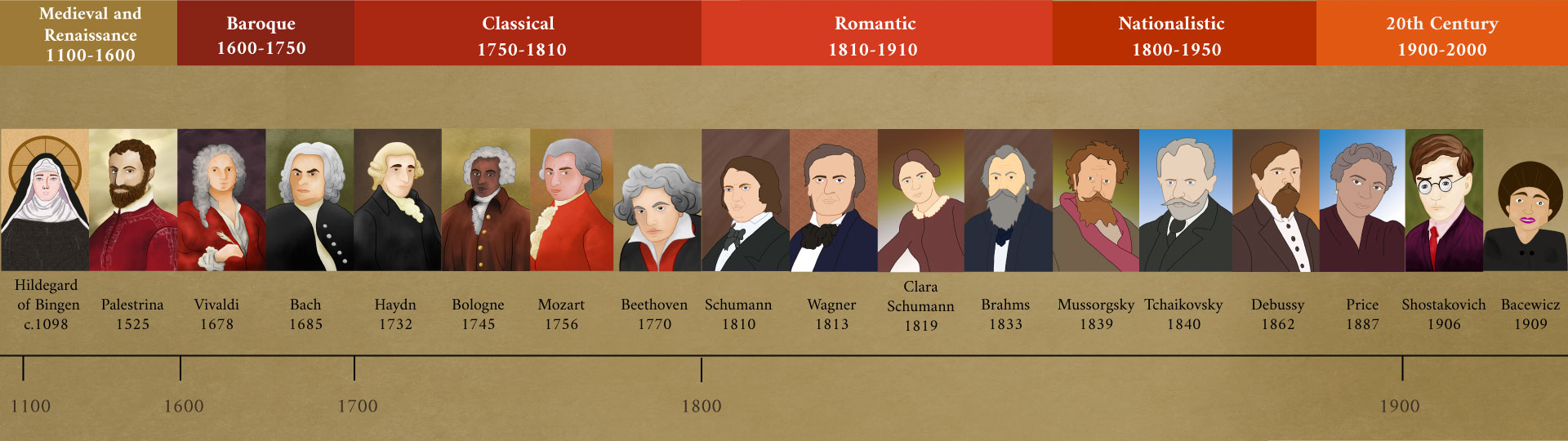
Using a piece of string marked out in centuries from 1100 to the present day, cut out the names or pictures of the composers studied and peg them onto the timeline. This will help children to form a sense of chronology. If you did this for the other videos you can add to it. Also peg on the names given to the different eras of music studied so far: Medieval (1100-1400), Renaissance (1400-1600), Baroque (1600-1750), Classical (1750-1810), Romantic (1810-1910).
Explore the resources at 10 Pieces to delve deeper into the Hungarian Dances.
Explore the resources at 10 Pieces to delve deeper into the ballet of Tchaikovsky.
Use the musical elements/interrelated dimensions as headings. Can you select one of the pieces of music listened to and describe it using these headings? Or can you select one heading, such as dynamics, and compare the dynamics of each of themusic clips in the video. Headings you might choose to consider include:
pitch (how high/low the music is)
dynamics (whether the music is quiet or loud)
tempo (if the music is fast or slow)
timbre (the quality of tone, or sound of the instrument - is it brassy, dull, sparkly, etc)
texture (is there one line, or many parts)
duration (can you feel a driving pulse? can you pick out a repeated rhythm?)
structure might also be relevant - although hard to pick out on such short clips - for example, in a song are there verses?
This episode will be relevant for teaching Music at KS2 in England, Wales and Northern Ireland. Also, Second Level P5-P7 level in Scotland. It covers listening and appraising, enabling children to develop a sensitivity to and understanding of music from varied genres, styles and different times. Children are encouraged to build a sense of chronology and begin to understand how musicchanged over time by listening with attention to detail to a variety of music written by the great composers.
Resources
Image of Clara Schumann
Click to display the image full size.
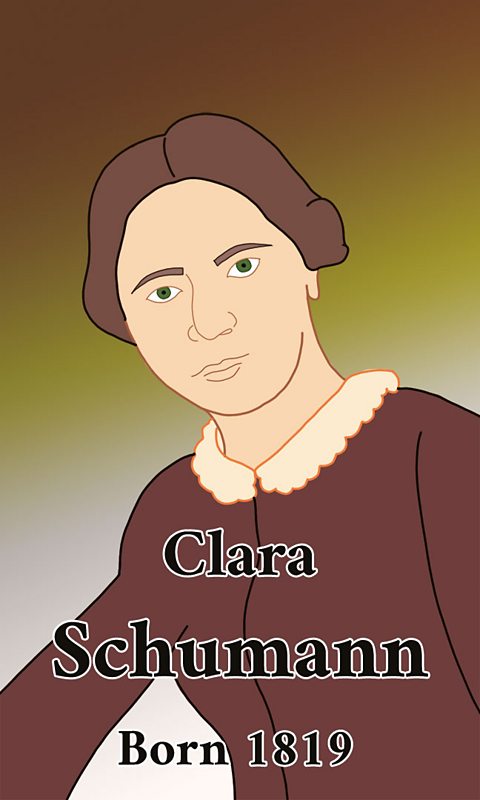
Image of Brahms
Click to display the image full size.
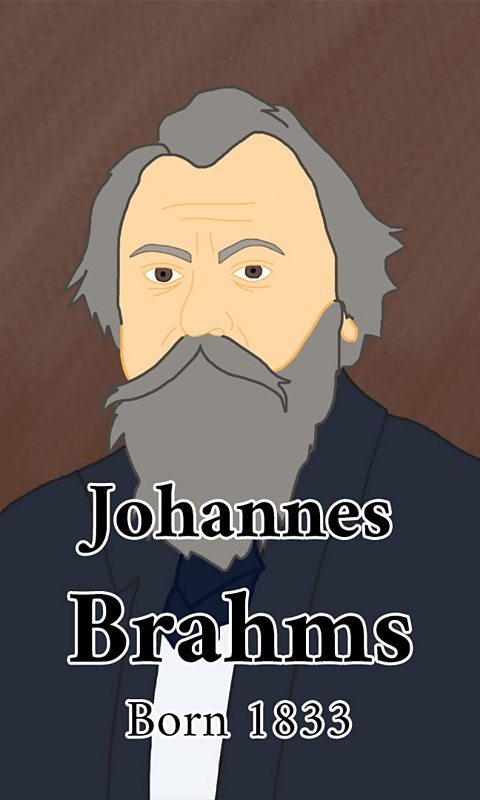
Image of Tchaikovsky
Click to display the image full size.
A timeline of the composers
http://teach.files.bbci.co.uk/teach/music/history_of_music/composer_timeline.jpg