NARRATOR: What is a food chain?
All living things, including humans, animals and plants, need energy to live. But where do they get their energy from?
The answer is easy - all living things get their energy from food.
Plants make their own food with the help of sunlight, air and water. Animals and humans don’t produce their own food, so they need to eat plants or other animals to get energy and survive.
They are all part of a food chain.
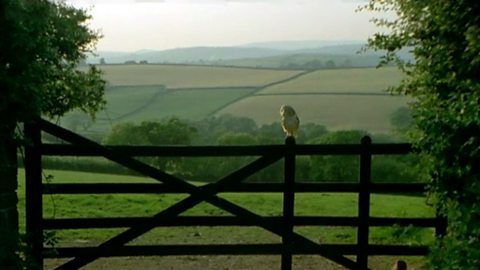
A food chain shows how plants and animals depend on each other as their source of food. For instance, a caterpillar eats plants, mice eat caterpillars, and owls eat mice. There! A perfectly simple food chain.
And we can see food chains happening underwater too. Algae is eaten by small fish, small fish are eaten by bigger fish, and bigger fish are eaten by sea lions who are then eaten by sharks!
There are lots of different food chains taking place around us but food chains usually start with a plant and finish with a big, hungry animal.
CHILD: Like me!
Video summary
An animation that illustrates and explores food chains.
A simple food chain - plant, caterpillar, mouse, owl - is presented as a set of interlocking jigsaw puzzle pieces. An underwater food chain is shown, too. The clip concludes by showing us our own place in a food chain.
Teacher Notes
- Each pupil could choose their favourite animal and then find out about what it eats.
- The pupils could then draw a simple food chain that involves their animal on a strip of card.
- You could help your pupils to cut their card strips into simple jigsaw puzzle pieces, like the ones shown in the clip.
- The pupils could challenge their friends to complete one another’s food chain jigsaws.
This clip is relevant for teaching Science at KS1 in England and Wales, Foundation and KS1 in Northern Ireland, and early level and first level in Scotland.
The difference between nocturnal and diurnal animals. video
Discover how animals that hunt and forage at night are quiet, while those active in the daytime make lots of noise.
How have different animals adapted to their habitats? video
Explore how four separate climates lead to very different animal adaptations in lizards, camels, bats and penguins.
How squirrels collect nuts. video
Find out how hungry grey squirrels beat the coming winter by stocking up on autumn nuts and acorns.
The problems facing seabirds. video
Birds flying south for winter find their journey fraught with human-made dangers.
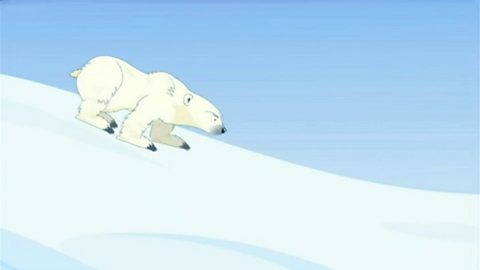
Why did the brown bear evolve into the polar bear? video
Bears migrate to the frozen Arctic and find it difficult to hunt seals until they gradually evolve to suit their habitat.
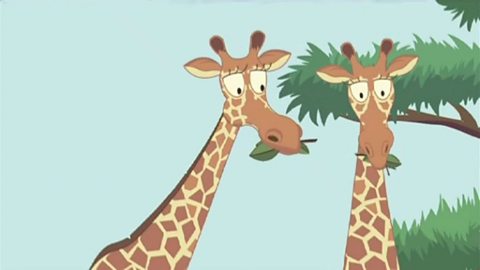
Why does the giraffe have a long neck? video
Giraffes compete for food with other animals of the African plains and adapt over time.
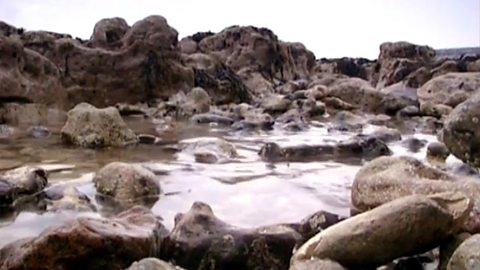
Rock pools. video
Discover how plants and animals in a beach tide pool have found ways to survive the constantly changing sea levels.
Where do owls live? video
Find out how owls survive in the snow, in forests, and even in deserts thanks to their wise adaptations.
Animals. collection
A collection of KS1 science clips about animal classification. Watch simple introductions to fish, amphibians, marine life, egg-laying animals, spiders, animals with patterns and nocturnal wildlife.