Please note: This video contains some short scenes of injured or dead seabirds, which some younger viewers may find upsetting. Teacher review is advised prior to showing to your class.
Hello. I'm Grant O'Rourke with today's Birding News.
When birds set off on their long flight to their far-off winter destinations, it's certainly no walk in the park. Dangers facing these migrating birds include bad weather - some storms can blow these birds off course. Almost half the number of birds migrating don't make their destination.
If they do manage to survive the storms, another danger they can face is starvation, as there are fewer fish in the sea. Fewer fish in the sea, eh? Now, why would that be?
Oh, well, it could be that climate change equals warmer seas, which equals less fish, because unlike us, fish like cold seas. So, if the water is getting warmer, the fish are moving away to colder waters.
The temperature of the sea around the United Kingdom has gone up by one degree, which might not sound very much to you, but it makes a big difference to the animals that live there.
Or, the lack of fish could be because of too much commercial fishing.
So, what can WE do to help sea birds? Well… we could stop dropping litter for a start! But we could also volunteer to take part in a beach clean. Litter can cause a serious amount of harm to birds, whether they eat it or get caught up in it.
We should all be careful about what we put down the toilet, too, and I'm not talking about poo here.
HE SNIGGERS
All right, all right. What I am talking about is things like this. Looks innocent enough - something you would use to clean your ears. These plastic sticks can be washed up on the beach and eaten by sea birds. Not cool. Plastic litter in general is a huge problem for all marine wildlife.
Climate change is the biggest threat to our sea birds, so do your bit to help stop global warming.
Video summary
A spoof news programme outlines the problems facing seabirds, including difficulties migrating, reduced fish stocks and littered beaches.
Students are encouraged to think about what they put down the toilet. Cotton buds and other non-biodegradable plastics can litter beaches and threaten marine wildlife.
Please note: This video contains some short scenes of injured or dead seabirds, in the context of demonstrating the challenges they face, which some younger viewers may find upsetting. Teacher review is advised prior to showing to your class.
This clip comes from the BBC series, See You See Me, Coastal Birds.
Teacher Notes
- Pupils could write stories based on the bird's journey of migration and the problems it comes across.
- Encourage the pupils to identify the problems with bird migration and list all of the ways they could help. Pupils could then turn these ideas into a class assembly on conserving wildlife.
- A school trip to the beach could be consolidated by watching this clip, sharing everyone's role in keeping British beaches clean and protecting seabirds.
This clip is relevant for teaching Science at KS1 in England and Wales, Foundation and KS1 in Northern Ireland, and early level and first level in Scotland.
The difference between nocturnal and diurnal animals. video
Discover how animals that hunt and forage at night are quiet, while those active in the daytime make lots of noise.
How have different animals adapted to their habitats? video
Explore how four separate climates lead to very different animal adaptations in lizards, camels, bats and penguins.
How squirrels collect nuts. video
Find out how hungry grey squirrels beat the coming winter by stocking up on autumn nuts and acorns.
Why did the brown bear evolve into the polar bear? video
Bears migrate to the frozen Arctic and find it difficult to hunt seals until they gradually evolve to suit their habitat.
Why does the giraffe have a long neck? video
Giraffes compete for food with other animals of the African plains and adapt over time.
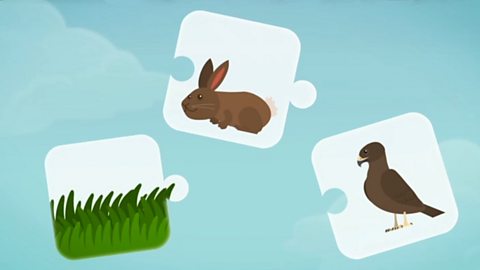
What is a food chain? video
Explore simple food chains, in which plants are eaten by prey animals, which are eaten by predators.
Rock pools. video
Discover how plants and animals in a beach tide pool have found ways to survive the constantly changing sea levels.
Where do owls live? video
Find out how owls survive in the snow, in forests, and even in deserts thanks to their wise adaptations.
Animals. collection
A collection of KS1 science clips about animal classification. Watch simple introductions to fish, amphibians, marine life, egg-laying animals, spiders, animals with patterns and nocturnal wildlife.