The sea moves in and out twice each day. It's known as the tide. At high tide, this patch of rock is under water. At low tide, the sea's drawn back and the rocks dry out in the sun.
It's changing all the time. Wet then dry, then wet, then dry. And it makes living here difficult, but some creatures do manage it. Look into these rock pools and you'll find them filled with all sorts of life.
PRESENTER: So what kind of creatures have you found here in the rock pool?
MARCUS: I've found two small beadlet sea anemones. If you look at them at the moment in the water, you see the tentacles that are out on the top there. And he's actually busy feeding at the moment. If we take him out, we can see just how well attached he is to the rock there.
PRESENTER: Yeah. He's completely stuck there.
MARCUS: This is very important to the sea anemone to make sure he's not washed away by powerful currents and waves in the sea. He's very firmly attached, but he can move if he wants to. He can move very slowly, perhaps from rock to rock, which enables him to find better feeding, in another area perhaps. We'll put this one back in the water.
We can see we've got some seaweed down here. This is very interesting. Like the sea anemone, the seaweed's very soundly attached to the rocks. This particular type is called bladderwrack, and you can see it's got lots of little air pockets in there, which when the tide comes back in and covers the weed over with water, it'll actually float up, allowing it to drift around.
PRESENTER: Seaweed and anemones have to be well stuck on because the seashore's a really tough world. All the time, the waves are crashing down, and nothing survives here without some sort of protection.
MARCUS: Oh, yes.
PRESENTER: That's a big one.
MARCUS: That looks like a shore crab. A male. Look on the underside. You can see by the shape of the tail there, that's a male.
PRESENTER: He's missing one of his claws.
MARCUS: He's actually missing two legs at the back and one of his claws. This is quite common for crabs because they often fight with each other. And then, later on, they can actually regrow their limbs back again, so they can grow a new claw or maybe new legs.
PRESENTER: A crab's shell is like a suit of armour, protecting it against all sorts of enemies - other crabs, poisonous fish, sea birds - and it's also a surprisingly good disguise.
MARCUS: This is a much smaller one. More aggressive as well.
PRESENTER: A green one this time.
MARCUS: That's right; they actually vary in colour quite considerably. The reason for that is the background. You can see all the different colours you can see in the rock pool here? Each one helps to blend in. That one's got a red underside whereas this one is green on the underside. And you can see it blowing bubbles as it's trying to breathe.
PRESENTER: I couldn't get over how much life there was in this harsh, rocky world, and Marcus had saved the best till last.
Oh, look! It's a starfish. Can I turn it over?
MARCUS: Yes, no problem at all.
PRESENTER: It doesn't bite, does it?
MARCUS: No, they don't bite at all. They're quite harmless.
PRESENTER: Oh, that's incredible. Look - all the legs.
MARCUS: Now if you look down the centre of the arms, you can see his tube feet. He has hundreds of those. They've all got little suckers on the end.
PRESENTER: And is that how he clings onto the rocks?
MARCUS: That's right, yes. And when they all move in the same direction, that's how he walks across the sea bed.
PRESENTER: Amazing!
MARCUS: Very pretty.
PRESENTER: I'd better put him back.
Video summary
A look at how the creatures who live in a rock pool survive.
The presenter begins by talking about the tide. With the help of an expert, Marcus, they explore rock pool life and how the sea anemone and seaweed anchor themselves to rocks for stability. Finally, they look at how a crab protects itself and how it can re-grow a leg or claw if it loses one.
This clip comes from the BBC series, KS1 Science Clips, Plants and Animals in the Local Environment.
Teacher Notes
- As part of a topic on animals and their habitats, pupils could be presented with a blank picture of a rock pool and a range of animals and plants to select from.
- They can decide which creatures would live in the rock pool and explain to the class or group why they made their choices.
- Once they have watched the clip, the pupils could discuss the similar features rock pool creatures possess - suckers and camouflage, for example.
- They could design their own rock pool creature, taking into account colour and ability to withstand the force of the tides.
This clip is relevant for teaching Science at KS1 in England and Wales, Foundation and KS1 in Northern Ireland, and early level and first level in Scotland.
The difference between nocturnal and diurnal animals. video
Discover how animals that hunt and forage at night are quiet, while those active in the daytime make lots of noise.
How have different animals adapted to their habitats? video
Explore how four separate climates lead to very different animal adaptations in lizards, camels, bats and penguins.
How squirrels collect nuts. video
Find out how hungry grey squirrels beat the coming winter by stocking up on autumn nuts and acorns.
The problems facing seabirds. video
Birds flying south for winter find their journey fraught with human-made dangers.

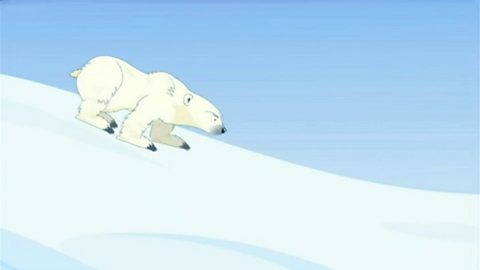
Why did the brown bear evolve into the polar bear? video
Bears migrate to the frozen Arctic and find it difficult to hunt seals until they gradually evolve to suit their habitat.
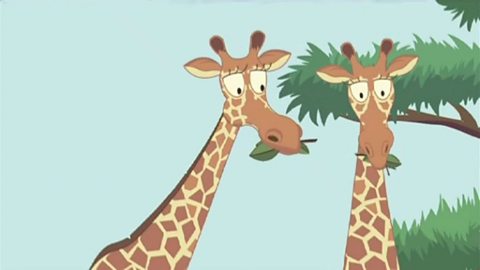
Why does the giraffe have a long neck? video
Giraffes compete for food with other animals of the African plains and adapt over time.
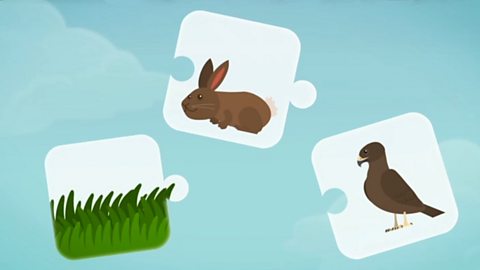
What is a food chain? video
Explore simple food chains, in which plants are eaten by prey animals, which are eaten by predators.
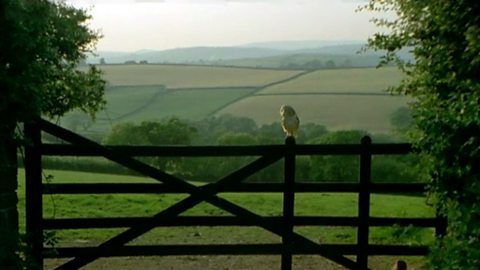
Where do owls live? video
Find out how owls survive in the snow, in forests, and even in deserts thanks to their wise adaptations.
Animals. collection
A collection of KS1 science clips about animal classification. Watch simple introductions to fish, amphibians, marine life, egg-laying animals, spiders, animals with patterns and nocturnal wildlife.