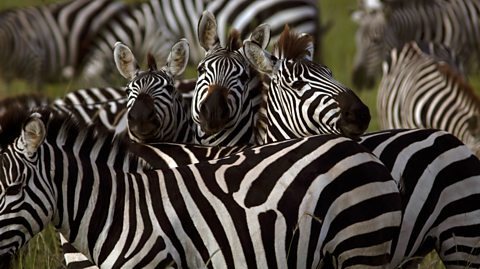
It's always much quieter at night, isn't it?
Most animals are tucked up asleep. But some are out and about.
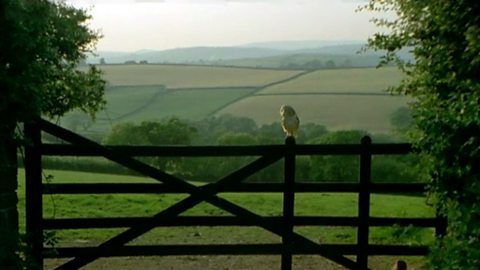
This barn owl is looking for its dinner. It flaps its wings very quietly so that nothing can hear it coming.
These are voles. And they have to keep quiet or a hungry barn owl might hear them. They come out to look for food at night too.
Bats also come out at night-time. These bats have great big ears so they can hear another very quiet animal - moths. Bats like to eat moths. But they can't see very well, so they use those huge ears to listen out for them.
Now, these cats are special cats from India. They're called fishing cats because they like to go fishing at night. They have to be really quiet when they're fishing or the fish will hear them coming and swim away. Caught one!
When the night ends and it starts to get light, all the quiet night animals go to bed and all the noisy day animals wake up.
All the birds start to sing as it gets lighter. Lots of different birds join in the singing.
WARBLING
This is called a dawn chorus.
Now, THIS is a very noisy bird. It's a lyrebird and it comes from Australia. It's very clever because it can copy just about any noise it wants to. Like the call of this kookaburra.
MIMICS KOOKABURRA
It can sound like all kinds of things.
CLICKS AND WHIRRS
Like a camera!
WAILING
Or a noisy car alarm!
GRINDING AND WHIRRING
Or even the sound of someone chopping down a tree.
SAWING
The lyrebird is an amazing bird.
Now, these creatures seem quite quiet. But just wait.
HOWLING
They really howl. Which is probably why they're called howler monkeys. They're some of the noisiest creatures in the world.
HOWLING CHORUS
Video summary
A short video about the significant differences in adaptations between nocturnal and diurnal creatures. The two groups take different approaches to stealth and vocalisations.
The video shows bats, owls and fishing cats and discusses how they use stealth at night. Daytime creatures display loud calls, with the loud cackling laugh of a kookaburra mimicked by a lyrebird in a concert that also contains the sounds of a car alarm, camera and chainsaw.
This clip comes from the BBC series, Our Planet, Loud and Quiet and Oak Trees.
Teacher Notes
Pupils could practise imitating birdcalls, including some of those illustrated in the clip. Listen again to the 'dawn chorus' section of the clip, then ask pupils to produce a dawn chorus of their own, gradually joining in with their own bird imitation, until the whole class is singing.
- Pupils might enjoy a visit to an outdoor area, where they can listen out for birdcalls. Alternatively, they could research birdsong using internet sources.
- Ask the pupils to co-operate to draw a set of cards, showing all the different animals from the clip. They could add any other animals they know to be active mostly by day or by night. Shuffle the cards and challenge individuals to sort them into a 'day' and 'night' pile. The fastest sorter wins.
This clip is relevant for teaching Science at KS1 in England and Wales, Foundation and KS1 in Northern Ireland, and early level and first level in Scotland.
How have different animals adapted to their habitats? video
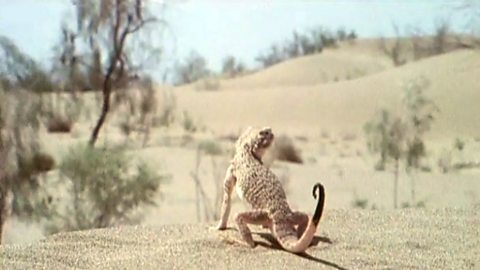
Explore how four separate climates lead to very different animal adaptations in lizards, camels, bats and penguins.
How squirrels collect nuts. video
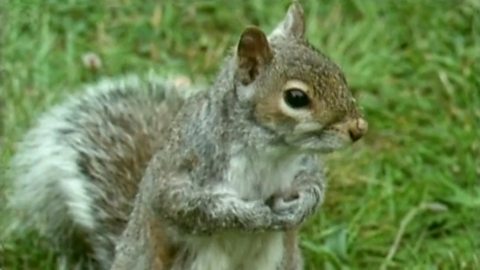
Find out how hungry grey squirrels beat the coming winter by stocking up on autumn nuts and acorns.
The problems facing seabirds. video
Birds flying south for winter find their journey fraught with human-made dangers.
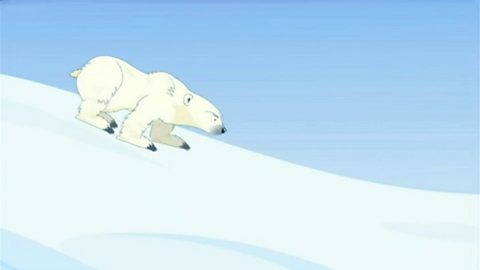
Why did the brown bear evolve into the polar bear? video
Bears migrate to the frozen Arctic and find it difficult to hunt seals until they gradually evolve to suit their habitat.
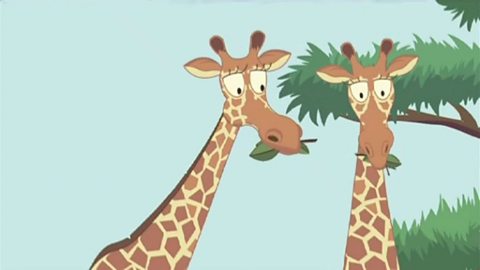
Why does the giraffe have a long neck? video
Giraffes compete for food with other animals of the African plains and adapt over time.
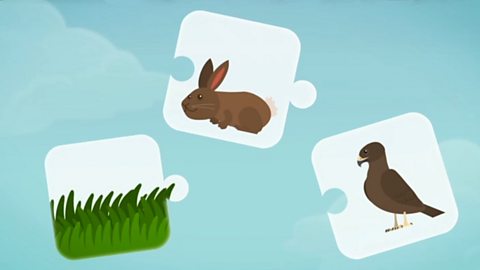
What is a food chain? video
Explore simple food chains, in which plants are eaten by prey animals, which are eaten by predators.
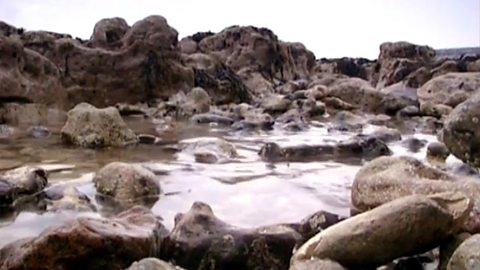
Rock pools. video
Discover how plants and animals in a beach tide pool have found ways to survive the constantly changing sea levels.
Where do owls live? video
Find out how owls survive in the snow, in forests, and even in deserts thanks to their wise adaptations.
Animals. collection
A collection of KS1 science clips about animal classification. Watch simple introductions to fish, amphibians, marine life, egg-laying animals, spiders, animals with patterns and nocturnal wildlife.