Some animals live where the weather is always hot.
Now, this is a type of lizard called an agama. Agamas can't live where it's cold because they need the heat to keep their bodies warm. Lizards are cold-blooded.
These lizards love bathing in the sun and they have an unusual way of talking to each other. They use their curly tails to make signals. It's a bit like waving but, instead of using their hands to wave, these agamas use their tails.
So these lizards live where the weather is hot.
But these penguins live where the weather is snowy and cold.
They all have to huddle together when the wind blows and it snows. This is called a blizzard. And it is so cold and icy, the penguins are covered in snow!
Penguins are warm-blooded and they have a thick skin and are nice and fat to keep them warm. They have to go fishing in the icy cold sea for their supper. They are great at swimming. And the cold water doesn't bother them at all.
So these penguins live where the weather is cold.
In some places in the world, it rains for weeks and weeks on end. It's impossible to get out of the rain! This creature is sopping wet.
Birds don't mind the rain too much because they have waterproof feathers, so the rain runs off. And these fruit bats manage to keep dry by using their wings as umbrellas.
These bats live where the weather is wet.
You might have seen these animals before. They are camels. Camels often live in the desert, where it's very hot and dry. The humps on their backs have fat in them, which means the camels don't have to have food and water for a long time.
Because deserts are so dry, when the wind blows, there are sandstorms. In the sandstorm, camels can close their nostrils and their big eyelashes help to keep out the sand. When camels find water, they drink lots and lots.
These camels live where the weather is dry.
Animals live everywhere.
Whether the weather is hot…
…cold…
…wet…
…or dry.
Video summary
A short video about how different animals have adapted to live in different habitats.
The video shows the adaptations of agama lizards for life in hot conditions, penguins for surviving Antarctic blizzards, bats that live in tropical rainstorms, and camels, who survive desert conditions and sandstorms thanks to adaptations such as fat-storing humps and long eyelashes.
This clip comes from the BBC series, Our Planet, Fish and Weather.
Teacher Notes
- This clip could be used to provide a discussion point into the different ways that animals have adapted to their environments.
- Additionally, the clip could be used as a discussion point into the type of environment lizards like. Pupils could compare similarities and differences with their own environment.
This clip is relevant for teaching Science at KS1 in England and Wales, Foundation and KS1 in Northern Ireland, and early level and first level in Scotland.
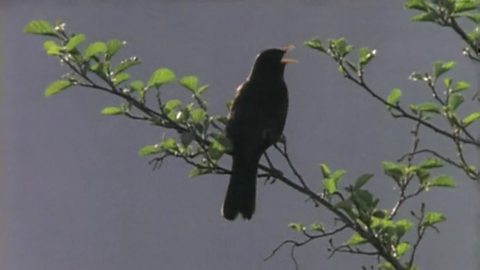
The difference between nocturnal and diurnal animals. video
Discover how animals that hunt and forage at night are quiet, while those active in the daytime make lots of noise.
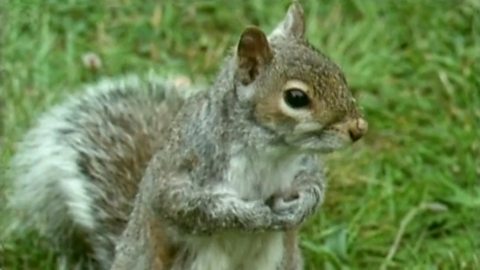
How squirrels collect nuts. video
Find out how hungry grey squirrels beat the coming winter by stocking up on autumn nuts and acorns.
The problems facing seabirds. video
Birds flying south for winter find their journey fraught with human-made dangers.

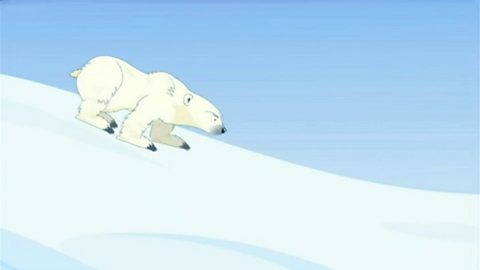
Why did the brown bear evolve into the polar bear? video
Bears migrate to the frozen Arctic and find it difficult to hunt seals until they gradually evolve to suit their habitat.
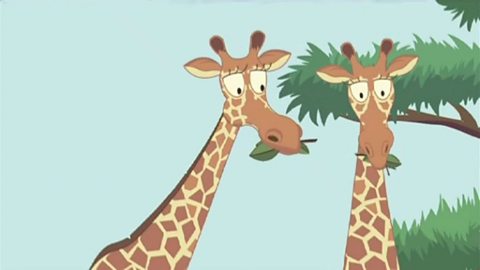
Why does the giraffe have a long neck? video
Giraffes compete for food with other animals of the African plains and adapt over time.
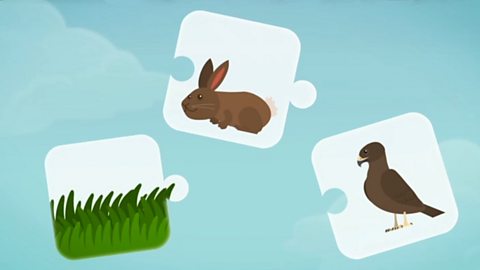
What is a food chain? video
Explore simple food chains, in which plants are eaten by prey animals, which are eaten by predators.
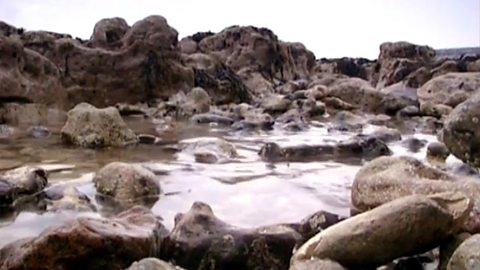
Rock pools. video
Discover how plants and animals in a beach tide pool have found ways to survive the constantly changing sea levels.
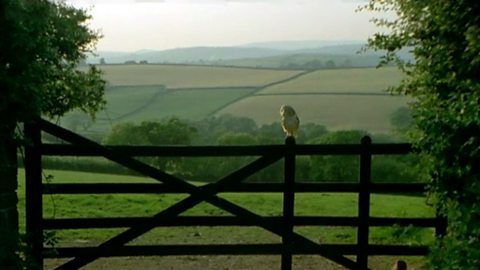
Where do owls live? video
Find out how owls survive in the snow, in forests, and even in deserts thanks to their wise adaptations.
Animals. collection
A collection of KS1 science clips about animal classification. Watch simple introductions to fish, amphibians, marine life, egg-laying animals, spiders, animals with patterns and nocturnal wildlife.