SAM: Ooh! Those leaves look so yummy! Ooh… I wish I had a longer neck so I could reach them!
GRANDDAD: Long, long ago, that's exactly what the giraffe said.
SAM: Did they?
GRANDDAD: Oh, yes! A long, long time ago, giraffes didn't have long necks. They were just like the elephants and the antelopes, whose necks were shorter.
GIRAFFE: Just look at those leaves! This is the perfect tree for a spot of lunch. Hello there, elephant! Haven't seen you for a while. How are things?
ELEPHANT TRUMPETS
ELEPHANT: Hey, over here, lads! Grub's up!
GIRAFFE: Hey! Leave me some, will you? I was here first! Ow! You're standing on my hoof. Don't mean to be pushy, but… Ah! Thank you. Very kind of you. Oh, no! They haven't left me anything to eat! Hmm. Now THEY look good!
HE STRAINS
GIRAFFE: It's no use.
SAM: Was the giraffe still hungry?
GRANDDAD: He was. Then he found another acacia tree.
GIRAFFE: Ah! Perfect!
GRANDDAD: He started to eat, when…
ANTELOPE: Go on, get out of the way!
GIRAFFE: Hold on! You don't have to push and shove, boys! There's plenty of leaves for us all, you know.
GRANDDAD: But the antelopes weren't listening. They were too busy munching.
GIRAFFE: Ooh, ow, ah! Watch it!
Very, very tasty!
GIRAFFE: There'll be nothing left for me!
SAM: So what did the giraffe do?
GRANDDAD: There was nothing he could do, other than to stand back and wait until the antelopes had had their fill.
GIRAFFE: Maybe I can… re-e-e-each those high… juicy… leaves!
ANTELOPE: Uh, got it!
ANTELOPE MUNCHES
GIRAFFE: Bother! And bother again!
SAM: It's so not fair!
GRANDDAD: Well, that's how it was for the giraffes. They had to compete with the elephants and the antelopes for food. Then, one day, after a long, long, long, long time, a giraffe was born that had a slightly longer neck. And as she grew up, she was taller than her brothers and sisters.
LONG-NECKED GIRAFFE: Hello there, how's things? …Whatever.
ANTELOPE: Hey, look at that! How come the giraffe is still eating?
LONG-NECKED GIRAFFE: Oh! Long necks can come in very handy, you know.
GRANDDAD: And she was right. With her longer neck, the giraffe could reach the juicy leaves on the high branches. She didn't get as hungry as the other giraffes. She had plenty to eat! So when she got older and had baby giraffes of her own, some of them had long necks too. And over many, many, many years, more giraffes were born with longer necks.
ELEPHANT 1: Oi, you, out of the way!
ELEPHANT 2: Hold up, guys, I don't believe it! Have you seen the length of this guy's neck?
TALL GIRAFFE: I think you'll find this is an especially good tree.
GRANDDAD: The giraffes with the longest necks found more juicy leaves, and didn't often go hungry. They survived, and the giraffes with the shorter necks didn't do so well. So after many, many, many, many, many years…
SAM: All the giraffes had really long necks! Do you think one day there will be a tortoise born with a really long neck?
GRANDDAD: Sam, that's a very interesting question.
Video summary
An animation describing how and why giraffes have developed such long necks.
Sam, a young tortoise, wishes he had a longer neck to reach the nicest leaves. Granddad Charlie tells Sam a story about giraffes.
Long ago, giraffes didn't have long necks. They wanted to eat the higher leaves but had to compete with elephants and antelopes for the lower leaves.
One day, a giraffe was born with a slightly longer neck. She could reach the food and the juicy leaves. When she had young, some of them also had longer necks and they too were better at reaching for food.
Over many years, other giraffes were born with longer necks. These giraffes survived better than the giraffes with the shorter necks, and eventually all of the giraffes had long necks.
Teacher Notes
- Using the animals in this clip, the pupils could be challenged to identify their similarities and differences.
- The clip could be used to introduce habitats and how animals live together in the same place.
- Pupils could then write their own fact sheets on giraffes, antelopes and elephants, describing where they live and what they eat.
This clip is relevant for teaching Science at KS1 in England and Wales, Foundation and KS1 in Northern Ireland, and early level and first level in Scotland.
The difference between nocturnal and diurnal animals. video
Discover how animals that hunt and forage at night are quiet, while those active in the daytime make lots of noise.
How have different animals adapted to their habitats? video
Explore how four separate climates lead to very different animal adaptations in lizards, camels, bats and penguins.
How squirrels collect nuts. video
Find out how hungry grey squirrels beat the coming winter by stocking up on autumn nuts and acorns.
The problems facing seabirds. video
Birds flying south for winter find their journey fraught with human-made dangers.
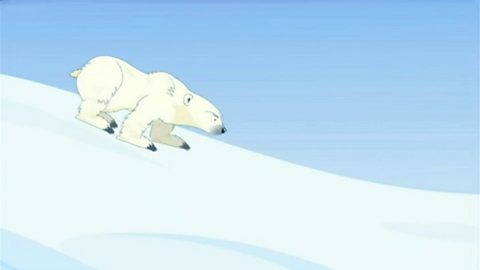
Why did the brown bear evolve into the polar bear? video
Bears migrate to the frozen Arctic and find it difficult to hunt seals until they gradually evolve to suit their habitat.
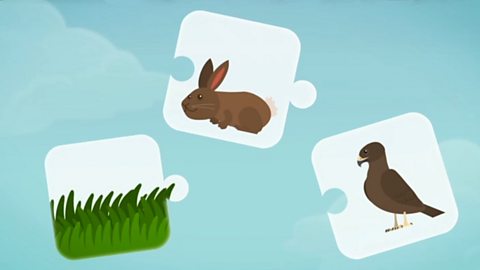
What is a food chain? video
Explore simple food chains, in which plants are eaten by prey animals, which are eaten by predators.
Rock pools. video
Discover how plants and animals in a beach tide pool have found ways to survive the constantly changing sea levels.
Where do owls live? video
Find out how owls survive in the snow, in forests, and even in deserts thanks to their wise adaptations.
Animals. collection
A collection of KS1 science clips about animal classification. Watch simple introductions to fish, amphibians, marine life, egg-laying animals, spiders, animals with patterns and nocturnal wildlife.