GCSE Food Preparation and NutritionFood Production and ProcessingIn this film you will learn:Where wheat is grown and produced in the UKhow it can be turned into flour and then the flour into brand what primary and secondary processing meansThere is a strong tradition of animal and crop farming in the UKAgriculture can be divided into 3 types:There's Arable farming which is the growing crops like wheat,barley, oilseed rape, peas, apples and soft fruits.And then there's Pastoral farmingwhich is raising animals like cows, sheep, deer and hens.Mixed farming is both arable and pastoral.In this episode we are going to look at wheat production.This is a map showing areas where wheat is grown in the UK.Most foods that we eat are processed in some way before they genear a table and wheat is no exception.I don't know anyone who eats wheat straight from the field,do you?If you do, I think you should have a word with them.Primary processing is the first process of preparinga raw food, such as milling wheat into flour.Secondary processing is when the primary product is changedto another product, such as turning wheat flour into bread.Both primary and secondary processing affects the sensory and nuproperties of the wheat and its products.Milling wheat is the process of turning wheat grains intoThe wheat grains are ground into powder by rollers.This powder contains all of the grainand that's why it's called whole grain flour.Because it contains all the grain, wholegrain flour has moreand fibre than white flour.The millers can refine it further by separating out the partthat make up the grain.They are: the bran,wheat germand endosperm, which is also known as rough semolina.The rough semolina can then be ground up some more to create whiBecause the germ has now been removed,there is no fat in white flour and this allows it to be storeThe bran and endosperm are also sold for the productionof breakfast cereals.To make bread,add yeast to flour,mix with water and knead the dough until it's silky smooth.The yeast produces the gas carbon dioxide, or CO2,causing the dough to rise before baking.During baking, the starch grains in the flour swell and burmaking them digestible.The surface of the bread browns,the scientific term for this is dextrinisation.Turning flour into bread is an example of secondary processing.So now you know:Where wheat is grown and produced in the UK,how it can be turned into flour and then the flour into breadand what primary and secondary processing means.crunch, crunch, crunch
Video summary
How do we produce bread from start to finish?
It stems from Britain's tradition of agriculture, including of animal and crop farming.
Wheat is harvested and the wheat grains milled to make flour, which is a primary process.
The secondary process is when flour is made into bread dough by adding yeast and water.
Both processes can affect sensory and nutritional properties.
Yeast, when mixed with water and flour produces carbon dioxide causing raw bread dough to rise i.e. before it is baked.
During baking, the starch grains in the flour burst making them digestible.
The surface of the bread browns.
This is known as dextrinisation.
This clip is from the series Food Preparation and Nutrition.
Teacher Notes
Students could identify a range of foods and research their processing routes from raw (primary processing) and through secondary processing.
Note the changes, including sensory properties that take place.
Examples of foods could include milk, strawberries, eggs, sardines and potatoes.
During processing foods are often preserved to keep them fresh for extended periods of time.
Students could name and explain the preservation methods suitable for a range of different vegetables, fruits, meat and fish.
Students could investigate how these methods affect sensory and nutritional qualities of the selected foods and write a short report.
This clip will be relevant for teaching Food Technology and Modern Studies at GCSE in England, Wales and Northern Ireland.
This topic appears in OCR, Edexcel, AQA, WJEC KS4/GCSE in England and Wales, CCEA GCSE in Northern Ireland.
The importance of staying hydrated. video
A guide to why hydration is vital for health and how water is lost from the body.
Food Groups and the Eatwell Guide. video
A look at how the Eatwell Guide classifies food into groups and is a guide to achieving a balanced diet.
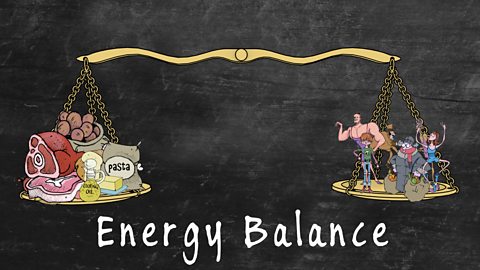
Energy needs of the body. video
An animated guide to energy needs, percentages from macro-nutrients, exercise and energy balance.
Eight tips for healthy eating. video
Discover he eight guidelines for a healthy diet include the foods we should eat more of and some to cut down on.
Healthy cooking methods. video
This animation investigates healthier cooking methods which limit the amount of oil or fat used.
What information is included on food packaging? video
This animation gives an insight into the labelling that must by law be included on food packaging, and what information it gives us.
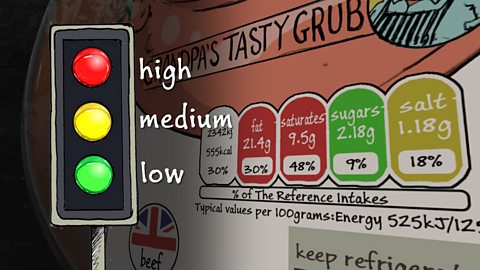
How our senses guide food choices. video
How our 5 senses guide food choices, help us identify and appreciate the smell, taste and texture of food and develop our personal preferences.
The causes of food poisoning. video
This animation outlines the causes of food poisoning, conditions for bacteria to multiply, and how to make food safe.