Greg James: GCSE Food Preparation and NutritionFood LabellingIn this film you will learn about:Labels on food packagingand the information that must be incorporated by lawincluding current nutritional labelling.European Union labelling laws are designed to make food labelseasier to understand and accurate,without being misleading or making false claims.Zero Calorie Doughnutsstuff your face and still lose weight!Yeah, I'm pretty sure they don't exist, unfortunately.Get Thin Treacle Tarts Instant results guaranteed!Or those, again sadly not.Labelling laws are designed to inform the consumerand to help them make wise nutritional choices.The following are mandatory, that means compulsory by law,to be displayed on the label.Name of productManufacturer’s name and contact detailsDescription of the productWeight – although there are some exceptions such as bread.Ingredients – in order of weightCooking or heating instructionsShelf life - the Use by & Best by datesStorage instructionsConditions of usefor example not to be consumed by babies,the elderly or pregnant women.Place of originAllergen and food intolerance,they are in bold on the ingredients list.and Nutrition labellingTurbo-Ultra-Brain Genius DrinkDoubles your IQ and it's sugar free.that can't possibly work!Mandatory nutrition labels can help you choosebetween products and check how much fat, salt, and sugar they coFind these nutrition labels on the back or side of a packageand you'll see:Information on energy in Kilojoules and KilocaloriesInformation on fat, saturates (those are saturated fats)carbohydrate, sugars, protein and salt.This information is given per 100g and sometimes per portion.On the front of packaging, by law, supermarkets and manufacturermust highlight energy, fat, saturated fat, sugars,and salt content alongside The Reference Intake for each of them.The Reference Intakes are guidelines about the approximate amountparticular nutrients and energy required for a healthy diet.Jelly Arms & Pogo Legsthe sugary sweets that give you rubbery limbs!BOING!!!And that's just plain silly.Colour-coded nutritional information tells you,at a glance, if the food has high, medium or low amounts of fat,saturated fat, sugars or salt.Red means high,amber means mediumand green means lowSo now you know about:Labels on food packagingand the information that must be incorporated by lawincluding current nutritional labelling.Grandma's Guff-Away, Anti Boff Biscuitsyou'll never poop again.musical fart noiseoh dear
Video summary
This short film is to support teaching around GCSE Food Technology and was first published in 2019.
This film demonstrates the essential information that should be displayed on food packaging by law and how to use it to it make wise nutritional choices.
Consumers should expect to see the product name, manufacturer, a product description, weight, ingredients – in order of weight, cooking or heating instructions, shelf life, conditions of use, place of origin, allergens and food intolerance's and, of course nutritional information.
These are all mandatory.
Nutritional information is designed to help consumers choose between products and check how much fat, salt and sugar they contain.
Colour coding, the traffic light system, tells people, at a glance if the food has high, medium or low amounts of fat, saturated fat, sugars or salt.
Manufacturers are not allowed to make false or ’too good to be true’ claims about their products.
This clip is from the series Food Preparation and Nutrition.
Teacher Notes
Students could devise a 20 Question Quiz on food labelling.
Test your friends and family on what they know. What did you discover? Discuss your findings.
‘Healthier Option’ food ranges are often said to be healthier than their ‘luxury’, ‘regular’ or ‘value’ counterparts.
Students could examine nutritional information on the product packaging of different versions of the same or similar product e.g. Chicken Curry, Cottage Pie, Coleslaw or Meat Pie. What did you discover? Are the claims accurate?
Students may present their findings and conclusions in a short report.
This clip will be relevant for teaching Food Technology and Modern Studies at GCSE in England, Wales and Northern Ireland.
This topic appears in OCR, Edexcel, AQA, WJEC KS4/GCSE in England and Wales, CCEA GCSE in Northern Ireland.
The importance of staying hydrated. video
A guide to why hydration is vital for health and how water is lost from the body.
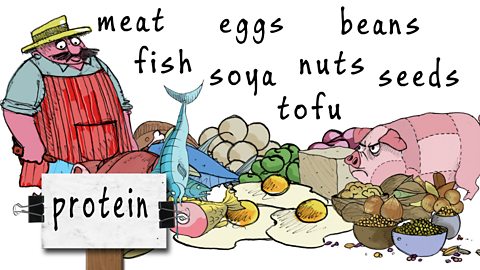
Food Groups and the Eatwell Guide. video
A look at how the Eatwell Guide classifies food into groups and is a guide to achieving a balanced diet.
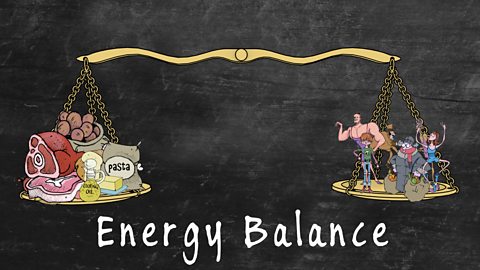
Energy needs of the body. video
An animated guide to energy needs, percentages from macro-nutrients, exercise and energy balance.
Eight tips for healthy eating. video
Discover he eight guidelines for a healthy diet include the foods we should eat more of and some to cut down on.
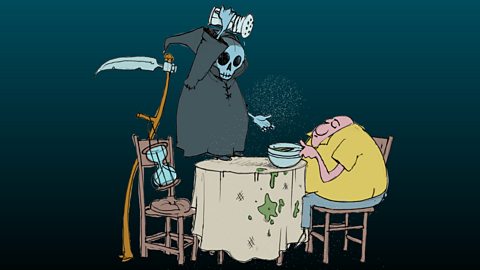
Healthy cooking methods. video
This animation investigates healthier cooking methods which limit the amount of oil or fat used.

How our senses guide food choices. video
How our 5 senses guide food choices, help us identify and appreciate the smell, taste and texture of food and develop our personal preferences.
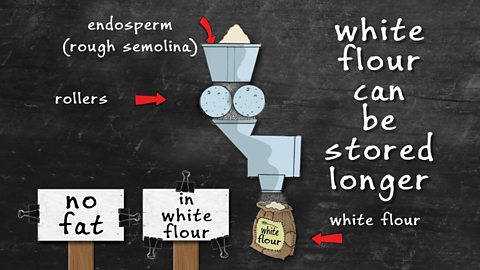
Food production. video
An introduction to primary and secondary food processing, using the example of wheat milled into flour and made into bread
The causes of food poisoning. video
This animation outlines the causes of food poisoning, conditions for bacteria to multiply, and how to make food safe.