Greg James: GCSE Food Preparation and NutritionFood Groups on a plateIn this film you will learn about:The 5 Food Groups,the foods in each groupand the main nutrients they contain.Definitions:Food Groups: a way of classifying types of foodaccording to their main nutrientsNutrients:chemicals found in food that perform a particular funcBalanced diet: eating a variety of foods to get allin the right proportions and quantities to be healAlmost all foods contain more than one type of nutrientfor example: Meat contains protein and fat as well aThe Eatwell Plate is the UK’s healthy eating modelthat shows the different Food Groups that make up ourIt's divided into sections designed to show how muchof each food group we should eat to have a balanced dieFood can be classified into 5 groups:The group that provides us with Carbohydrates forcontains Bread, cereals, flour, oats, rice, potatoes andCarbohydrates are macro-nutrientsbecause they are needed in large quantities by the bThe group comprising fruit and vegetables, is the groupwe need to eat at least 5 portions of every day.Fruit and vegetables contain plenty of fibre and valusuch as Vitamins C and Aas well as the minerals folate and potassium.Next, the group containing Milk, cheese and yoghurThese foods provide a range of nutrients, such as:Calcium:for development and maintenance of healthy teeth and boneProtein: for energy, growth and repairVitamin B12: for healthy blood cells and nerve functionand Vitamin B2 (riboflavin):to release energy from carbohydrates and protein.The food group of meat, fish, eggs, soya, tofu, beansprovides a range of nutrients, such as:Protein for growth, repair and maintenanceof healthy muscles and bones.Vitamin B12 for healthy red blood cells and nerveand Omega 3 fatty acids that help maintain normal hearFoods from the food group that contains butter, oil, marsugar and syrup should only be eaten in small amas part of a healthy and varied diet.The Eatwell Plate shows you the proportion of foofrom each food group.Don’t forget that this includes everything you eaincluding sneaky snacks.These are the percentages of food that we should eathat are represented on The Eatwell PlateFruit and vegetables 33%Bread, cereals, flour, oats, rice, potatoes and pastaMilk, cheese and yoghurt 15%Butter, oil, margarine, sugar and syrup 5%Meat, fish, eggs, soya, tofu, beans, nuts and seeSo, now you should know:The 5 Food Groups,the foods in each groupand the main nutrients they contain.Come back piggy I only want to talk!
Video summary
A fact-packed but light-hearted animation, featuring the vocals talents of Radio 1's Greg James, that takes a look at the different food groups, and how the foods we eat everyday can be classified according to their main nutrients.
The Eatwell Guide has been created by Government to help define recommendations on eating healthily and achieving a balanced diet.
The illustrated guide introduces the five food groups that make up our diet, and is divided into sections showing how much or how little of each food group we should eat to maintain a balanced diet.
The five food groups are fruit and vegetables; potatoes, breads, rice, pasta and other starchy carbohydrates; oils and spreads (the smallest section); dairy and alternatives; and beans, pulses, fish, eggs, meat and other proteins.
The largest and most important sections are fruit and vegetables and bread, potatoes, rice, and pasta, indicating that we should eat more from these sections than others, such as oils and spreads.
The guide also informs us of the importance of avoiding high fat, high sugar and salty products, of maintaining hydration and checking labelling on food packaging for fat, sugar and salt content.
This handy guide can be used when deciding what to eat, cooking a meal, shopping for groceries, or eating in a café or restaurant.
This clip is from the series Food Preparation and Nutrition.
Teacher Notes
Students could look carefully at recipes for a variety of dishes, comprising of ingredients from more than one food group.
Referring to the Eatwell Guide, students could place each main ingredient in the appropriate food groups, for example, with lasagne there is protein in the milk and meat, carbohydrate in the pasta; and fat in the roux sauce with cheese.
Students could look at the guide, and work out if the dish is balanced.
Students could compare their findings with others’ working on different dishes, and hold a class discussion on the outcomes.
Dishes could include lasagne, vegetable or meat samosas, thai fishcakes, shepherd’s pie, bolognese sauce made from vegetarian mince and served with wholemeal spaghetti, fruit scones with butter, jam and whipped cream.
This clip will be relevant for teaching Food Technology and Modern Studies at GCSE in England, Wales and Northern Ireland.
This topic appears in OCR, Edexcel, AQA, WJEC KS4/GCSE in England and Wales, CCEA GCSE in Northern Ireland.
Eight tips for healthy eating. video
Discover he eight guidelines for a healthy diet include the foods we should eat more of and some to cut down on.
The causes of food poisoning. video
This animation outlines the causes of food poisoning, conditions for bacteria to multiply, and how to make food safe.
Food production. video
An introduction to primary and secondary food processing, using the example of wheat milled into flour and made into bread
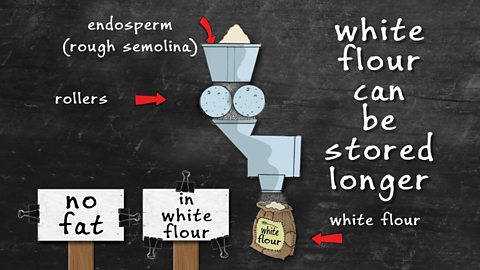
Healthy cooking methods. video
This animation investigates healthier cooking methods which limit the amount of oil or fat used.
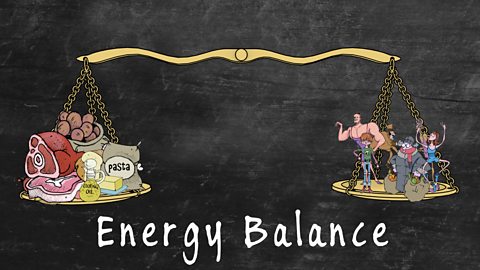
Energy needs of the body. video
An animated guide to energy needs, percentages from macro-nutrients, exercise and energy balance.
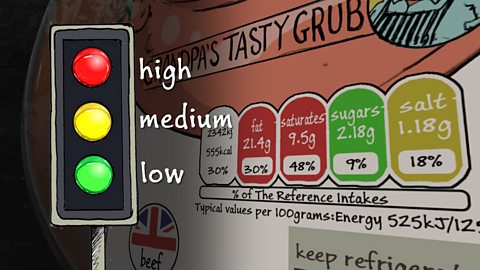
What information is included on food packaging? video
This animation gives an insight into the labelling that must by law be included on food packaging, and what information it gives us.
How our senses guide food choices. video
How our 5 senses guide food choices, help us identify and appreciate the smell, taste and texture of food and develop our personal preferences.
The importance of staying hydrated. video
A guide to why hydration is vital for health and how water is lost from the body.