Greg James: GCSE Food Preparation & NutritionHydrationIn this film you will learn about:Hydration – what it means,why it’s importantand the functions of water in the dietas well as symptoms of dehydration.When we’re talking about human needs,water is pretty high on the list,we can’t survive more than a few days without it.Hydration is the term used to describethe supplying of water to a person’s body.Water doesn't contain calories or sugar,but a chemical called fluoride, is often added to tap waterto help prevent tooth decay.We get water from lots of sources,including these.Watch out for sugar in drinks!Bottled & canned drinks or flavoured water may contain the equivalentof up to 8 teaspoons of sugar.You'll have no teeth left!Water is needed for normal body functions such as:Digesting food because it assists absorption of nutrients, bulks faecesand helps avoid constipation by moving food through the intestines.Lovely!It assists Kidney function, helping to purify theas the kidneys filter out and eliminate waste products that are thenexpelled from the body in urine.and temperature regulation.More fluid is needed in hot weather and during physical activities.Water is also essential in preventing dehydration,which is the opposite of hydration, obviously.When it becomes dehydrated, the body needs water urgently.Water is lost from the body;In waste products - urine and faecesIn perspiration, or sweat, as it evaporates from the skin.Water is also lost when you breathe.during strenuous physical exercise, respiration rates increaseand more water is lost from the body.Dehydration occurs when the body loses more fluid than it takes in.Signs of dehydration are:Feeling thirsty & having a dry mouthHeadacheLethargy and tirednessPassing less urine, less frequentlyPassing urine that is dark in colour,or darker than usual,or that smells strong.Irritability and anxietyand constipation.Someone who’s already dehydrated should avoid caffeinated drinks.Caffeine has diuretic properties causing increased urination,making the body release even more water.Severe dehydration can be life threatening.Not the happy ending we were hoping forThese are the recommendations for daily fluid intake.Athletes and people exercising vigorouslyneed additional water to replenish the waterlost through sweating and respiration.So now you should know about:Hydration – what it means,why it’s importantand the functions of water in the dietas well as symptoms of dehydration.FANCY A CUPPA?
Video summary
Why is water essential to the human body?
Water is essential for diet and functions in the body, including digestion and absorption of nutrients, kidney function, regulating body temperature regulation and preventing dehydration.
We lose water from our bodies in sweat, faeces, urine and respiration, and faster during exercise because both our respiration and sweating rates increase.
Recommended daily fluid intakes vary according to age and physical activities.
Symptoms of dehydration include thirst, a dry mouth, headache, passing less urine less frequently, constipation, irritability and anxiety …and unfortunately, as our hapless legionnaire ultimately discovers, death.
Teacher Notes
Key Stage 3: Students could prepare and serve either a water or milk- based thirst - quenching fruit drink to rehydrate an athlete after exercise.
Students could explain to others why their drink is suitable for an athlete.
They could taste the drinks and evaluate their qualities.
Key Stage 4: Students could survey fellow students to discover which bottled or canned soft drinks, including sports drinks they consume regularly.
From the can, bottle or pack information, students could calculate the amount of sugar in grams in each drink.
Show the amount of sugar in grams (and in teaspoonfuls) each drink contains on a chart.
A slightly rounded teaspoonful of sugar = 6g.
As a group or whole class, discuss the findings.
Should manufacturers be forced to reduce the amount of sugar in food and drink?
This clip will be relevant for teaching Food Technology and Modern Studies at GCSE in England, Wales and Northern Ireland.
This topic appears in OCR, Edexcel, AQA, WJEC KS4/GCSE in England and Wales, CCEA GCSE in Northern Ireland.
Eight tips for healthy eating. video
Discover he eight guidelines for a healthy diet include the foods we should eat more of and some to cut down on.

The causes of food poisoning. video
This animation outlines the causes of food poisoning, conditions for bacteria to multiply, and how to make food safe.
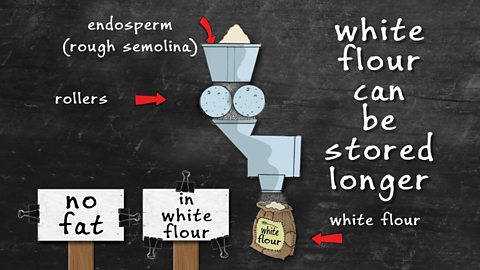
Food production. video
An introduction to primary and secondary food processing, using the example of wheat milled into flour and made into bread
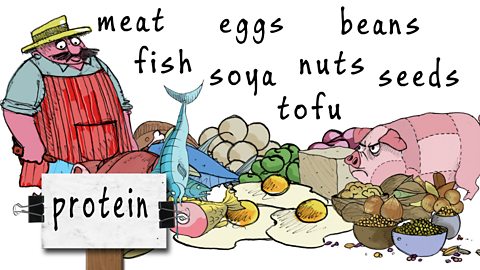
Food Groups and the Eatwell Guide. video
A look at how the Eatwell Guide classifies food into groups and is a guide to achieving a balanced diet.
Energy needs of the body. video
An animated guide to energy needs, percentages from macro-nutrients, exercise and energy balance.
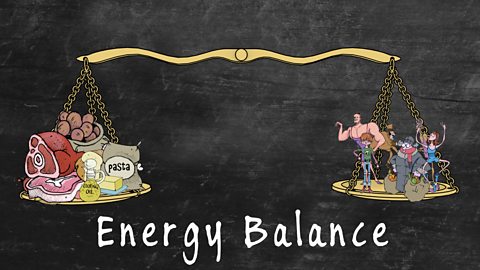
Healthy cooking methods. video
This animation investigates healthier cooking methods which limit the amount of oil or fat used.
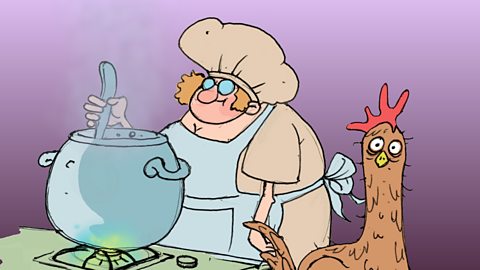
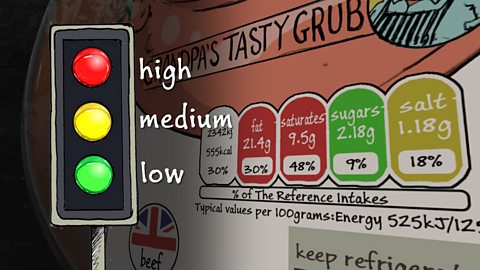
What information is included on food packaging? video
This animation gives an insight into the labelling that must by law be included on food packaging, and what information it gives us.
How our senses guide food choices. video
How our 5 senses guide food choices, help us identify and appreciate the smell, taste and texture of food and develop our personal preferences.