Greg James: GCSE Food Preparation and NutritionSensory Perception and Food ChoiceIn this film you will learn about:The sensory appreciation of foodand how the senses guide food choices.All of our 5 sensessight, hearing, smell, taste and touchenable us to evaluate and appreciate foodand develop personal food preferencesy'know, what we like or don't like.Sight Our eyes are very influential.Just seeing a picture of something yummy can make your moutSound – The sound of food being prepared, cooked,served and eaten can influence food choice.Touch - Imagine picking up a juicy-looking peach,only to have your fingers sink into a squashy bitaround the far side. Disgusting!!But touch isn't only about how the food feels in your hand.The mouth reacts to the feel of a food’s surface too.This is known as “mouthfeel”.Imagine popping a lovely piece of cake onto your tongue,only to discover its texture is wet and slimy.Or, more pleasantly, when you eat a piece of chocolate,the “mouthfeel” tells you that the chocolate is hard, smootOK guys, I really want some chocolate now!But when it comes to appreciating food,the two senses that are the undisputed superheroes are smellalso known as odourand taste.Although they work independently of each other,these two super senses work best when they are working toOdour and taste join forces to create…flavourEverything you can smell is giving off molecules.These molecules are smaller than the naked eye can seeand so light that they can float through the air and…up your nose.At the top of your nasal passages,there is a small patch of nerve cells or neurons that are covehair-like projections called cilia.The odour molecules bind to the cilia totrigger the neurons and cause you to detect a smell.you can smell PIE, you can smell PIEThe tongue detects 5 basic tastes.They are: sweet, sour, salt, bitter and savourywhich is also known as umami.The tongue is covered in prominent pink bumps known as papieach containing 3-5 sensory cells, called taste buds.It's these taste buds that detect tastesand they transmit this information via nerves to the brain.Working with your nose, the tongue is capable ofdetecting thousands of tastes and flavours.It's very slimy, but it's very clever!Our Perfect Partners: Nose and TongueSo now you should know about:The sensory appreciation of foodand how the senses guide food choices.
Video summary
This animation explains the role of the 5 senses of sight, sound, touch, smell and taste in making us appreciate food.
Our senses help us to evaluate food and make choices and develop personal preferences.
Smell (odour) and taste work together to create flavour.
Everything that we smell is giving off molecules that are so light they float through the air and up the nose.
The small patch of nerve cells or neurons at the top of the nasal passages are covered in hair-like projections called cilia.
When the neurons are triggered they cause the nose to detect a particular smell.
The tongue, the nose’s perfect partner, can detect 5 basic tastes – sweet, sour, salt, bitter and umami, a savoury taste.
Taste buds detect tastes and transmit the information via nerves, to the brain.
Working together, the nose and tongue can detect thousands of different tastes and flavours.
This clip is from the series Food Preparation and Nutrition.
Teacher Notes
How sharp are your senses? In groups, students (unseen by others) could set up Mystery Sensory Stations for others to smell, feel and taste (but not see) a range of ingredients.
Suggested items include vegetables and fruit with different textured skin, peel or flesh e.g. – green or red pepper, celeriac, kiwi fruit, lychees or rambutan, pitaya (dragon fruit), foods with a distinctive smell or taste.
Try strong smelling herbs like basil, rosemary or coriander, as well as other foods such as anchovy, golden syrup, honey, cheese, mint sauce etc.
Blindfolded, how many students could identify foods by smell alone? How many items by smell and touch? How many by smell, touch and taste? What do the findings indicate? Discuss them as a class.
Curry is a favourite dish. The students could each prepare a basic vegetable curry of their choice made with three or more separate spices* not counting chilli powder.
They should keep their recipes secret. Tasting each curry, can students identify the individual spices, not including chilli, used in each one? Students could describe the taste of each of the curries. Which spice, if any is a dominant taste?
Spices (except chilli and pepper) do not taste ‘hot’.
When some people say they dislike ‘spicy’ foods, do they mean ‘hot’ as in chilli or pepper, or those just tasting of spices?
Discuss this and highlight other ‘taste confusions’ – the distinction between sour and bitter, for example. How might these misunderstandings be avoided?
Not curry powder or ready-made masala. These are blends of a number of spices.
This clip will be relevant for teaching Food Technology and Modern Studies at GCSE in England, Wales and Northern Ireland.
This topic appears in OCR, Edexcel, AQA, WJEC KS4/GCSE in England and Wales, CCEA GCSE in Northern Ireland.
The importance of staying hydrated. video
A guide to why hydration is vital for health and how water is lost from the body.
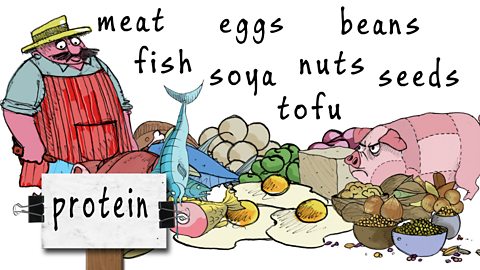
Food Groups and the Eatwell Guide. video
A look at how the Eatwell Guide classifies food into groups and is a guide to achieving a balanced diet.
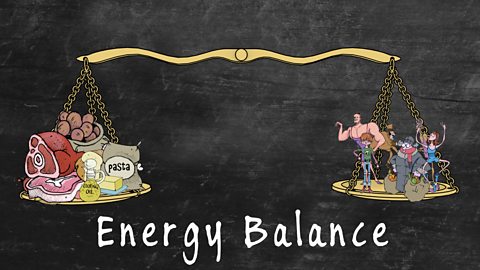
Energy needs of the body. video
An animated guide to energy needs, percentages from macro-nutrients, exercise and energy balance.
Eight tips for healthy eating. video
Discover he eight guidelines for a healthy diet include the foods we should eat more of and some to cut down on.
Healthy cooking methods. video
This animation investigates healthier cooking methods which limit the amount of oil or fat used.
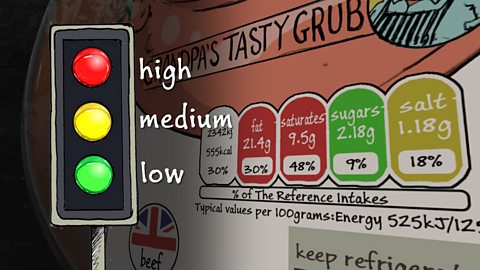
What information is included on food packaging? video
This animation gives an insight into the labelling that must by law be included on food packaging, and what information it gives us.
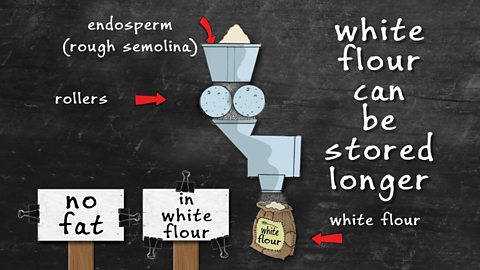
Food production. video
An introduction to primary and secondary food processing, using the example of wheat milled into flour and made into bread
The causes of food poisoning. video
This animation outlines the causes of food poisoning, conditions for bacteria to multiply, and how to make food safe.