Greg James: GCSE Food Preparation and NutritionHealthy EatingIn this episode you will learn:The 8 guidelines for a healthy dietEating healthily means eating a balanced diet.That’s eating a variety of foods to get all the nutrientsin the right proportions and quantities to be healthy.Follow these 8 Guidelines for a Healthy DietNumber 1Base your meals on starchy foods like these.Number 2Eat lots of fruit and vegetablesChoose a variety to get different combinationsof vitamins and minerals.Don’t stick to green eitheraim to eat a rainbow of colours, the more the better.Remember canned, fresh and frozen all count.Number 3Eat more fishaim to eat 2 portions per weekone of which should be oily fish, like salmon or mackerel,that's a good source of Omega 3 fatty acidand fat-soluble vitamin D for bone health.For those who don't eat fish,you can get Omega 3 from linseeds and linseed oil,also rapeseed oil, walnuts and soya-based foods like tofu.Number 4Cut down on saturated fats and sugarbut we do need some fat in our dietto provide essential fatty acidsand absorption of fat-soluble vitamin A, D, E and K.Having said that, eating too much fat and sugarcan lead to weight gain.Number 5Try to eat less saltno more than 6 grams per day for adults. Children, much less.Eating too much salt can cause high blood pressureand an increased risk of developing heart disease and strokes.Number 6Get active and try to be a healthy weight.Government recommendations for 19 – 64 year olds are150 minutes of brisk walking or cyclingor 75 minutes of high intensity physical activitysuch as running or swimming, every week.It's also recommended that you do some muscle strengthening exercislike weight lifting, or carrying heavy weights on at least two days a weNumber 7Drink plenty of waterdrink 1.6 – 2.5 litres every day.and finally Number 8Don’t skip breakfast. The most important meal of the day.a healthy breakfast featuring things like whole grain cereals, muesli,porridge, fruit and wholemeal toast will provide fibre, vitaminsand minerals as well as keeping you satisfied until lunch.So now you should know:The 8 Guidelines for a healthy diet
Video summary
The eight guidelines for a healthy diet are revealed.
Guidelines advise eating lots of fruit and vegetables and eating more fish for omega 3 fatty acid, and cutting down on saturated fats and sugar to avoid weight gain.
In addition, eating less salt, being active, drinking more water and not skipping breakfast are recommended.
The guidelines add up to a healthier approach to life.
This clip is from the series Food Preparation and Nutrition.
Teacher Notes
Students could create an illustrated explanation of each of the 8 healthy diet guidelines especially to help younger children to understand them.
Students should consider the age of the children and the form and format of the presentation.
To obtain feedback, students could trial their work in a primary school or other setting – club or after-school class.
Students could examine the diets and exercise levels of 2 young people of their own age.
Record everything they eat and drink over 3 days.
Analyse the findings.
Are the 8 Guidelines for a Healthy Diet being followed?
They could give an opinion of their diets and what changes, if any, would be necessary for them to be healthier?
Explaining their reasons why.
This clip will be relevant for teaching Food Technology at KS3 or KS4.
This topic appears in OCR, Edexcel, AQA, WJEC KS4/GCSE in England and Wales, CCEA GCSE in Northern Ireland.
The causes of food poisoning. video
This animation outlines the causes of food poisoning, conditions for bacteria to multiply, and how to make food safe.
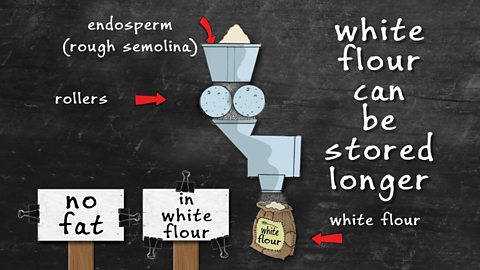
Food production. video
An introduction to primary and secondary food processing, using the example of wheat milled into flour and made into bread
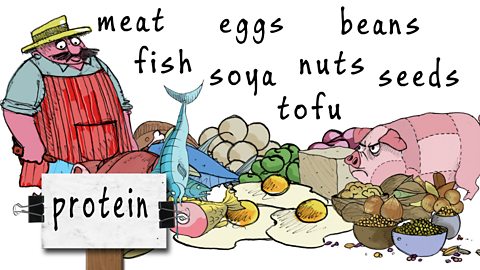
Food Groups and the Eatwell Guide. video
A look at how the Eatwell Guide classifies food into groups and is a guide to achieving a balanced diet.
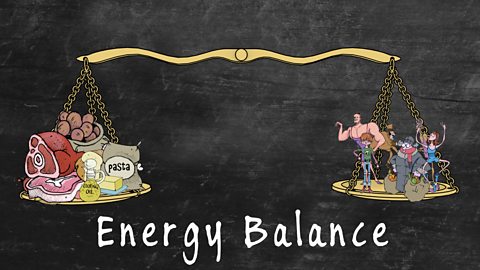
Energy needs of the body. video
An animated guide to energy needs, percentages from macro-nutrients, exercise and energy balance.
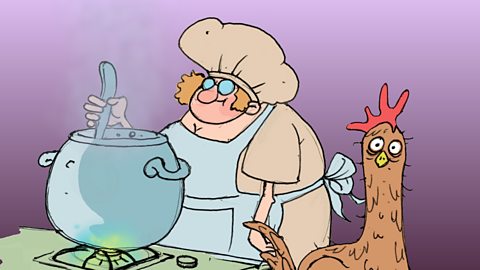
Healthy cooking methods. video
This animation investigates healthier cooking methods which limit the amount of oil or fat used.
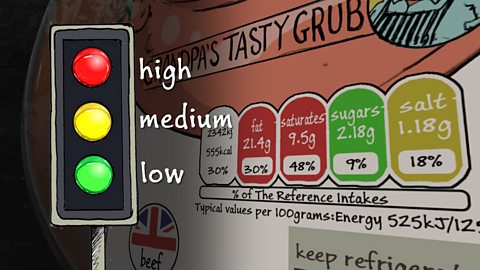
What information is included on food packaging? video
This animation gives an insight into the labelling that must by law be included on food packaging, and what information it gives us.
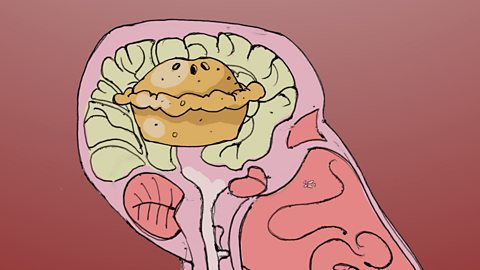
How our senses guide food choices. video
How our 5 senses guide food choices, help us identify and appreciate the smell, taste and texture of food and develop our personal preferences.
The importance of staying hydrated. video
A guide to why hydration is vital for health and how water is lost from the body.