LC:Silent letters are found in lots of English words and because you can’t hear them when you say the word it makes spelling these words really tricky.
Bahhh. We all know this is a lamb ahhhh, Baaa and from the sound of it (lamb) you would expect the word to be spelt l, a, m.
But lamb has a b on the end of it: l, a, m - b.
Ha ha! Not that kind of bee – the letter b.
If we pronounced it as lamb (pronounce the b) it would be easy to spell; but the b is silent which means we must use our incredible brain power to remember the b when we write it.
So, I hear you ask, what’s the point of that pesky b?
Well let me tell you a story - long, long, long ago invading warriors like the Anglo-Saxons and the Vikings, they turned up in this country bringing lots and lots of their own words with them. One of their words was lambaz which is an old Germanic word for a young sheep. The word caught on and soon everybody was using it. “Mary had a little lambaz its fleece as white as snow!” said everyone!
Overtime people stopped pronouncing the baz bit of lambaz and we ended up with the lamb sound we know today. But because lambaz has already been written down in books…
…the b was kept. I like to think of the silent b as a sort of keepsake to remind us all of lambaz.
Lambaz!
LC:There are quite a few words with these silent keepsake bs.
The word Kambaz is another old Germanic word. Kambaz describes a toothed object which you can use to untangle your hair. Over the years the baz sound was dropped and the kam became comb but still spelt with a b. Try and remember that silent b the next time you kambaz your hair.
Bombus is a word borrowed from the Latin language and describes a booming sound. We dropped the ‘bus’ sound long ago when saying the word, but in spelling the ‘b’ was kept.
Climban is an Anglo Saxon word and we get the word clamber and the word climb from it. The word clamber has kept the b in the spelling and the pronunciation, but the word climb has only kept it in the spelling.
“Climban every mountain … ford every stream! …“
Sorry about that. Anyway, crumb has a b in it which we honestly believe was just popped in there about 300 years ago by someone who thought it would match up with other mb ending words like thumb, dumb, and numb. I always remember the b in crumb by thinking of apple crumble because the b of crumb can actually be heard in the word crumble.
I remember the silent b in limb by thinking about limbering up my limbs.
Plumber is spelt with a silent b but this is because the word originally came from the Latin word for lead which is plumbum. The Roman’s made water pipes from plumbum and the people that did this metal work were called ‘plumbarius’. So the b has been left in our spelling but not in the pronunciation.
My final silent b comes from another Latin word dubitare which means to question and hesitate. Our word dubious comes from it. Dubious means to doubt and doubt comes from the same Latin word dubitare. You can hear the b in dubious but its silent in doubt.
Silent letter stories are fascinating and I love finding out new ones plus they are also great at helping me remember the silent letters in my spelling. Of course lots of our silent letter stories have been lost in time so in those cases I just think up something silly to help me remember. Here’s one you might like – ahemm here goes “A dumb bee made my thumb go numb” Do you get it? A dumb bee is a silent b and dumb, thumb and numb all have silent bs in them. It works for me I hope it works for you.
Video summary
These types of words with silent letters are hard to spell because they cannot be heard when the word is spoken.
For these types of words, it is necessary to learn and remember the silent letters.
Silent b is introduced in the word ‘lamb’.
To help remember this silent letter, there is a story of how the word was originally spelt – lambaz – in old Germanic.
Over time the ‘baz’ at the end of the word was dropped from the pronunciation but the ‘b’ remained in the spelling of the word.
The word ‘kambaz’ is the old Germanic word for 'comb' and a similar thing happened to this word too.
The word 'bomb' was originally ‘bombus’, a Latin word that described a booming sound.
The ‘us’ has been dropped but the ‘b’ remained.
Another word that was used by the Anglo-Saxons was ‘climban’ – which has dropped the ‘an’ but kept the ‘b’.
Finally, two words from the Latin language, 'plumb' and 'doubt', are explained.
This short film is from the BBC series, Wonderful Words, a series of animated clips to support vocabulary knowledge.
Teacher Notes
This short film could be used in teaching about the silent letter b and to reinforce spellings containing silent letters.
Pupils could write a short story incorporating words with a silent b.
This could also be used as part of a history topic on the origin of words.
This short film is relevant to teaching English at KS2 level in England and Northern Ireland and Second Level in Scotland.
Prefixes. video
A fun, animated guide explaining how prefixes can usually be added to the beginning of words.
Homophones. video
A fun, animated guide explaining that homophones are two or more words that sound the same but have different meanings and often different spellings.
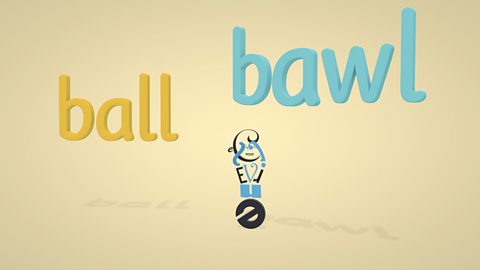
Homophone sentence show. video
A fun, animated introduction to homophones, which are similar sounding words that have different meanings and are often spelled differently.
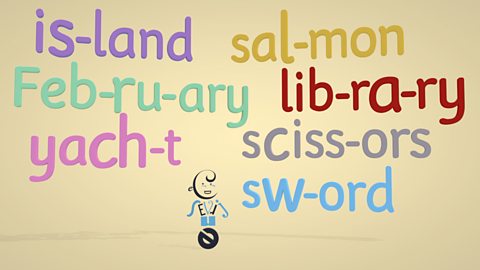
Silent letters. video
An animated guide to words containing silent letters.
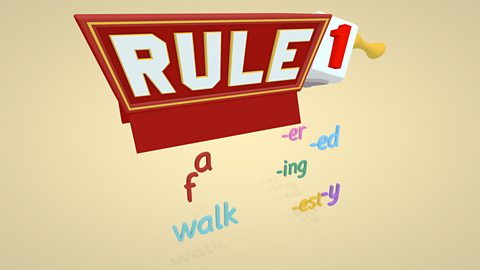
Suffixes - part 1 of 4 video
A fun, animated guide to the rules for adding the suffixes 'er', 'ing', 'ed', 'est' and 'y'.
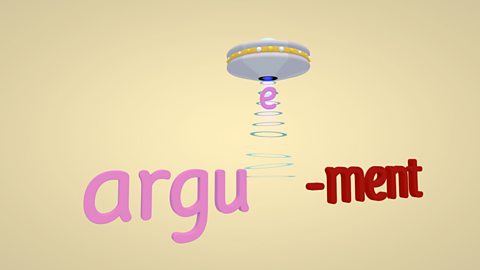
Suffixes - part 2 of 4 video
A fun, animated guide to the rules for adding the suffixes 'ment' and 'ly'.
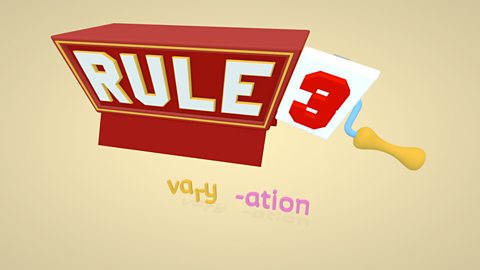
Suffixes - part 3 of 4. video
A fun, animated guide to the rules for adding the vowel suffix 'ation'.
Suffixes - part 4 of 4. video
A fun, animated guide to the rules and exceptions for adding the vowel suffix 'ous' to root words.