Letter Character:Homophones are two or more words that sound the same but have different meanings. Like the word ball and …
Awahhh! … bawl. Boohoo!
Homophones can be tricky but once you understand the different meanings and learn the different spellings you’ll get on just fine. Let’s start with a set of homophones you probably all recognise …
… their, there and they’re. Though they sound the same, each is spelt differently and has its own meaning. Have a think about how you would write the sentence: “they’re over there with their dad” …
To spell the sentence correctly you need to know that there spelt t, h, e, r, e, has a meaning which indicates place, like the word ‘here’ does.
In this case the place is on the other side or over there.
Their spelt t, h, e, i, r means something that ‘belongs’ to them similar to other belonging words like my, your and our. In this case dad belongs to them – their dad
They’re spelt t, h, e, y apostrophe r, e – is a contracted form of they are where the apostrophe has replaced the a of are.
Here’s a useful tip - try a test read using the full version of they’re without the apostrophe to check it works in the sentence.
they are over there with their dad makes sense so we can be confident we’ve got the meaning and spelling right! But if we had tested they are here …
they are over there with they
are dad; doesn’t work at all does it?!
When using the there, spelt t, h, e, r, e and meaning a place, try swopping it with another place meaning word like here to see if it makes sense…
… they’re over here with their dad; works okay doesn’t it? This tells us that the use of the place meaning there is correct.
You can also try swopping the belonging their with another belonging word like our to test if you’re on the right track
they’re over there with our dad makes sense doesn’t it? So we can be confident that the belonging there is the right choice.
LC:So now that we’ve checked out all our meanings and spellings we just have to pop a capital letter at the start of the sentence…
and end it with a full stop.
Now that we’ve got that sorted I’m off to say hello. Where are they? Oh, there they are. Cooee!
Video summary
It is important to distinguish between homophones so that the correct spelling is used.
Examples of common homophones are demonstrated, such as 'ball' and 'bawl', before focusing on the homophones: their / there / they’re.
There are detailed explanations and examples of the three words, used in context, with various strategies to help pupils remember which is the right word to use in different situations.
This short film is from the BBC series, Wonderful Words, a series of animated clips to support vocabulary knowledge.
Teacher Notes
This short film could be used to introduce or to reinforce the different meanings and spellings of the homophones their, there and they’re.
Pupils could write a short story incorporating as many different homophones as possible.
This short film is relevant to teaching English at KS2 level in England and Northern Ireland and Second Level in Scotland.
Prefixes. video
A fun, animated guide explaining how prefixes can usually be added to the beginning of words.

Homophone sentence show. video
A fun, animated introduction to homophones, which are similar sounding words that have different meanings and are often spelled differently.
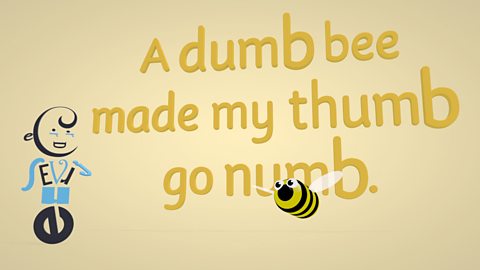
Silent letter b. video
A fun, animated guide explaining that silent letters are found in lots of English words.
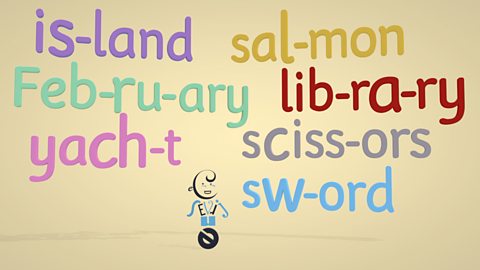
Silent letters. video
An animated guide to words containing silent letters.
Suffixes - part 1 of 4 video
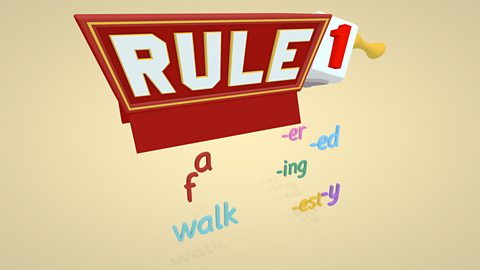
A fun, animated guide to the rules for adding the suffixes 'er', 'ing', 'ed', 'est' and 'y'.
Suffixes - part 2 of 4 video
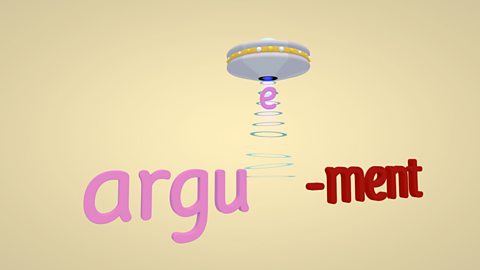
A fun, animated guide to the rules for adding the suffixes 'ment' and 'ly'.
Suffixes - part 3 of 4. video
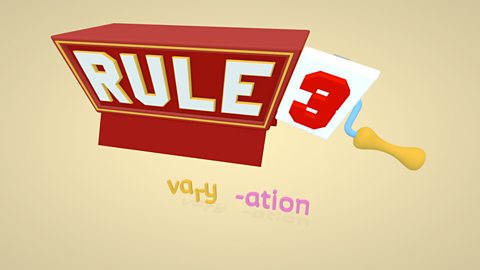
A fun, animated guide to the rules for adding the vowel suffix 'ation'.
Suffixes - part 4 of 4. video
A fun, animated guide to the rules and exceptions for adding the vowel suffix 'ous' to root words.