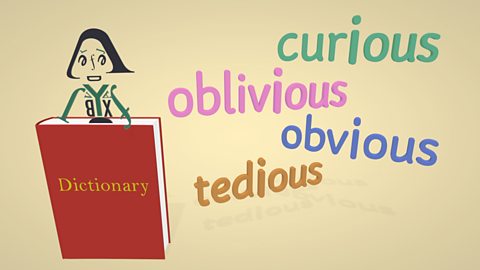
Letter Character (male):Hi everybody and a big, big, big, welcome to the Homophone Sentence Show! Homophones are what we call two or more words that sound the same but have different meanings.
We’ve got sentences stuffed full of homophones and your job is to listen out for those similar sounding words, learn the meanings and remember the spellings. So let’s get started!
Letter Character (female):I hear it’s here!
LC (male):Keeping the peace is a piece of cake - peace and piece do you get it?
LC (female):That was my cake! Ohhh!
LC (male):Don’t worry; I’ve seen her make a scene like this before.
LC (female):It’s big enough to make a grown man groan.
LC (female):Humphh!
LC (male):She will accept cake from everyone except me!
LC (male):Who's going to decide whose cake this is?
I will
LC (male):So how did you do?
LC (male):We had hear and here,
LC (female):peace and piece,
LC (male):seen and scene
LC (female):grown and groan,
LC (male):accept and except
LC (male):and finally the tricky who’s and whose. Did you remember that who's spelt w, h, o, apostrophe, s is a contraction of ‘who is’ and that whose spelt w, h, o, s, e is a pronoun, like their or mine. It’s used when something belongs to somebody but we don’t know who that somebody is.
LC (female):So listen out for those similar sounding words. By learning the meanings and remembering the spellings you’ll never confuse your homophones!
Here’s a few more for you to think about…
The male voice choir always gets a lot of fan mail!
He took a tea break - slurp-ahhh - before fixing the brake light
The fire burning in the grate dried the cheese making it great to grate.
LC (male):Goodbye!
LC (female):Bye!
Video summary
A pair of homophones are demonstrated being used in the same sentence, shown pictorially to represent their meaning.
Some of the example sentences include; 'I hear it’s here', 'Keeping the peace is a piece of cake', 'Don’t worry I’ve seen him make a scene like this before' and 'It’s big enough to make a grown man groan'.
There is a final recap of all the homophones used with an explanation of who’s and whose; ‘who’s’ is a contraction of ‘who is’, whereas ‘whose’ is a pronoun like mine or their.
This short film is from the BBC series, Wonderful Words, a series of animated clips to support vocabulary knowledge.
Teacher Notes
This short film could be used to introduce or to reinforce the different meanings and spellings of common homophones.
Pupils could be given a passage that includes a variety of homophones, and asked to find them all.
This short film is relevant to teaching English at KS2 level in England and Northern Ireland and Second Level in Scotland.
Prefixes. video
A fun, animated guide explaining how prefixes can usually be added to the beginning of words.
Homophones. video
A fun, animated guide explaining that homophones are two or more words that sound the same but have different meanings and often different spellings.
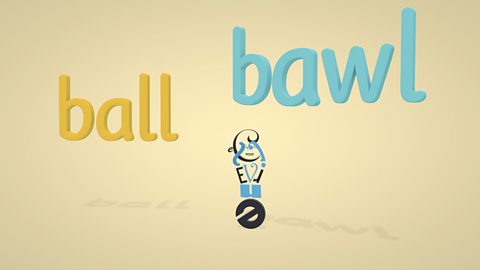
Silent letter b. video
A fun, animated guide explaining that silent letters are found in lots of English words.
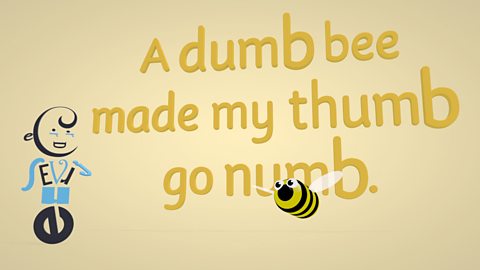
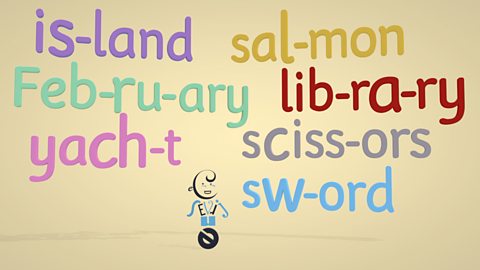
Silent letters. video
An animated guide to words containing silent letters.
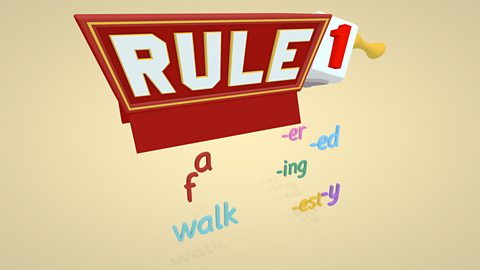
Suffixes - part 1 of 4 video
A fun, animated guide to the rules for adding the suffixes 'er', 'ing', 'ed', 'est' and 'y'.
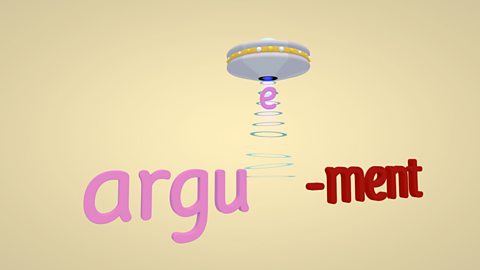
Suffixes - part 2 of 4 video
A fun, animated guide to the rules for adding the suffixes 'ment' and 'ly'.
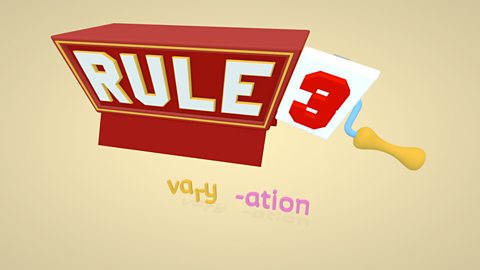
Suffixes - part 3 of 4. video
A fun, animated guide to the rules for adding the vowel suffix 'ation'.
Suffixes - part 4 of 4. video
A fun, animated guide to the rules and exceptions for adding the vowel suffix 'ous' to root words.