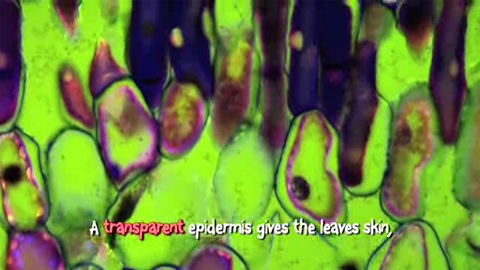
Jon Chase: Bacteria are a type of microorganism, each made up of just one cell. Some bacteria are harmful and cause disease, and some are useful, like the one hundred trillion bacterial cells that inhabit our digestive system.
Bacteria reproduce by cloning themselves through binary fission - a kind of asexual reproduction. In the right conditions, they can reproduce very quickly. Some species can replicate themselves in as little as twenty minutes. We can grow bacteria in an incubator on plates of agar jelly with time, nutrients, and an optimum temperature.
These girls at Copthall wanted to investigate the bacteria growing on their possessions. They took some petri dishes, and they swabbed some of their stuff, and put them in an incubator set at just under 30-degrees-centigrade to help them grow. Two days have passed since we put the agar plates inside the incubator. So let's have a look at what's been grown.
With any scientific experiment, you need some kind of control, don't you?
Students: Yeah.
Jon Chase: So, here was our control, here.
Wooh! Nothing at all. Brilliant. So there's proof that if you just shut one by itself, you'd have no bacteria. What have we got here? Headphones! A few speckles here and there.
Student: That's been in my ear.
Jon Chase: Well, that's not too bad.
Student: It is!
Jon Chase: You've got a few different microorganisms on there. Earrings!
[STUDENTS GASP IN DISGUST]
You know what, I'm glad I don't wear earrings you know. So there's a lovely pattern been drawn in the earrings, and you can see the bacteria have grown in exactly the same place as your pattern. So everyday objects harbour all types of bacteria, and these can be grown in petri dishes with some surprising and rather revolting results, as shown with the help from the girls from Copthall School.
Jon Chase: OK, so two days have passed since we put the petri dishes… dishes?
So two days have passed since the petri dishes… Two days have passed since we put the agar plates inside the incubator.
Video summary
With the help of some students, science presenter Jon Chase investigates the growth of bacteria on agar plates.
The students swab some of their personal possessions, including earrings and mobile phones, and then spread the bacteria onto the surface of agar plates. These are grown in an incubator and the results are shown.
Jon explains how bacteria grow and reproduce by binary fission.
Teacher Notes
Students could make models of bacterial cells out of balloons. They could label them with the parts of cells and include relevant functions.
After watching this short film, students could repeat the experiment seen, by swabbing and culturing their own samples (an appropriate risk assessment must be completed).
A follow up activity could involve investigating which antibiotics or antiseptics have the greatest effect upon cultured bacteria.
These short films will be relevant for teaching biology and science in general at KS3 and KS4 in England, Wales and Northern Ireland and National 4/5 in Scotland.
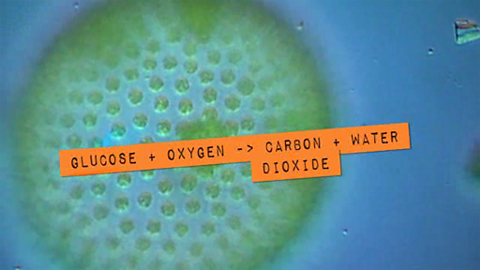
Aerobic respiration. video
Science presenter Jon Chase explains aerobic respiration.
An explanation of photosynthesis. video
Jon Chase explains photosynthesis.
Enzymes and active sites. video
Jon Chase demonstrates the action of the enzyme catalase.
Factors that affect germination. video
Jon Chase investigates the effect of temperature, water and oxygen on seed germination.
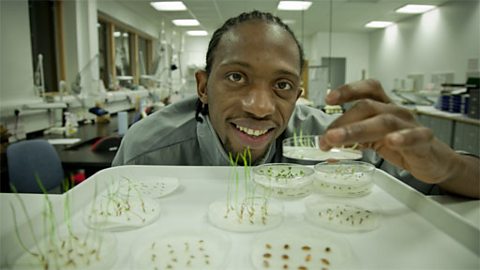
Food as fuel. video
A screaming jelly baby is demonstrated to show the energy content of food.
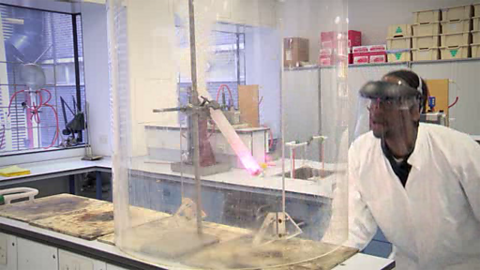
Microscopy. video
Jon Chase describes three different types of microscope.
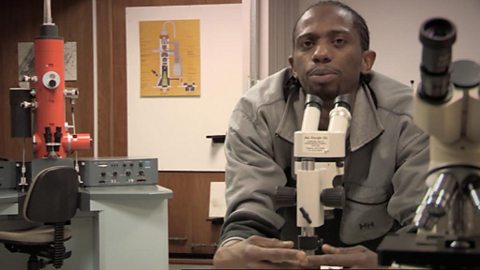
Mitosis Rap. video
Jon Chase raps about the stages of mitosis.

Osmosis Rap. video
Science presenter Jon Chase raps about osmosis.
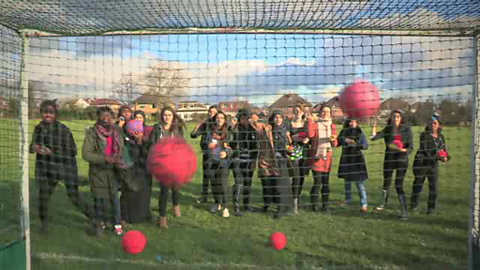
Photosynthesis Rap. video
Science presenter Jon Chase raps about photosynthesis.