Germination is the process by which a plant begins to grow from a seed. Seeds need certain conditions to germinate successfully.
Doctor Laura Bowden is a seed specialist, and I've asked her to try and germinate crop seeds for us in different conditions.
"Well, these are barley seeds, and these ones I grew in our controlled temperature room, which is at 20 degrees, so they've been nice and warm. These ones have been in the fridge at four degrees, so they haven't germinated at all. There's quite a difference, showing that temperature really is very important to seed germination."
So we've seen that warmth is essential for germination, but there are two other crucial factors. Water is probably the most important factor for germination. Without water, most seeds can't germinate. In hotter parts of the world, the lack of water is a serious problem. Droughts can result in crops dying, causing terrible starvation.
"This experiment here, these are rye grass seeds. These ones have had a good amount of water - enough for them to grow well. These ones here haven't had quite as much water, so they're looking unhealthier. These poor ones have had no water at all. If you give them too much water, that would also be a stress and they wouldn't be able to cope and it would kill them."
We've seen that warmth and water are essential for germination, but there is one other crucial factor. Oxygen is very important. They need oxygen because they have to respire.
Seeds contain a food store. Respiration requires oxygen and releases energy from the food store. This is why seeds need oxygen during germination.
Once the young plant has leaves, it no longer needs its food store because it makes glucose in its leaves by photosynthesis. Respiration then releases the energy needed from this glucose. So these are the basic factors that seeds need to germinate. Temperature. Water. Oxygen.
But to have any chance at solving the world's food shortages, scientists are helping farmers work out the best ways of getting their crops to grow quickly. Quite often, farmers will apply fertilizers to their fields, which will speed up germination and plant growth.
"So these are grass seeds again, and these ones have had nitrate added to the solution that they're given to grow with, and these ones haven't, they've just had water. And you can see there is a huge difference in the growth. These ones, they have started to germinate, you can see the shoots, but they're so much smaller, and that's because of the effect of nitrates, which is the major component of fertilizer - so farmers use exactly this principle."
"Wow, that really is impressive."
The research that Dr. Bowden and her colleagues are doing is crucial to understanding how to improve our farming techniques. In 2011, the world population hit 7 billion, and by 2050, that number will be 9 billion - 9 billion people need an awful lot of food. Science is helping us understand more and more about how plants grow and germinate. And it's helping us to understand how we can feed our ever-expanding population.
Video summary
Science presenter Jon Chase investigates the effect of temperature, water and oxygen on seed germination.
He finds out that seeds germinate best in warm, moist and well oxygenated conditions. He also looks at the effect fertiliser has on the rate of germination and plant growth.
Teacher Notes
Students could repeat the experiment seen in this short film using cress seeds. Do the students’ results reflect the findings of Jon Chase? Are temperature, water and oxygen the key factors?
The scientist interviewed says that water is most important of the three. The scientist also says that fertilisers (nitrates) speed up germination (as well as plant growth). Does this match with your students’ findings?
Students could then look at the fertilisation of plants, by placing pollen onto a stigma and observing it grow into a pollen tube.
These short films will be relevant for teaching biology and science in general at KS3 and KS4 in England, Wales and Northern Ireland and National 4/5 in Scotland.
Aerobic respiration. video
Science presenter Jon Chase explains aerobic respiration.
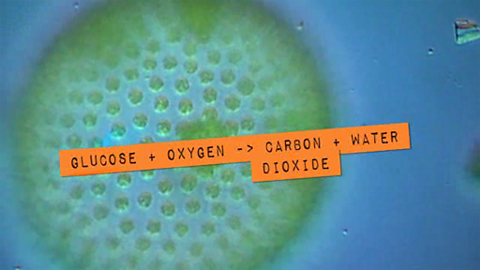
An explanation of photosynthesis. video
Jon Chase explains photosynthesis.
Enzymes and active sites. video
Jon Chase demonstrates the action of the enzyme catalase.
Food as fuel. video
A screaming jelly baby is demonstrated to show the energy content of food.
Microorganisms and bacteria. video
Personal possessions are swabbed for bacteria which are then cultured on agar plates.
Microscopy. video
Jon Chase describes three different types of microscope.
Mitosis Rap. video
Jon Chase raps about the stages of mitosis.

Osmosis Rap. video
Science presenter Jon Chase raps about osmosis.
Photosynthesis Rap. video
Science presenter Jon Chase raps about photosynthesis.