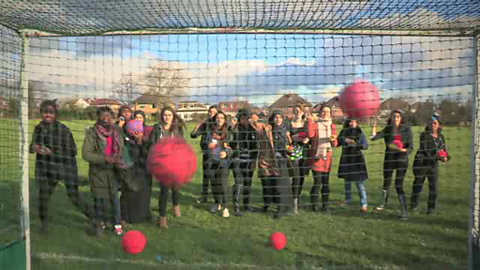
Wouldn't it be great if we could clone ourselves? Well, the cells in our bodies do this all the time by a process called mitosis. It is one of the most basic and beautiful processes on the planet. It's just like a dance. So I've got the pupils here at Copthall School to show you how it works. So get settled and check out my mitosis rap!
The human body is made up of billions of cellsand each one has got a nucleus where DNA is heldcells are called diploid with 2 sets of chromosomes23 from your dad, 23 from your mumIgnore the sex cells and soon you might noticeEvery cell, everywhere really came from Mitosis
Mitosis is a type of cell replication that enables cells to clone themselves. It's essential to growth and repair. It's a brilliant, simple cycle that is fundamental to life. When you see mitosis through a microscope, it looks like a dance of the chromosomes. We're looking at a cell with only a few chromosome dancers. A human cell contains 23 pairs of chromosomes.
The mitosis cycle starts with the chromosomes of the parent cell making identical copies of themselves, so when the cell divides, there will be identical chromosomes in each dividing half. Then the doubled chromosomes line up along the central axis of the cell, and microtubules called spindle fibres pull them apart to opposite ends of the cell. Now, each end of the cell has a full set of chromosomes around which a nucleus forms. Then the cell membrane pinches in between the two nuclei, dividing the original cell into two new daughter cells. The daughter cells are genetically identical to the parent cell. The parent cell has cloned itself, and the cycle begins again.
Video summary
Science presenter Jon Chase describes the stages of mitosis in the form of a rap whilst a class of pupils act out the process.
Teacher Notes
After listening to the rap, students could role-play the process themselves. Can they improve upon the version seen in this short film?
Students could then make a card sort activity to help them revise with images of each stage on one set of cards and written descriptions on the other. Making the card sort activity themselves will support their learning.
After learning about meiosis, students could be asked to state the differences between the processes (crucially the number of cells produced and whether they are identical or not) in the form of a table to help them revise.
These short films will be relevant for teaching biology and science in general at KS3 and KS4 in England, Wales and Northern Ireland and National 4/5 in Scotland.
Aerobic respiration. video
Science presenter Jon Chase explains aerobic respiration.
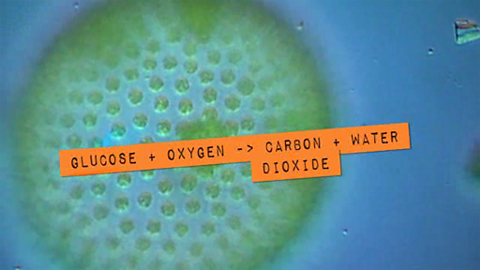
An explanation of photosynthesis. video
Jon Chase explains photosynthesis.
Enzymes and active sites. video
Jon Chase demonstrates the action of the enzyme catalase.
Factors that affect germination. video
Jon Chase investigates the effect of temperature, water and oxygen on seed germination.
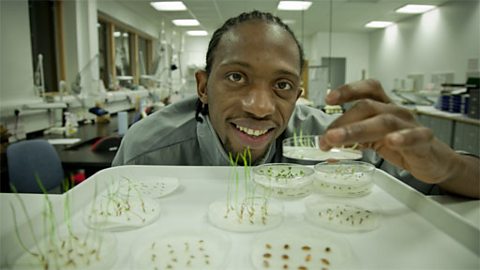
Food as fuel. video
A screaming jelly baby is demonstrated to show the energy content of food.
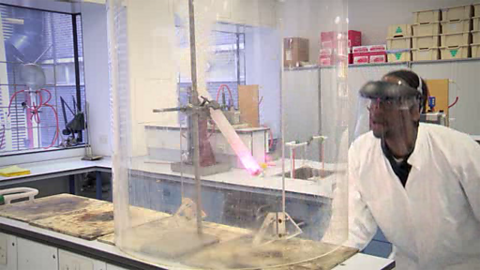
Microorganisms and bacteria. video
Personal possessions are swabbed for bacteria which are then cultured on agar plates.
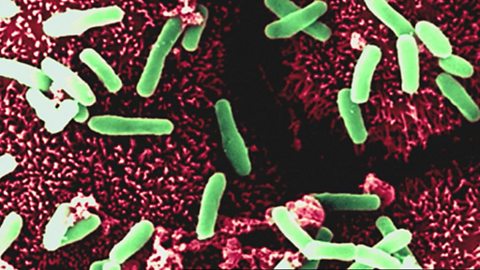
Microscopy. video
Jon Chase describes three different types of microscope.
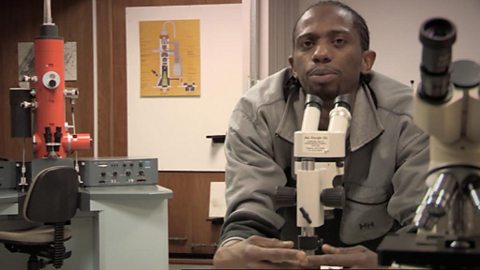
Osmosis Rap. video
Science presenter Jon Chase raps about osmosis.
Photosynthesis Rap. video
Science presenter Jon Chase raps about photosynthesis.