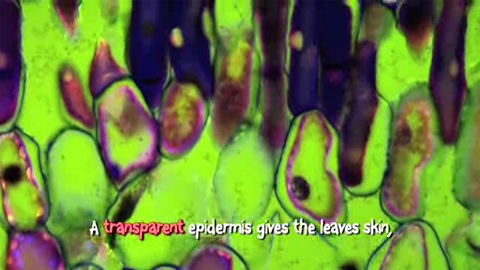
Photosynthesis is one of the most important reactions on this planet. Let's have a look at the word… "Photo" means light, "synthesis" means to make - and that's exactly what it does. So, plants harness the energy from the sun to make food. Photosynthesis happens in the leaves of all green plants. Without photosynthesis, there would be no oxygen in our atmosphere and life as we know it would not exist.
It happens inside the chloroplasts, which are found in leaf cells and other green parts of the plant. Chloroplasts contain a substance called chlorophyll, which gives the plant its green colour. Chlorophyll absorbs sunlight and uses its energy to convert carbon dioxide and water into glucose. Oxygen is also produced.
Photosynthesis, it's just a chemical reactionAnd there are four things that we need for it to happen,Water, CO2 and a light source,And chlorophyll where relevant reactions are caused.
Chlorophyll absorbs the energy in sunlight,To combine water and carbon dioxide,Providing the glucose that the plants need,The by-product is oxygen we need to breathe.
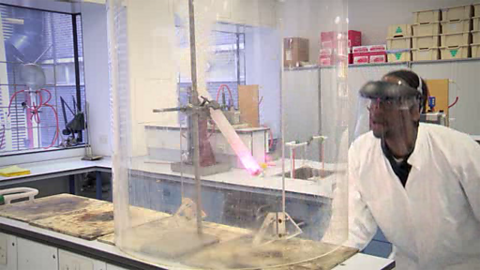
Time for a demo here. Here we have the aquatic plant named Cabomba. It's very fast at growing and particularly efficient at photosynthesizing. We're going to have a look at two things. First, the oxygen produced. If photosynthesis is happening, the gas collected in the tube over the last 30 minutes should be oxygen. If it is oxygen, it will re-light this glowing splint. Wicked!
Second thing, light! The good thing about using underwater plants is that you can actually see the oxygen being produced. The amount of bubbles coming out of the stem of the plant are a good indication of the rate of photosynthesis. But what happens if we reduce the light intensity? It's practically stopped. See, without light photosynthesis can't happen. So you can imagine if you were to put this in a pitch black room, there would be no photosynthesis and hence no bubbles being released. So for photosynthesis to happen, we need water, carbon dioxide, chlorophyll, and light.
There needs to be light for the process to start,absorbed by the chlorophyll in chloroplasts,It's those that can be found in all the green parts,photosynthesis is mainly in the leaves of plants.
We've already seen that photosynthesis produces oxygen, but the other product is glucose. This glucose is the fuel plants need for energy and to grow. So, essentially, plants make their own food and in turn, animals rely on plants for their food. Animals get their food from plants by eating plants directly or by eating other animals that have already eaten plants. Plants are the most fundamental part of the food chain.
Photosynthesis is essential to life on this planet for two main reasons. One is it provides us with oxygen, and the second is it harnesses the sun's light energy to produce food. Wooo-hooo!
Video summary
Science presenter Jon Chase explains photosynthesis.
He shows the balanced symbol equation and conducts an experiment using Cabomba pondweed to demonstrate that oxygen is a product of photosynthesis. He then shows the effect of a lower light intensity on the rate of photosynthesis.
Jon also describes the role that plants play in food webs and ecosystems.
Teacher Notes
Recap the equation for photosynthesis. Do this visually by showing students test-tubes of carbon dioxide, water, oxygen and glucose (tests for the first three substances can be reviewed if appropriate). Then review the differences between this process and respiration.
Ask students to label a diagram of a plant cell and review their functions. Students could then count the numbers of bubbles of oxygen produced by Cabomba or Elodea pondweed at varying intensities of light.
Encourage students to prove the gas they have collected is oxygen by using it to relight a glowing splint.
These short films will be relevant for teaching biology and science in general at KS3 and KS4 in England, Wales and Northern Ireland and National 4/5 in Scotland.
Aerobic respiration. video
Science presenter Jon Chase explains aerobic respiration.
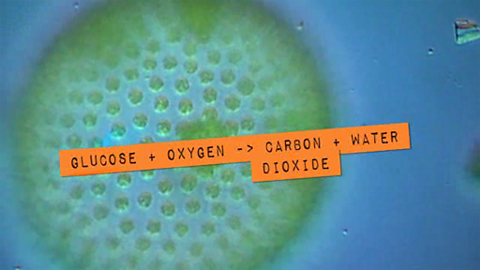
Enzymes and active sites. video
Jon Chase demonstrates the action of the enzyme catalase.
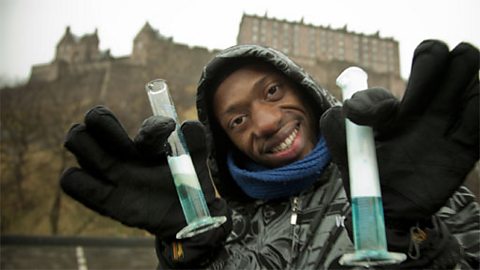
Factors that affect germination. video
Jon Chase investigates the effect of temperature, water and oxygen on seed germination.
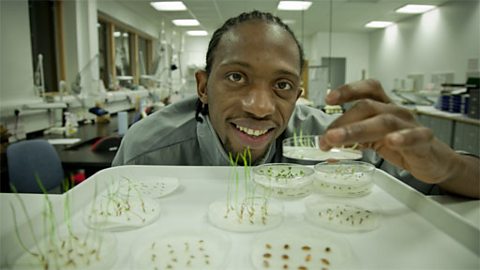
Food as fuel. video
A screaming jelly baby is demonstrated to show the energy content of food.
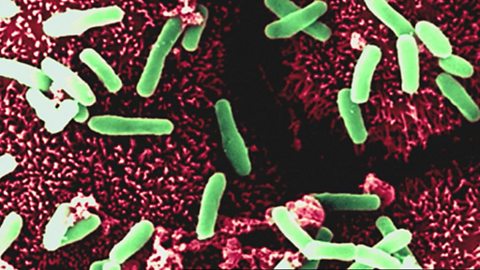
Microorganisms and bacteria. video
Personal possessions are swabbed for bacteria which are then cultured on agar plates.
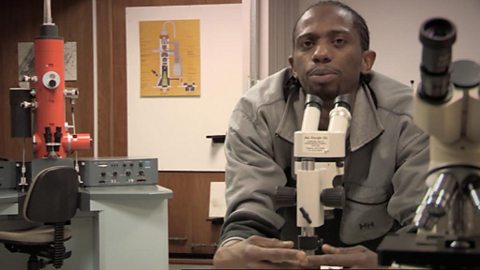
Microscopy. video
Jon Chase describes three different types of microscope.
Mitosis Rap. video
Jon Chase raps about the stages of mitosis.

Osmosis Rap. video
Science presenter Jon Chase raps about osmosis.
Photosynthesis Rap. video
Science presenter Jon Chase raps about photosynthesis.