Ever wondered what your liver was for? Worth looking after it!
Enzymes! There are tens of thousands of chemical reactions going on inside our bodies all the time.
I'm at a farmers' market in Edinburgh to show people how enzymes contained in an animal liver can help turn a dangerous chemical like hydrogen peroxide into something totally safe.
Welcome to the wonderful world of enzymes!
Do you know what your liver's good for?
Not really.
What your liver's good for… is for breaking down stuff. I'm going to show you how that works. OK. First I'm going to take some of this stuff. Put on my safety goggles… Hydrogen peroxide - you can use it to bleach your hair if you like to look pretty! When you eat stuff your body breaks it down but it can produce some harmful chemicals and this is one of them. Because it's the detox organ in the body the liver is full of enzymes that work as catalysts to speed up the breakdown of harmful chemicals. Catalysts speed up chemical reactions without being used up or chemically changed. Enzymes speed up reactions - they make things happen quicker. In our bodies hydrogen peroxide is broken down by the enzyme called catalase.
Sorry I don't do liver - I just I don't like it.
What happens when the catalase in liver comes into contact with hydrogen peroxide?
I've added some blue washing-up liquid which shows you the gases more clearly. Liver is effective at breaking down the hydrogen peroxide. And it does this by breaking it down into water and oxygen.' That is what we call an enzyme reaction and it's caused by catalase in our liver.
Thank you!
Hydrogen peroxide has the molecular structure H202. Catalase splits it up into H20 and 02 - water and oxygen - but how does it work? Every enzyme has a place in which the molecule fits exactly. This is known as the active site. The active site of the catalase allows the hydrogen peroxide molecule to fit exactly. You could say the active site is like the ring of a bottle opener. The hydrogen peroxide molecule slots exactly into the active site and it's that that splits up the molecule into oxygen and water - breaking up the dangerous hydrogen peroxide and making it safe. Good stuff that liver!
Video summary
Science presenter Jon Chase demonstrates the action of the enzyme catalase, produced by the liver, in breaking down hydrogen peroxide into water and oxygen.
The balanced equation for this reaction is shown. Jon describes the role of an enzyme’s active site.
Teacher Notes
You could ask students to place a small amount of bread under their tongue for a few minutes. When they then move the soggy bread across their tongue it will taste sweet.
This is because the enzymes in saliva break down the starch into glucose. Show students a graphic representation of the lock and key hypothesis of how an enzyme works.
Ask them to draw sequential steps of this process in the corners of their exercise book pages and flick them to make an animated diagram.
These short films will be relevant for teaching biology and science in general at KS3 and KS4 in England, Wales and Northern Ireland and National 4/5 in Scotland.
Aerobic respiration. video
Science presenter Jon Chase explains aerobic respiration.
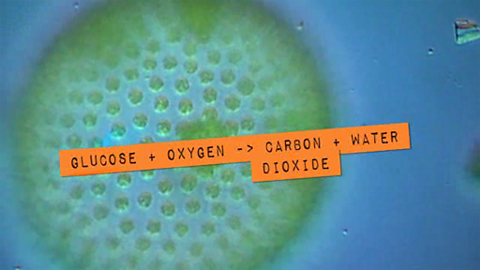
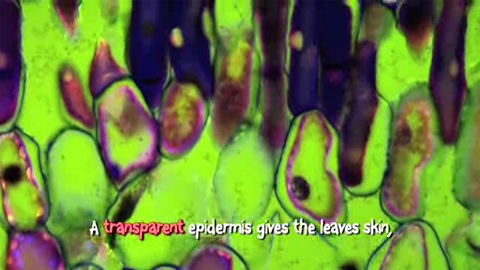
An explanation of photosynthesis. video
Jon Chase explains photosynthesis.
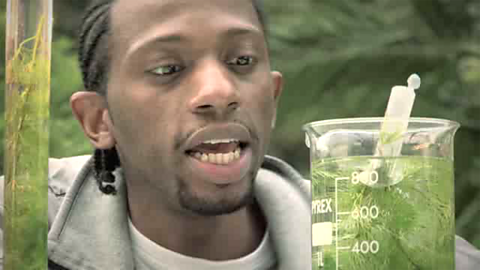
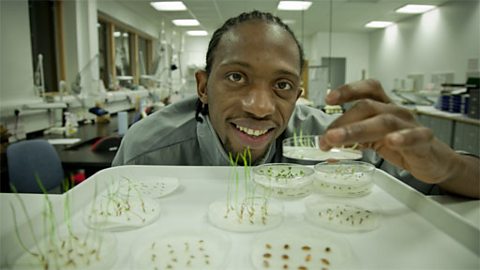
Factors that affect germination. video
Jon Chase investigates the effect of temperature, water and oxygen on seed germination.
Food as fuel. video
A screaming jelly baby is demonstrated to show the energy content of food.
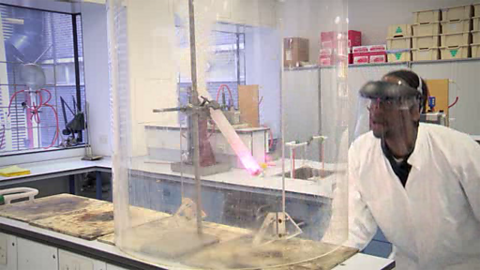
Microorganisms and bacteria. video
Personal possessions are swabbed for bacteria which are then cultured on agar plates.
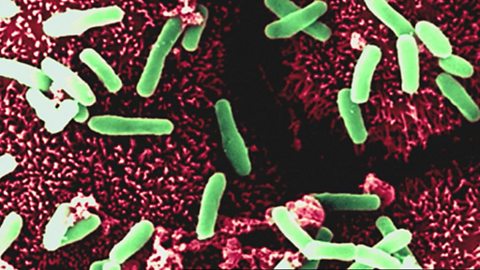
Microscopy. video
Jon Chase describes three different types of microscope.
Mitosis Rap. video
Jon Chase raps about the stages of mitosis.

Osmosis Rap. video
Science presenter Jon Chase raps about osmosis.
Photosynthesis Rap. video
Science presenter Jon Chase raps about photosynthesis.