Sikhism has more than 20 million followers around the world. There are nearly half a million of us in the UK. It was founded in the region of the Punjab in South Asia more than 500 years ago by a man called Guru Nanak. He was the first of the ten Gurus our spiritual leaders. Through their teachings we believe there is only one God who is worshiped by people of all religions. We call God Waheguru. Waheguru is a name for Godwhich we should repeat every day and night and wherever we are whenever we are. It means the great one the master. Waheguru is just the king of kings. I do think God listens to peoplewhen they pray. No matter how deep the problem or how silly the question or something he'll always be there to listen. The holiest place in the world for Sikhs is the Harmandir Sahib in the Punjab in India. We call it the Golden Temple. When I was in Year Two I went to the Golden Temple with my family. When I first saw it it was amazing. It's absolutely stunning. It's decorated in pure gold and it's a lovely place to be. It's more or less every Sikh's dream to go there once in their lifetime. Just like the Golden Temple everyone is welcome at the Gurdwara the Sikh place of worship back at home. We believe everyone is equal in the eyes of God. Boys don't get treated any different from girls. Like my parents don't treat me any different from my brothers.
And what about your dad?
When I'm told to do something it isn't just like 'Oh because you're the girl you have to stay in the kitchen you have to cook you have to clean.' My brother helps out my dad helps out and everything. I just find it really nice to be treated equally. Otherwise I just wouldn't be like as happy as I am I think.
At the Gurdwara everyone sits together to pray and eat. Sharing food and serving others is a massive part of Sikhism. We love to volunteer. When I do a bit to help others and do sewa it makes me feel very spiritual and content and then it kind of makes you feel a bit more of a… happy kind of person.
Everything we know about Sikhism can be found in the holy scriptures the Guru Granth Sahib. We respect the Guru Granth Sahib like a human teacher an eternal living guru. It contains the wisdom of all the Sikh Gurus in history as well as the teachings of people from other religions. It's got all the teachings of all the ten Gurus throughout their lifetimes in the Guru Granth Sahib so we won't ever have another Guru apart from Guru Granth Sahib because he's the eternal Guru.
Video summary
Simran describes how the Sikh faith was started by Guru Nanak over 500 years ago in the Punjab region of India.
She explains that Sikhs call God 'Waheguru' and they pray believing that their prayers are listened to in the heavenly court. When she was only 7, Simran went to the Golden Temple, called 'Harimandir Sahib', in Amritsar, north India.
She describes what a big experience this was. She outlines how equality of all people, despite any differences, is an important part of the Sikh religion. We visit their place of worship, called a Gurdwara, where this belief in equality is expressed in all kinds of ways; everyone does the washing up, everyone is encouraged to volunteer and all people sit and eat together at the Gurdwara kitchen, called the Langar.
Simran also talks about their holy text, called the Guru Granth Sahib. She says that it is unusual among holy texts because some of it was written by Muslims and some by Hindus, as well as the teachings of the Ten Gurus of the Sikhs. No human Guru is needed now, as the Guru Granth Sahib is the 'eternal teacher.'
Teacher Notes
Children often struggle with generalisations about religions, so they could be given two lists, one of general words (scripture, place of worship, spiritual leader, belief about God, service to other people) and another of specific Sikh examples (Guru Granth Sahib, Gurdwara, Guru, Waheguru, seva or langar) to match up.
Ask who knows the Muslim, Jewish, Hindu or Christian examples of the general words? How can we find out? This makes a good basic display idea for the study of religions with 7-11's. If you can, arrange a class trip to the Gurdwara in your local area.
This topic will be relevant to teaching Religious Education at KS2 or KS3 in England, Wales and Northern Ireland and National 2 or 3 in Scotland.
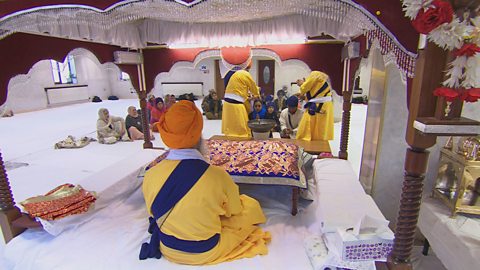
Taking Amrit. video
Two Sikh boys called Taren and Jovan join the Sikh Khalsa by taking part in the special Sikh ceremony, which is called taking Amrit.
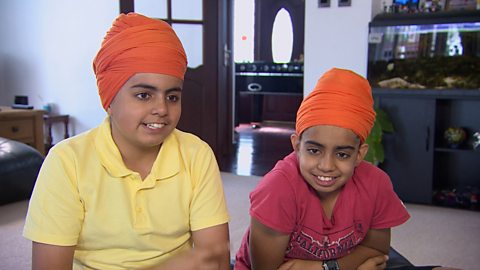
The Five Ks of Sikhism. video
Two Sikh boys called Taran and Joven explain the five Ks that they wear as members of the Sikh Khalsa.
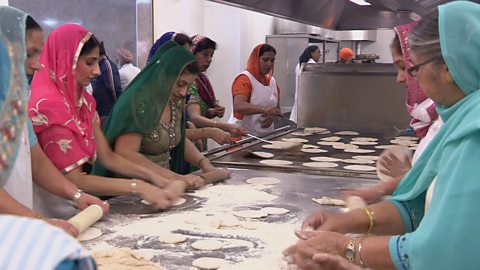
The Gurdwara. video
Simran, aged 11, describes the Sikh place of worship which is called the Gurdwara.
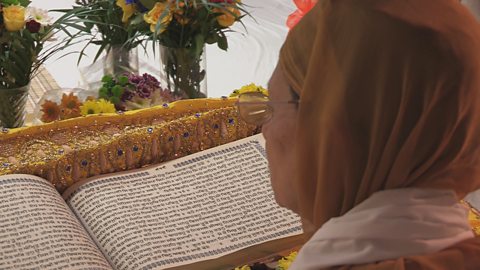
The Guru Granth Sahib. video
Simran, aged 11, explains the importance of the Sikh holy book, the Guru Granth Sahib.
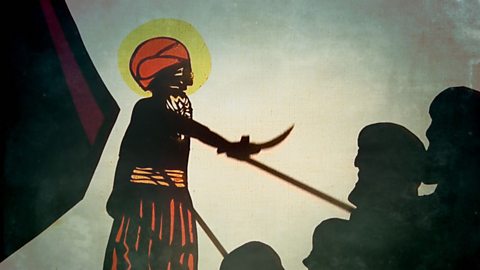
The Khalsa. video
Simran, aged 11, tells the story of the founding of the Sikh Khalsa 300 years ago.
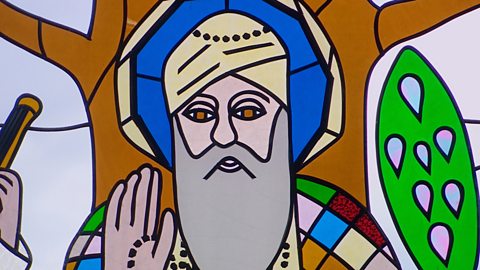
The Ten Gurus. video
Simran, aged 11, explains who the Ten Gurus are and why they are important to those who follow Sikhism.
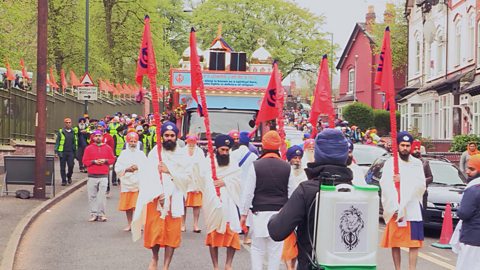
Vaisakhi. video
Simran, aged 11, takes us to the Vaisakhi celebrations and parade in her hometown of Birmingham.
Life as a young Sikh girl. video
A young British Sikh introduces herself, her family and some of the main beliefs of her religion.