To become Khalsa Sikhs and wear the symbols of the Five Ks 11-year-old Taran and his brother Joven had to take part in a special ceremony. It's called taking Amrit. Amrit is made from sugar water. Stirred with a sword it is blessed and sprinkled on the hair and the eyes.
There is something special about it. Like cos that… The prayers that have been read over it they're really powerful prayers.
SIMRAN: Amrit can be taken by men women or children like Taran and Joven. It is taken in the presence of five Khalsa Sikhs and the holy scriptures the Guru Granth Sahib. I was really excited and I was a bit nervous with like butterflies in my stomach. It was a bit awkward at first but when you walk in all the worries just go out the door.
SIMRAN: During the ceremony Sikhs make promises to never cut their hair smoke or drink alcohol and to wear the Five Ks at all times.
When people are telling you you feel like OK you have it imagined in your head. Then when it actually happens it feels a bit like deja vu so yeah it's pretty cool.
SIMRAN: Now Taran and his brother are in the Khalsa. They've joined a big family of Sikhs which they will be part of for the rest of their lives.
I feel more closer to God. Like especially with the Five Ks and when you're doing your prayers you always feel like God's just with you and he's around you and there's something around… There's something just like around me which is like special. It's like God's around me all the time.
Video summary
A special ceremony called taking Amrit is the way to become Khalsa Sikhs. Wearing the Five Ks is how many Sikhs show their commitment.
Here, 11-year-old Taran and his brother Joven show us what happened at their Amrit and explain the customs. Amrit is made from sugar water stirred with a sword. It is blessed and sprinkled on the hair and eyes.
Amrit can be taken by men, women or children - like Taran and Joven. It is taken in the presence of five Khalsa Sikhs, and the holy scriptures, the Guru Granth Sahib.
Teacher Notes
Pupils could be asked: Do you know other people who have a sense that God is with them? Do you ever have this sense yourself? (A personal question, so handle it sensitively, but teachers are often surprised by disclosures coming from this question).
Ask them if they think Taran gets this sense from his clothes, his prayers, or from God, or all three? How would they explain this sense?
This topic will be relevant to teaching Religious Education at KS2 or KS3 in England, Wales and Northern Ireland and National 2 or 3 in Scotland.
What is Sikhism? video
Eleven-year-old Simran introduces the Sikh religion and describes the key beliefs and practices in following the Sikh way of life.
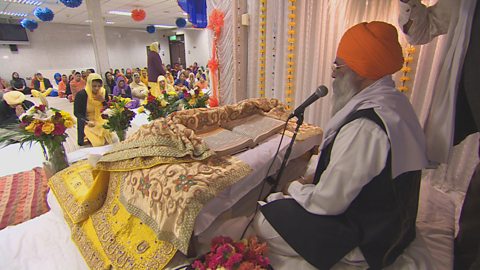
The Five Ks of Sikhism. video
Two Sikh boys called Taran and Joven explain the five Ks that they wear as members of the Sikh Khalsa.
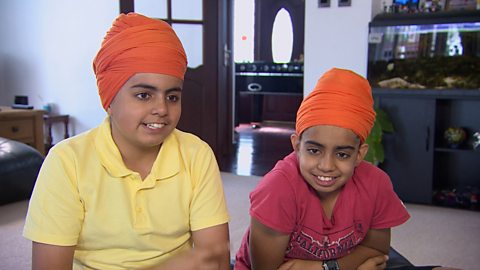
The Gurdwara. video
Simran, aged 11, describes the Sikh place of worship which is called the Gurdwara.
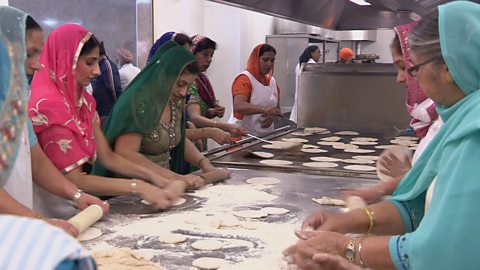
The Guru Granth Sahib. video
Simran, aged 11, explains the importance of the Sikh holy book, the Guru Granth Sahib.
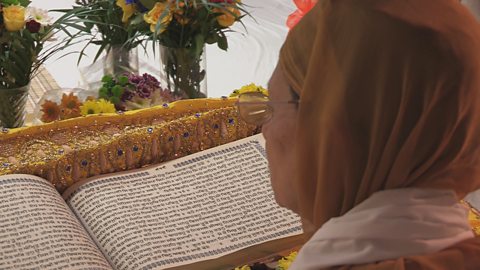
The Khalsa. video
Simran, aged 11, tells the story of the founding of the Sikh Khalsa 300 years ago.
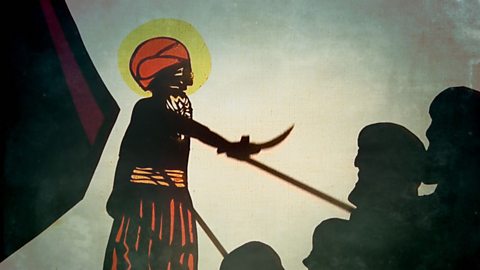
The Ten Gurus. video
Simran, aged 11, explains who the Ten Gurus are and why they are important to those who follow Sikhism.
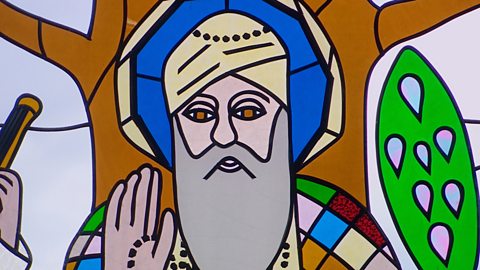
Vaisakhi. video
Simran, aged 11, takes us to the Vaisakhi celebrations and parade in her hometown of Birmingham.
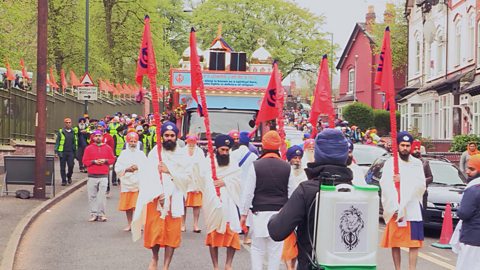
Life as a young Sikh girl. video
A young British Sikh introduces herself, her family and some of the main beliefs of her religion.