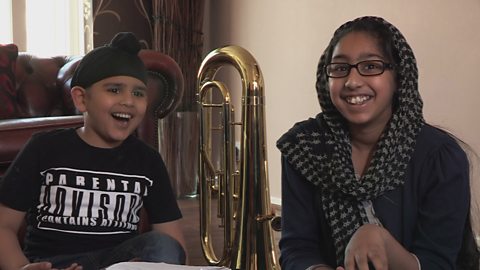
SIMRAN: The Khalsa Sikh community was founded more than 300 years ago during the harvest festival of the Vaisakhi. The Tenth Guru Guru Gobind Singh called a crowd together then he stepped out of a tent carrying a sword. He asked if anyone was prepared to give their life to God. One brave Sikh volunteered. The Guru took him into the tent then returned with blood on his sword.
I'd be scared. I'd be thinking 'What's going on?'
And that's how I think the other people felt. The people were horrified but four more Sikhs stepped forward. And each time the Guru came out of the tent with blood on his sword. There was loads of like muttering amongst the crowd and people had thought the Guru had gone mad or something. Then to the crowd's great relief all five men reappeared alive and well.
I think he was testing them a lot to see who still had faith in the Guru like what he was saying.
The Guru made up the holy sugar water Amrit and sprinkled it on their eyes and heads. They shared a bowl to drink it. And they were now Khalsa Sikhs Khalsa meaning pure. They became known as the five beloved ones or Panj Pyare. Guru Gobind Singh Ji created another way for us to live by making the Khalsa making the family. He also created names for us so boys were Singhs lions girls were Kaurs princesses. Being a Khalsa is a choice and once you make that choice you've made a commitment and that commitment is to love God with all your heart and if need be sacrifice whatever you have for God.
Video summary
Simran tells the story of how the Khalsa Sikh community was founded more than 300 years ago during the harvest festival of Vaisakhi.
She explains that becoming a Khalsa today is a choice and a commitment. And that commitment is to love God with all your heart and, if need be, sacrifice whatever you have for God.
Teacher Notes
Sikh storyteller and teacher Butta Singh says: “Being a Khalsa Sikh is a choice and once you've made that choice you've made a commitment. And that commitment is to love God with all your heart and if need be sacrifice whatever you have for God.”
You could ask pupils to discuss:
(i) What did the people in the story sacrifice? Why?(ii) What do Sikhs sacrifice today for their faith? What is hard here (Alcohol? Drugs?)(iii) What is hard for young people about being Sikh? Is it hard to wear the 5 Ks?
Ask the pupils to generate questions they would like to ask of Taran, Joven and Butta about their religion and faith. If you can, get a member of the Khalsa Sikh community to come into the class to talk about their faith and answer these questions.
This topic will be relevant to teaching Religious Education at KS2 or KS3 in England, Wales and Northern Ireland and National 2 or 3 in Scotland.
What is Sikhism? video
Eleven-year-old Simran introduces the Sikh religion and describes the key beliefs and practices in following the Sikh way of life.
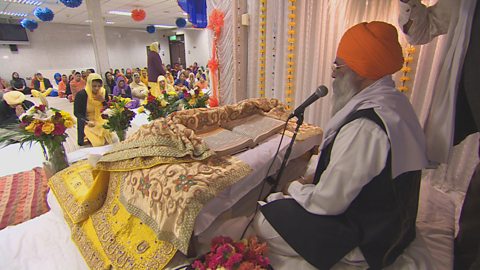
Taking Amrit. video
Two Sikh boys called Taren and Jovan join the Sikh Khalsa by taking part in the special Sikh ceremony, which is called taking Amrit.
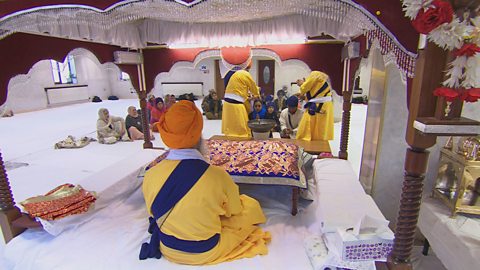
The Five Ks of Sikhism. video
Two Sikh boys called Taran and Joven explain the five Ks that they wear as members of the Sikh Khalsa.
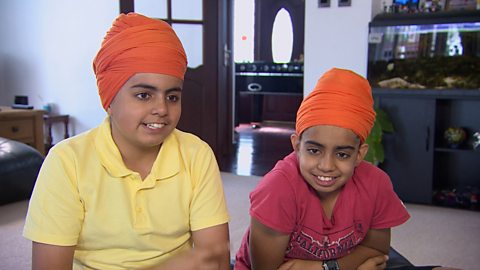
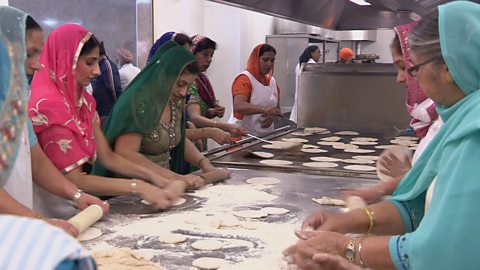
The Gurdwara. video
Simran, aged 11, describes the Sikh place of worship which is called the Gurdwara.
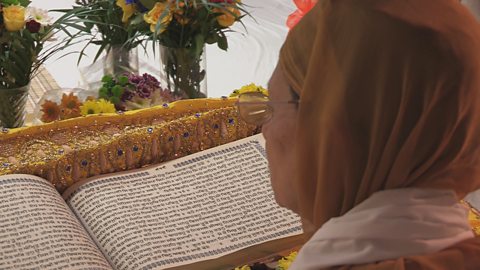
The Guru Granth Sahib. video
Simran, aged 11, explains the importance of the Sikh holy book, the Guru Granth Sahib.
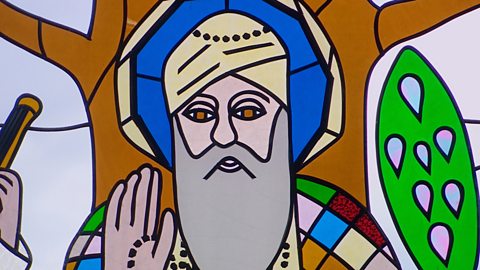
The Ten Gurus. video
Simran, aged 11, explains who the Ten Gurus are and why they are important to those who follow Sikhism.
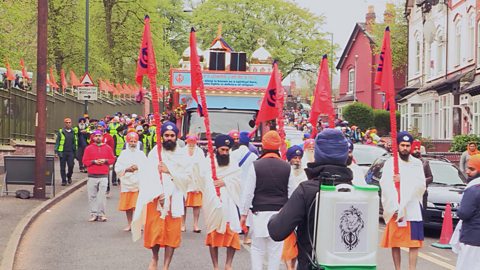
Vaisakhi. video
Simran, aged 11, takes us to the Vaisakhi celebrations and parade in her hometown of Birmingham.
Life as a young Sikh girl. video
A young British Sikh introduces herself, her family and some of the main beliefs of her religion.