SIMRAN: The Guru Granth Sahib is the name of the Sikh holy scriptures. Its pages contain so much wisdom we respect it just like a human Guru or teacher. When we're in the presence of Guru Granth Sahib Ji we behave in a respectful manner. We make sure our head's covered our shoes are off. We don't like stomp in we don't make a lot of noise we don't disrupt any other people that are listening to the different prayers. The scriptures contain sacred hymns written by the ten Gurus as well as teachingsfrom people of other faiths. There are 5867 sacred hymns or Shabads in the Guru Granth Sahib. They are written in Gurmukhi from the Punjabi language. The holy words of the Shabads are called Gurbani which means the teachings of the Gurus. Gurus Sikhs saints people from the Muslim people from the Hindu religion they've all contributed to it. And there has been… There's passages in Guru Granth Sahib referring to… …for everyone to be pure in their own religion.
SIMRAN: On special occasions the entire Guru Granth Sahib is read aloud from start to finish. It takes around two days and two nights. We call this Akh and Path.
SIMRAN: Ik Onkar.
HARPREET: So I'm going to correct you it's Ik Onkar.
SIMRAN: Ik Onkar.
HARPREET: No! Ik Onkar.
Ik Onkar.
Yeah.
SIMRAN: You need to know the Punjabi language to translate the original text of the Guru Granth Sahib. My friend Harpreetis a bit of an expert. By practising the Mool Mantar - it means basic teaching and is at the start of every section of the Guru Granth Sahib. The Mool Mantar begins with the words Ik Onkar meaning there is only one God. It reminds us God is the creator without fear and without hate. He is immortal without form and can be reached through the mercy and grace of the true Guru. It's basically the first prayer that Guru Nanak Dev Ji brought to us. It's amazing. Precious copies of the Guru Granth Sahib are kept at the Gurdwara and treated with the greatest respect. After each prayer service the Guru Granth Sahib is taken to a special resting room. Guru Granth Sahib Ji are taken carried on the head as a sign of respect. Another Sikh they sprinkle water along the way. By doing so they are cleansing the route.
SIMRAN: They are not just putting a book into a bedroom Guru Granth Sahib Ji contains all the ten Gurus it contains everything they've taught us and for that it's not just a book it's a human being.
JATINDER: The rest of the congregation they follow Guru Granth Sahib Ji into the resting room which is called the Sach Khand and Guru Granth Sahib Ji are put to rest there. The coverings are put over Guru Granth Sahib Ji and the Sikhs then conduct a prayer and then from there the doors are closed for the day.
SIMRAN: Guru Granth Sahib Ji teaches us many different things of how to be a good Sikh how to live our life how to be the best we can be.
Video summary
Simran explains that the Guru Granth Sahib is not just a book to Sikhs; it is treated as a living Guru.
She tells us that 5867 sacred hymns or Shabads make up the Guru Granth Sahib and that it is full of wisdom and teachings for Sikhs.
Simran talks about a special devotion, called Akhand Path, which involves reading all of the scriptures aloud and takes about two days. This is something that Sikhs do as a special act of worship.
Symbols for respect for the Guru Granth Sahib are also outlined, these include: bowing the head to the ground in the presence of the Guru, covering the head, removing shoes to enter the presence of the Guru, sprinkling water ahead of the Guru Granth Sahib and providing a room and bed for rest.
The greatest respect for the teachings, however, is not in removing shoes or sprinkling water, but living a life inspired by the wisdom of the Gurus. This matters most.
Teacher Notes
Draw attention to the ways scriptures or holy writings are used and honoured in different religions (you could use another clip from the ‘My Life, My Religion’ series about Torah, Bible or Qu’ran).
Ask pupils to think about why these scriptures are so highly valued and rank some reasons: is it because believers say they come from God? Because they give rules for living? Because they tell stories that make sense of life? Because they are inspired or inspiring?
Pupils could be asked what makes some words holy, and get them to choose examples of ‘holy words’ that mean a lot to them.
This topic will be relevant to teaching Religious Education at KS2 or KS3 in England, Wales and Northern Ireland and National 2 or 3 in Scotland.
What is Sikhism? video
Eleven-year-old Simran introduces the Sikh religion and describes the key beliefs and practices in following the Sikh way of life.
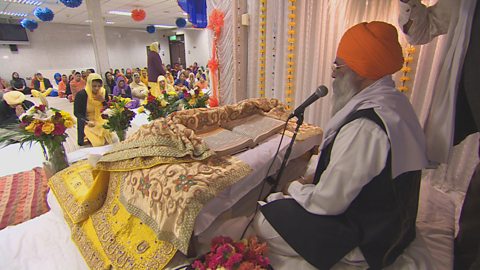
Taking Amrit. video
Two Sikh boys called Taren and Jovan join the Sikh Khalsa by taking part in the special Sikh ceremony, which is called taking Amrit.
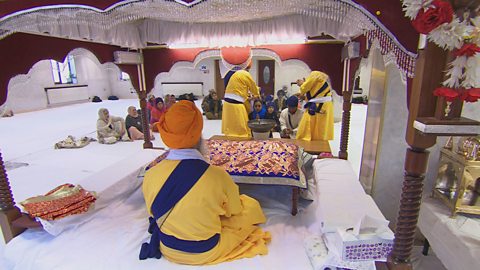
The Five Ks of Sikhism. video
Two Sikh boys called Taran and Joven explain the five Ks that they wear as members of the Sikh Khalsa.
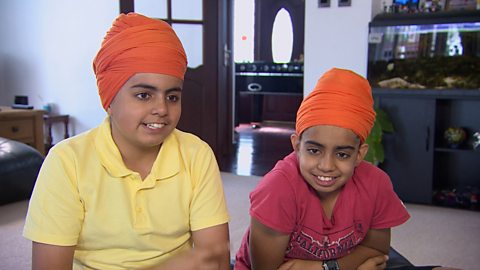
The Gurdwara. video
Simran, aged 11, describes the Sikh place of worship which is called the Gurdwara.
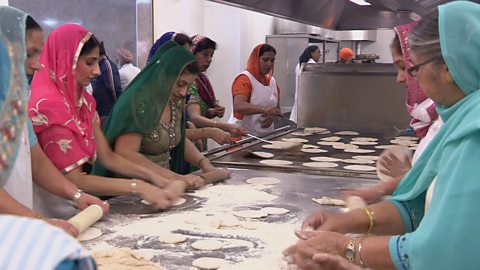
The Khalsa. video
Simran, aged 11, tells the story of the founding of the Sikh Khalsa 300 years ago.

The Ten Gurus. video
Simran, aged 11, explains who the Ten Gurus are and why they are important to those who follow Sikhism.
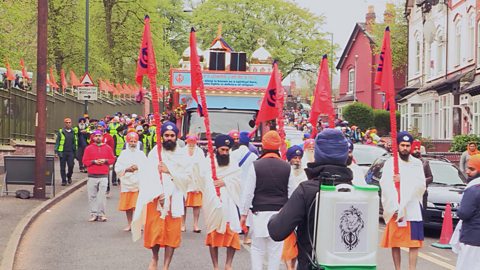
Vaisakhi. video
Simran, aged 11, takes us to the Vaisakhi celebrations and parade in her hometown of Birmingham.
Life as a young Sikh girl. video
A young British Sikh introduces herself, her family and some of the main beliefs of her religion.