Newton's Second Law states that force equals mass times acceleration. This can be investigated using a set-up like this one.
You can use this set-up to investigate how changing two separate factors, mass and force on the trolley, will affect the acceleration.
In both investigations, you will measure the acceleration, so this is the dependent variable.
Let's look first at investigating the effect on acceleration of changing force on the trolley.
In this investigation, force is the independent variable and mass is a control variable, and therefore must be kept constant. To increase the force on the trolley, you will add masses to the hanger. As the mass of the whole system must remain the same, it's important that you do this by transferring mass from the trolley to the hanger.
You can also investigate the effect of changing mass on the acceleration of the trolley. In this case, mass is the independent variable. The force must be kept constant because it is a control variable. In this instance you will increase the mass by adding additional masses to the trolley, not the hanger. If you add the mass to the hanger, this changes the pulling force.
A key part of this investigation is in the multiple calculations. To calculate acceleration, start by measuring the time it takes to travel between the start and end of the journey.
Calculate the velocity using the formula: velocity = distance/time.
Then calculate the acceleration using this formula: acceleration = change in velocity/divided by time.
Repeat the measurements and calculate a mean acceleration, ignoring any anomalies. Then plot your results on a graph.
Remember that when writing up your findings you should refer to increasing and decreasing acceleration, and not faster or slower.
You can use additional equipment to improve the accuracy of your measurements.
For example:
- light gates to record exactly when the trolley passes a certain point, as it breaks a beam of light;
- or a video camera to record the trolley moving and help measure distances and times more accurately.
A demonstration of key points of the required practical to investigate the effect of varying force or mass on the acceleration of an object for GCSE physics and combined science.
This short film focuses on two variables and their impact on acceleration: varying the force and varying the mass.
Students will have studied motion at KS3, but this film demonstrates which measurements they need to take and how to calculate velocity and acceleration.The equation that students will need to recall and apply - force = mass x acceleration - is featured and explained.
Teacher Notes
*The practical allows development of Apparatus & Techniques Physics 1, 2 & 3 (DfE GCSE subject content guidance, Appendix 4). *
This short film could be used as a way of revisiting acceleration theory before or after the carrying out the required practical.
The film demonstrates how to make valid measurements and how to use them to calculate acceleration and study the effects of changing force or mass.
It demonstrates the measurements to take to calculate velocity and acceleration.
Students could be asked to predict the effect of increasing mass and increasing force on acceleration of an object.
This film highlights the sketch graphs generated in these investigations. These could be used to practise describing and explaining graphs.
It also gives the opportunity to reinforce understanding of types of variable, the language of science and also identifying and justifying specific improvements.
Points for discussion:
Students need to recall and apply the equation F=ma.
Often students will use apparatus that measures acceleration directly but they also need to know how to do this manually.
This film demonstrates the measurements to make to calculate velocity and then acceleration step by step.
It also highlights a common pitfall when investigating effect of changing force in that new mass is added to the system rather than being transferred from the trolley to the hanger.
The film also focuses on specific improvements, stressing the need to explain how each of these changes is beneficial, something which students find challenging.
Language of science such as accuracy anomaly and systematic error are highlighted as part of the discussion around improvements.
Suggested activities:
Ensuring students have awareness of having a more manual approach to this investigation as well as using lightgates will be beneficial in helping them to apply to different contexts.
Curriculum Notes
Suitable for teaching physics and combined science at Key Stage 4 and GCSE in England, Wales and Northern Ireland, and at National 4 and 5 in Scotland, and Cambridge IGCSE Physics

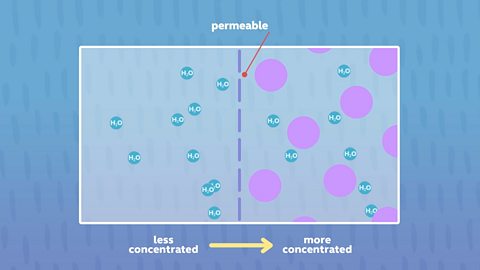
Investigate osmosis in plant tissue. video
A demonstration of the key points of the required practical to investigate osmosis in plant tissue for GCSE biology and combined science.
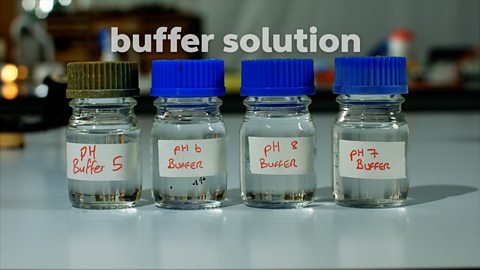
Investigate the effect of pH on enzyme activity. video
A demonstration of the key points of the required practical to investigate the effect of pH on enzyme activity for GCSE biology and combined science.
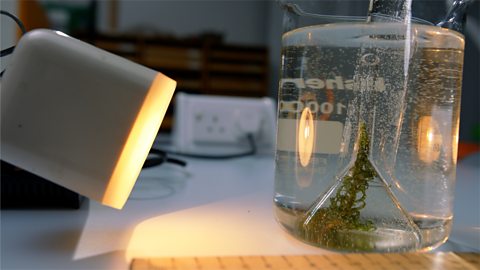
Investigate the effect of light intensity on the rate of photosynthesis. video
A demonstration of the key points of the required practical to investigate the effect of light intensity on the rate of photosynthesis for GCSE biology and combined science.
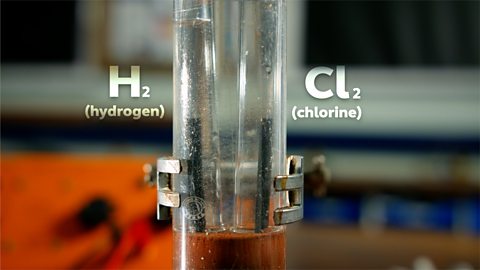
Investigate electrolysis of aqueous solutions using inert electrodes. video
A demonstration of the key points of the required practical to investigate electrolysis of aqueous solutions using inert electrodes for GCSE chemistry and combined science.
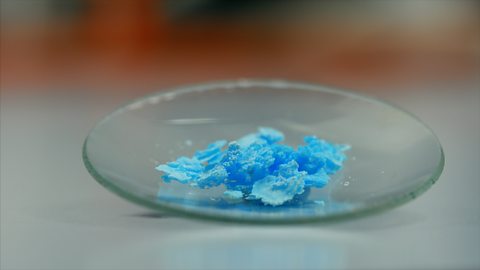
Prepare a pure, dry sample of a soluble salt from an insoluble oxide. video
A demonstration of the key points of the required practical to prepare a pure, dry sample of a soluble salt from an insoluble oxide for GCSE chemistry and combined science.
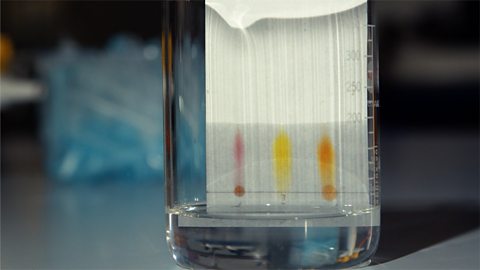
Investigate the separation of substances using paper chromatography video
A demonstration of the key points of the required practical to investigate the separation of substances using paper chromatography for GCSE chemistry and combined science.
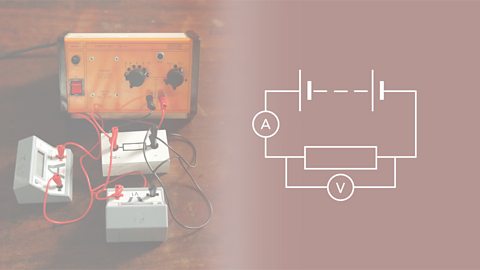
Investigate the I–V characteristics of circuit elements such as a filament lamp, diode and resistor at constant temperature. video
A demonstration of the key points of the required practical to investigate the I-V characteristics of circuit elements such as a filament lamp, diode and resistor at constant temperature.
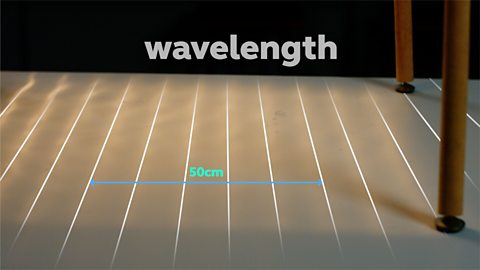
Measure the frequency, wavelength and speed of waves in a ripple tank video
A demonstration of the key points of the required practical to measure the frequency, wavelength and speed of waves in a ripple tank for GCSE physics and combined science.