Photosynthesis is the process by which plants and other organisms convert light energy into the chemical energy they need to keep themselves alive.
This investigation looks at how the intensity of light affects the rate of photosynthesis in pondweed. The independent variable here is the distance of the light source from the pondweed. Changing this distance, changes the light intensity.
The dependent variable, what you're measuring, is the number of bubbles of gas produced by the pondweed. We measure this by recording number of bubbles produced per minute. These bubbles are oxygen.
In order to ensure that the results of the investigation are valid, it's important to control several variables.
1: temperature: to control temperature, use LED light bulbs which don't get hot. Change of temperature can affect the rate of photosynthesis.
2: carbon dioxide concentration: add sodium hydrogen carbonate to the water in the beaker to ensure there is an excess of carbon dioxide supplied to the pondweed. If carbon dioxide was limited, the rate of photosynthesis would be lowered.
3: age and condition of the pondweed: the only way to ensure that the results are valid is to keep the same piece of pondweed throughout the investigation.
You can improve this method by repeating the experiment at each distance and use the set of results to calculate a mean of the number of bubbles of oxygen produced, discounting any anomalies.
Or use a gas syringe to collect the gas for a more accurate measure of the volume of gas produced.
There are other ways to investigate how light affects the rate of photosynthesis.
Like this investigation in which we use algal balls. In this instance, the dependent variable, what you're measuring, is the rate of change of pH in the solution. As photosynthesis occurs, carbon dioxide levels decrease. As carbon dioxide is an acidic gas, the pH in the solutions then increases. We can use an indicator to measure the pH of the solution, and colour changes allow us to compare.
We draw the same conclusion from both of these investigations. As distance from the light source increases, the rate of photosynthesis decreases.
Video summary
A demonstration of the key points of the required practical to investigate the effect of light intensity on the rate of photosynthesis for GCSE biology and combined science.
This short film highlights two different methods to investigate the effect of light intensity on the rate of photosynthesis, one using pondweed and an alternative method using algal balls.
Teacher Notes
The practical allows development of Apparatus & Techniques Biology 1, 3, 4 and 5 (DfE GCSE subject content guidance, Appendix 4).
This short film could be used to raise awareness of two different methods of investigating the effect of light intensity on the rate of photosynthesis.
Both take light intensity as the independent variable but measure rate of photosynthesis, the dependent variable, in different ways: the first method measures the rate production of oxygen bubbles over time, while he second method measures the change in pH over time.
This film could also be used to demonstrate different types of variables and to reinforce the fact that we must always suggest how to control variables in an investigation.
It can also be used to highlight the use of scientific language such as valid, anomaly and accuracy.
Points for discussion:Students often struggle to identify the independent, dependent and control variables in an investigation at KS4.
This film highlights each type of variable in two methods to investigate the same factor. It also stresses the need to consider the reasons some variables have to be controlled.
The film also focuses on specific ways to improve the investigation, stressing the need to explain how each of these changes is beneficial, again something students find challenging.
Scientific terms like valid, accurate and anomaly are highlighted as part of the discussion around improvements.
Suggested activities:Students could be asked to consider the limitations of each method. For example, all bubbles not being of equal volume in the first method or in the detection of colour change in the second method.
They could then be asked to suggest adjustments/improvements to overcome each of these limitations.
Teachers could work with students to consider other investigations and see if they can identify more than one method.
Working scientifically criteria states that students should ‘apply a knowledge of a range of techniques, instruments, apparatus and materials to select those appropriate to the experiment’ (DfE GCSE subject content guidance, Working scientifically).
Suitable for teaching biology and combined science at Key Stage 4 and GCSE in England, Wales and Northern Ireland, and at National 4 and 5 in Scotland.
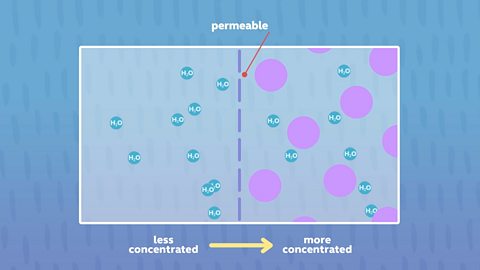
Investigate osmosis in plant tissue. video
A demonstration of the key points of the required practical to investigate osmosis in plant tissue for GCSE biology and combined science.
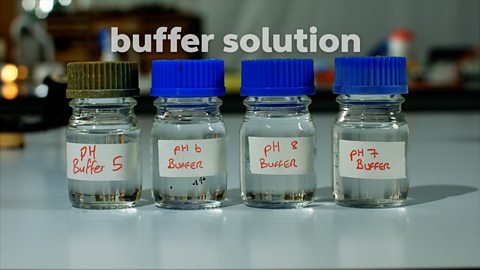
Investigate the effect of pH on enzyme activity. video
A demonstration of the key points of the required practical to investigate the effect of pH on enzyme activity for GCSE biology and combined science.
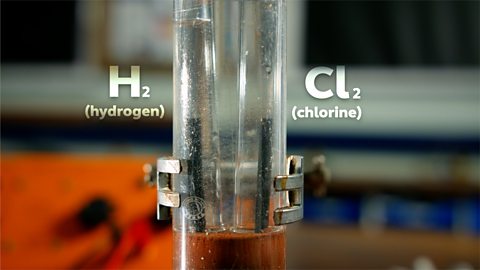
Investigate electrolysis of aqueous solutions using inert electrodes. video
A demonstration of the key points of the required practical to investigate electrolysis of aqueous solutions using inert electrodes for GCSE chemistry and combined science.
Prepare a pure, dry sample of a soluble salt from an insoluble oxide. video
A demonstration of the key points of the required practical to prepare a pure, dry sample of a soluble salt from an insoluble oxide for GCSE chemistry and combined science.
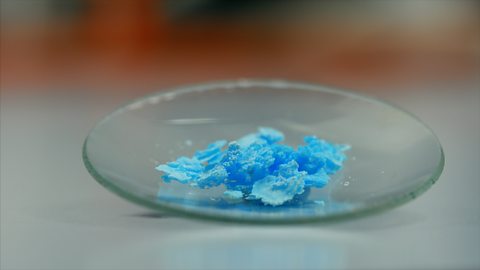
Investigate the separation of substances using paper chromatography video
A demonstration of the key points of the required practical to investigate the separation of substances using paper chromatography for GCSE chemistry and combined science.
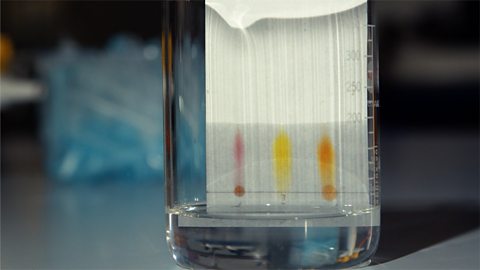
Investigate the I–V characteristics of circuit elements such as a filament lamp, diode and resistor at constant temperature. video
A demonstration of the key points of the required practical to investigate the I-V characteristics of circuit elements such as a filament lamp, diode and resistor at constant temperature.
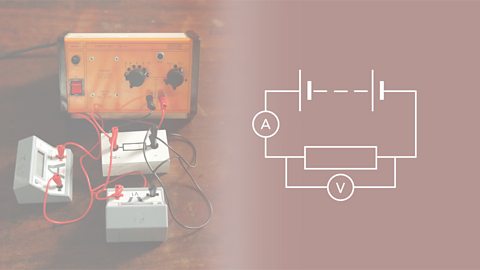
Investigate the effect of varying force or mass on the acceleration of an object. video
A demonstration of key points of the required practical to investigate the effect of varying force or mass on the acceleration of an object for GCSE physics and combined science.
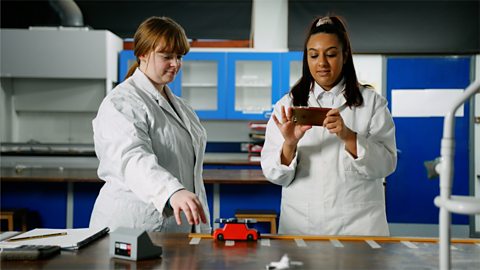
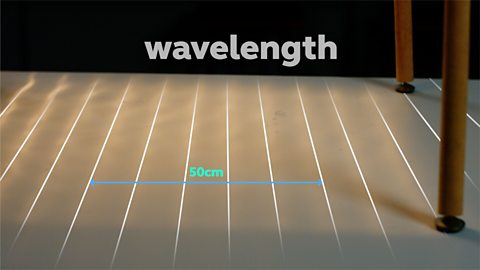
Measure the frequency, wavelength and speed of waves in a ripple tank video
A demonstration of the key points of the required practical to measure the frequency, wavelength and speed of waves in a ripple tank for GCSE physics and combined science.