This investigation tests how well the enzyme amylase performs at different pH values.
Amylase is a carbohydrase enzyme made by the pancreas and by glands in and around the mouth and throat.
It helps the body to break down carbohydrates and starches into sugar. pH varies in different parts of the digestive system and enzymes are developed to work in specific conditions.
You'll need a variety of equipment.
To mimic what happens in the body, the carbohydrate solution should be close to body temperature, approximately 35 degrees Celsius.
An electric water bath is the easiest way to control this temperature.
Using a pipette with a spotting tile, allows you to take tiny continuous samples from your test tubes, rather than using multiple test tubes.
Before you begin, check that your water bath temperature has reached 35 degrees Celsius.
Using a syringe, add amylase solution and buffer solution to a test tube.
Immediately sit the test tube in the water bath, and set the stop clock for five minutes.
Buffer solution resists changes in pH, helping to keep the pH constant throughout the investigation.
The syringe will give a more accurate measurement than a measuring cylinder. This is important when dealing with small volumes.
The boiling tube needs to stay in the bath for five minutes to allow the solution inside the boiling tube to adjust to the 35 degree Celsius temperature.
Put a drop of iodine into each well of your spotting tray. Iodine is used to test for the presence of starch. If starch is still present, this will show that the enzyme has not broken it down into sugar.
Once the timer reaches five minutes, add starch solution to the boiling tube and immediately begin sampling using your pipette.
You should sample every 30 seconds. Use your stopwatch to time this accurately.
You'll know that the enzyme is working at the point that the iodine does not change colour to blue-black, indicating that there is no more starch present.
The variables in this investigation are:independent variable - pHdependent variable - time taken for starch to breakdownand control variables - temperature, concentration and volumes of solutions and incubation time.
To calculate the rate of the reaction, use rate = 1000/time taken.
Your units will be written as S to the minus one.
To improve accuracy, repeat the experiment at the same pH using smaller time intervals. Focus this in and around the time when starch was no longer detected.
Video summary
A demonstration of the key points of the required practical to investigate the effect of pH on enzyme activity for GCSE biology and combined science.
This short film investigates the effect of pH on the enzyme amylase, with which students should be familiar having studied it linked with digestion.
This investigation requires high levels of organisation and working to specific, short intervals of time and can be challenging for students to manipulate. This film slows the process down, exploring each step.
Teacher Notes
The practical supports Development of Apparatus & Techniques Biology 1, 2 and 5 (DfE GCSE subject content guidance, Appendix 4).
This short film could be used after students have attempted the investigation to support understanding of the steps involved and the purpose of each step. As the investigation is quite fast paced, these messages can easily be missed during the process.
It is likely that students will be following a prescribed method for this investigation and therefore, exploring the method step-by-step after completing the investigation can help to ensure understanding.
The film can also be used to reinforce the impact of different variables in the investigation: dependent, independent and control variables.
Finally, it can be used to explore ways to improve the accuracy of the investigation.
Points for discussion:This practical is challenging for students to manage and good organisation is key.
Students are working to time and sampling frequently which reduces the opportunity to process the purpose of each step.
Students often find justification of method steps difficult, even when they can recall a practical method.
This film works through the practical method, exploring the purpose of each step and the apparatus used.
It also identifies the different variables that can affect the investigation: dependent, independent and control. This is something that students often struggle to identify at GCSE.
It also focuses on specific improvements which can be made to improve the outcome of the investigation, again something students find challenging.
Suggested activities:Students could be asked to suggest further improvements to this practical, for example to investigate at different pH values.*
They could also be asked to design a follow-on investigation, for example to investigate the effect of changing temperature on the rate of enzyme reaction.
For each alternative, students should be encouraged to identify the different types of variable, to justify their apparatus choice and explain the purpose of each step of the method.
Showing students investigations or data linked to using different enzymes and/or a different independent variable could support them in answering questions that may be set in unfamiliar contexts.
Suitable for teaching biology and combined science at Key Stage 4 and GCSE in England, Wales and Northern Ireland, and at National 4 and 5 in Scotland.
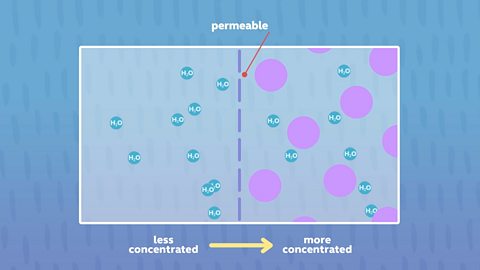
Investigate osmosis in plant tissue. video
A demonstration of the key points of the required practical to investigate osmosis in plant tissue for GCSE biology and combined science.
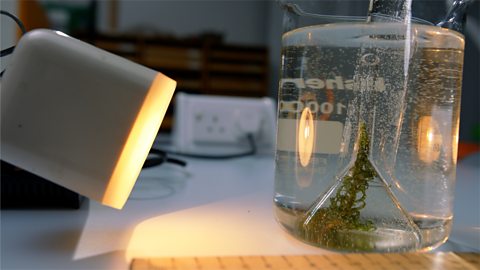
Investigate the effect of light intensity on the rate of photosynthesis. video
A demonstration of the key points of the required practical to investigate the effect of light intensity on the rate of photosynthesis for GCSE biology and combined science.
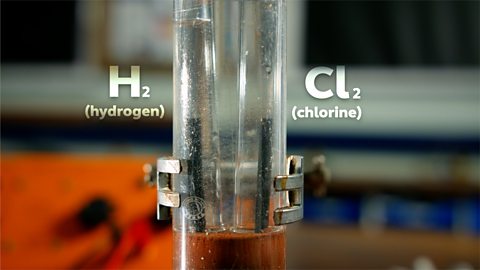
Investigate electrolysis of aqueous solutions using inert electrodes. video
A demonstration of the key points of the required practical to investigate electrolysis of aqueous solutions using inert electrodes for GCSE chemistry and combined science.
Prepare a pure, dry sample of a soluble salt from an insoluble oxide. video
A demonstration of the key points of the required practical to prepare a pure, dry sample of a soluble salt from an insoluble oxide for GCSE chemistry and combined science.
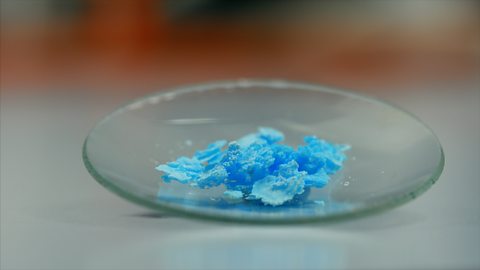
Investigate the separation of substances using paper chromatography video
A demonstration of the key points of the required practical to investigate the separation of substances using paper chromatography for GCSE chemistry and combined science.
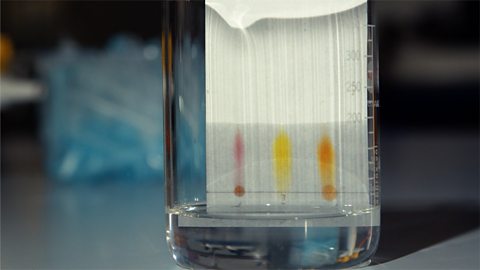
Investigate the I–V characteristics of circuit elements such as a filament lamp, diode and resistor at constant temperature. video
A demonstration of the key points of the required practical to investigate the I-V characteristics of circuit elements such as a filament lamp, diode and resistor at constant temperature.
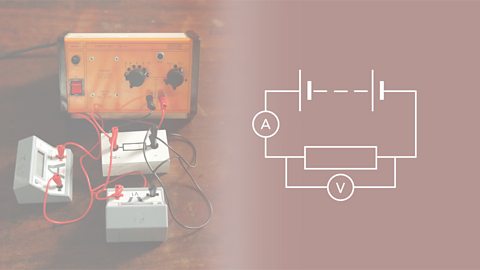
Investigate the effect of varying force or mass on the acceleration of an object. video
A demonstration of key points of the required practical to investigate the effect of varying force or mass on the acceleration of an object for GCSE physics and combined science.
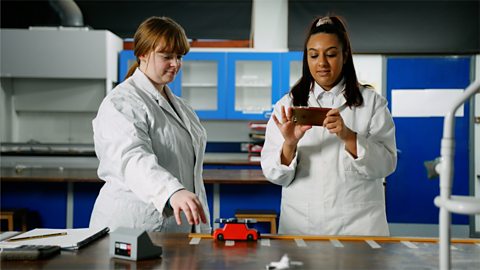
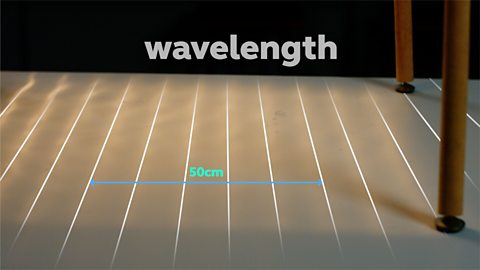
Measure the frequency, wavelength and speed of waves in a ripple tank video
A demonstration of the key points of the required practical to measure the frequency, wavelength and speed of waves in a ripple tank for GCSE physics and combined science.