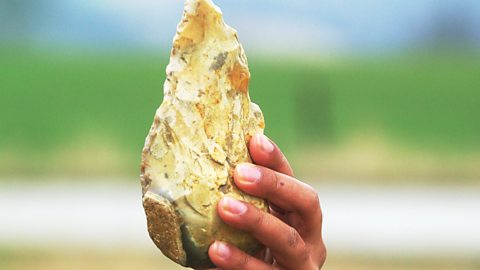
RAKSHA DAVE: A very long time ago in ancient Britain, there were no written words. This was the time before history was recorded. It's prehistory. The only clues to life back then come from the objects, burials, cave paintings, and monuments which speak to us about Britain's ancient past. My name is Raksha Dave. I'm an archaeologist and I'm in search of Britain's Ancient Voices.
I'm at an archaeological dig in Oxfordshire. I'm an archaeologist, which means I search for clues that people have left behind, and that means digging the remains of pits and ditches and buildings. People have been living here for thousands of years. We have new houses in the background, which were built about ten years ago, a medieval church just behind it, and we have evidence of an Iron Age roundhouse over there. The archaeologists have found houses, fireplaces, and rubbish tips, but the shape of the house is quite hard to see. You can just make out a circle in the earth. But what would it actually have looked like 2,500 years ago?
I've come to Butser Ancient Farm to find out. This is a replica of a house that people in the Iron Age used to live in. Archaeology shows us that most Iron Age houses in Britain were round. People cooked over a fire in an open pot in the middle of the house. So, Liz, what are you cooking here, then?
LIZ BARNES-DOWNING: Well, I've cooked up a delicious pottage here, which is Celtic field beans and oats and barley and spelt, which is a type of wheat.
RAKSHA: Whilst grains and vegetables were grown on the farm, herbs like marjoram were picked from the wild, and dried ham would have been added for flavour. We know this because we've found archaeological evidence of cooking pots and the animals they ate.
JOHN BOOTHROYD: What we find is the… the remains of the bones they've thrown away, bits they don't want. Something like this would be a bit of a pig, we believe.
RAKSHA: I'm amazed that we still have the evidence for it.
JOHN: They just throw it away when they're finished.
RAKSHA: And we can use this evidence to recreate the food they ate and get a taste of the Iron Age.
RAKSHA: OK.
LIZ: Let's use this as a plate.
RAKSHA: Yeah, it is quite hot.
LIZ: Be careful, it's very hot.
LIZ: A little bit of pottage…
RAKSHA: OK. …on there. It smells quite nice. I'd like to describe it as an Iron Age chilli without the spicy bits. It's quite beany and there's lots of, like, grain and goodness in it. I can also taste the ham coming through and the herbs. It's really nice.
LIZ: Mmm, good.
RAKSHA: So, this is what people of the Iron Age ate, but where did they go to the toilet?
MAUREEN PAGE: This is what we think an Iron Age toilet might have looked like. We don't have much evidence. We only have the greasy loam soil that has been found, which we think indicates that this was used as a toilet area. But we believe that they would have had some kind of shelter - you wouldn't want to go to the toilet just out in the field. We think that they would have dug a hole and then sat on the seat. The seat has got a nice hole in it. And you'd use that for your toilet.
RAKSHA: But wouldn't it smell, though?
MAUREEN: Well, it would smell, but that's why that pot of ashes is on the top, because if you then sprinkle ash in the hole, that will cut the smell down, so it would make it much more pleasant. And there's moss in the bowl there because they didn't have toilet paper.
RAKSHA: So what would have happened to the waste down the hole, then?
MAUREEN: We think they would have accumulated quite an amount and then dug it out to go and put on the crop field to help the crops to grow.
RAKSHA: So nothing would have been wasted.
MAUREEN: No, they didn't waste anything.
RAKSHA: I'm not sure if I'd want to get out of bed in the middle of a freezing cold night and come out here in the dark to use the toilet! This is a replica of an Iron Age bed. It's not very different from a modern bed of today. It's got a wooden frame. There's no duvet, but it would have been covered in either blankets or skins, and the mattress would have been made out of either bales of straw or lots of skins on top of each other, like this one. I'm going to give it a go because I want to see whether it's comfy or not. Oh! It doesn't feel too bad. It's quite cosy in here. All that's missing now is a good book. But reading and writing in Britain was a skill our ancestors had yet to learn.
Even though ancient Britain was so long ago, we know our ancestors were intelligent, creative, and organized people. And archaeological evidence can tell us so much about how people in prehistoric Britain really lived.
Video summary
What was it like to live in the Iron Age, and how do we know? Where does our information come from?
Partly from archaeological evidence, but also from ‘experimental’ archaeology, where re-enactors build roundhouses and try to live as they think Iron Age people did.
At Butser Ancient Farm there are houses and beds, even toilets – but, as even the experts admit, the evidence is uncertain.
This clip is from the series Ancient Voices.
Teacher Notes
Ask pupils to come up with a diary detailing their life in Iron Age Britain. How would they spend their days?
A poster could be created illustrating some of the activities, and be presented to the class.
This clip will be relevant for teaching History and Social Studies at KS2 in England, Wales and Northern Ireland and 2nd Level in Scotland.
What does Stonehenge Gold tell us about the Bronze Age? video
Raksha explores Maiden Castle – the biggest Iron Age Hill Fort in Britain. We find out how it was built and about the weapons they used to defend the entrance.
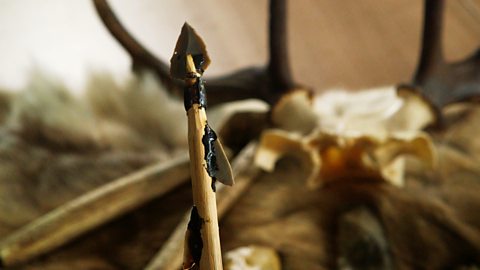
Discovering iron in Iron Age Britain. video
Raksha visits an Iron Age mine in the Forest of Dean and explores iron mining. Iron mining in the Forest of Dean dates back nearly 2,500 years where iron ore was found near the surface.
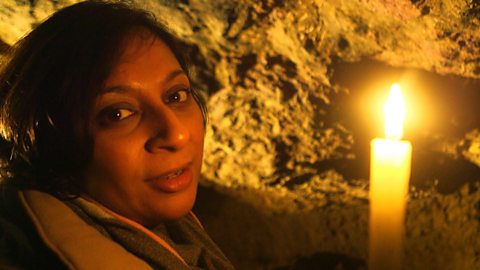
Discovering wool in Bronze Age Britain. video
Raksha visits Butser Ancient Farm and learns how woollen cloth was made in the Bronze Age, a re-enactor at the farm shows her how to use a spindle and loom.
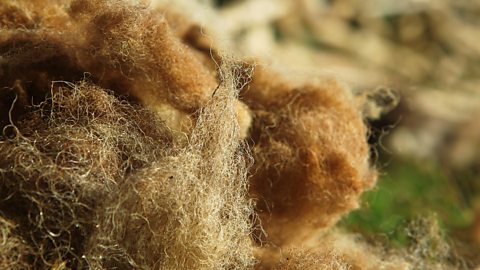
Discovering metalwork in Bronze Age Britain. video
Raksha visits Butser Ancient Farm to look at the beginning of the Bronze Age and construct a Bronze Age axe head in exactly the same way Bronze Age man would have done.
Iron Age forts and tribes. video
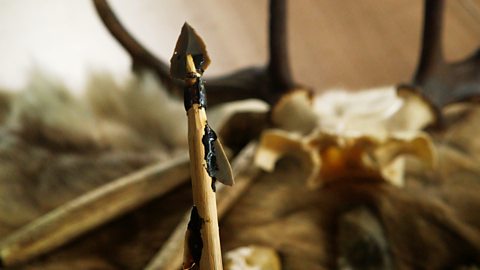
Raksha explores Maiden Castle – the biggest Iron Age Hill Fort in Britain.We find out how it was built and about the weapons they used to defend the entrance.
Stone Age farming and homes. video
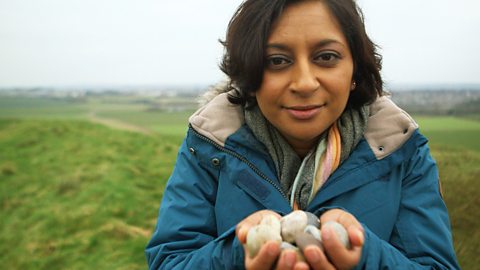
Raksha explores life in Britain during the Stone Age first by looking at hunter-gatherers who lived by hunting animals and collecting fruit and nuts, and then moves on to explore the first farmers
What do ancient bones tell us about the Stone Age? video
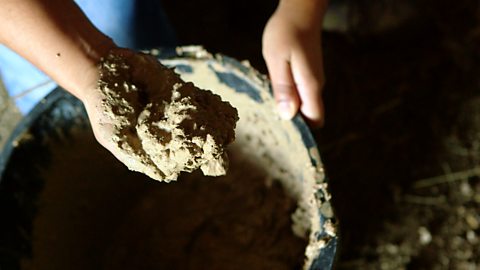
Raksha gives us a real insight into the life and times of higher status hunter-gatherers in the Old Stone Age by looking at The Red Lady of Paviland, one of the oldest skeletons found in Britain.
Discovering Stone Age tools made of flint video
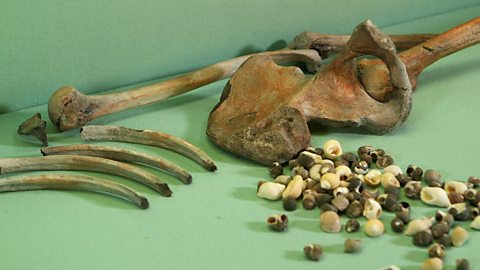
Raksha explores the importance of flint to Stone Age man. A modern day worker makes a replica of a Stone Age arrow, showing us how skilled Stone Age people were in their use of flint.