SHEEP BLEAT
RAKSHA DAVE: A very long time ago in ancient Britain, there were no written words. This was the time before history was recorded. It's prehistory. The only clues to life back then come from the objects, burials, cave paintings, and monuments which speak to us about Britain's ancient past. My name is Raksha Dave. I'm an archaeologist, and I'm in search of Britain's Ancient Voices.
For thousands of years, people wore clothes made out of fur and leather from animals which they killed. But in the Bronze Age, a new material was being made, thanks to these little fellas.
SHEEP BLEAT
These sheep are a very old breed, much smaller than the ones we usually see today, very similar to the kind you would have found in the Bronze Age. People back then discovered that they could make a new material from the fleece of a sheep. And this new material was wool, and best of all, you didn't have to kill the sheep, which meant you could still get milk from them. Our ancient ancestors would make use of anything they got their hands on, and no doubt, when they found bits of fleece fallen on the ground, they decided to try and make use of that too. Collecting the fallen fleece was very likely a job for small children. But how do you turn this into this?
GLENYS CROCKER: This is the fleece as it comes off the sheep, and I'm pulling out locks from it, and then you can tease it out to make it ready to spin, which you do on a spindle. And this is one that I've already teased out. So I'm twisting it.
RAKSHA: So what you're doing is, you're actually turning this fleece into yarn?
GLENYS: Into yarn, yes. Then we can weave with that.
RAKSHA: The wool is woven on a wooden loom.
GLENYS: This thread has to go in and out…
RAKSHA: OK.
GLENYS: …of all those threads.
RAKSHA: At the bottom of the vertical threads of yarn are stone weights which hold them in place. The vertical threads at the back are pulled to the front, and the new horizontal line of wool is pushed up in place. It takes a very long time to weave some cloth, but it was an essential skill, as it meant you could make blankets and clothes to keep you warm during winter. Time to try some on for myself. So how do I look? People must have been really, really pleased to learn how to make woollen clothes, cos not only does it keep the wind and the rain out, it keeps you feeling really, really warm.
SHEEP BLEAT
Video summary
Archaeologist Raksha Dave visits Butser Ancient Farm and learns how woollen cloth was made in the Bronze Age.
A re-enactor at the farm shows her how to use a spindle and loom, creating a set of clothes that are much warmer and more practical than those made from animal skins.
This emphasises the importance of sheep to man in the Bronze Age, even if the old breeds are very different to sheep today.
This clip is from the series Ancient Voices.
Teacher Notes
Could be used to explore technology and new ways of making clothes.
Could also be used as a comparison with factory-made woollen cloth in Victorian times.
It could also be used to explore change over time – from animal skin clothes in the Stone Age to woollen clothes in the Bronze Age.
Children could be asked how we know what these replicas looked like and they work, questioning the evidence the replicas are based on.
Children could try putting on clothing made from different materials and evaluate which are the warmest and best suited to harsh weather conditions.
This clip will be relevant for teaching History and Social Studies at KS2 in England, Wales and Northern Ireland and 2nd Level in Scotland.
What does Stonehenge Gold tell us about the Bronze Age? video
Raksha explores Maiden Castle – the biggest Iron Age Hill Fort in Britain. We find out how it was built and about the weapons they used to defend the entrance.
Discovering iron in Iron Age Britain. video
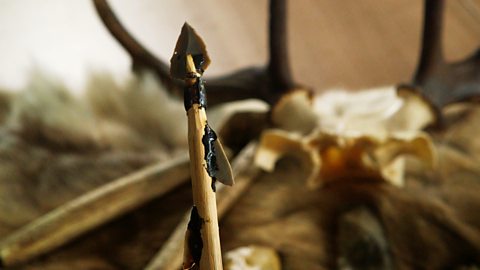
Raksha visits an Iron Age mine in the Forest of Dean and explores iron mining. Iron mining in the Forest of Dean dates back nearly 2,500 years where iron ore was found near the surface.
Iron Age daily life video
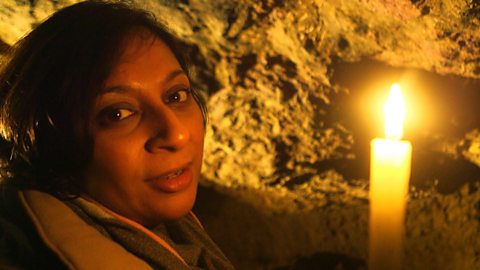
Archaeologist Raksha Dave explores Maiden Castle, the biggest Iron Age Hill Fort in Britain, to try and piece together what it would have looked like 2,500 years ago.
Discovering metalwork in Bronze Age Britain. video
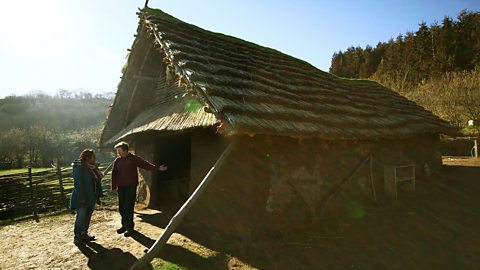
Raksha visits Butser Ancient Farm to look at the beginning of the Bronze Age and construct a Bronze Age axe head in exactly the same way Bronze Age man would have done.
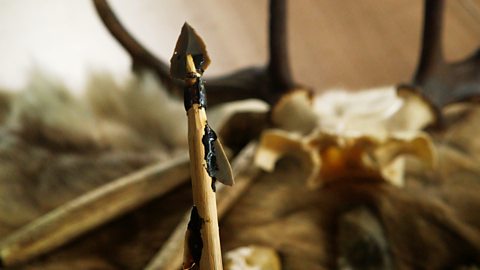
Iron Age forts and tribes. video
Raksha explores Maiden Castle – the biggest Iron Age Hill Fort in Britain.We find out how it was built and about the weapons they used to defend the entrance.
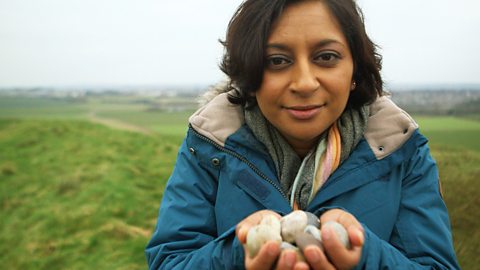
Stone Age farming and homes. video
Raksha explores life in Britain during the Stone Age first by looking at hunter-gatherers who lived by hunting animals and collecting fruit and nuts, and then moves on to explore the first farmers
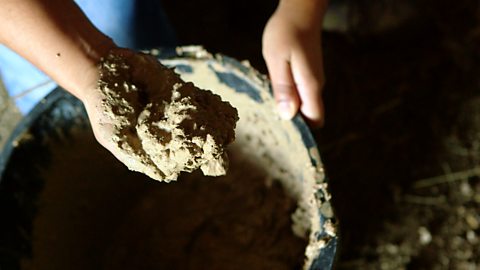
What do ancient bones tell us about the Stone Age? video
Raksha gives us a real insight into the life and times of higher status hunter-gatherers in the Old Stone Age by looking at The Red Lady of Paviland, one of the oldest skeletons found in Britain.
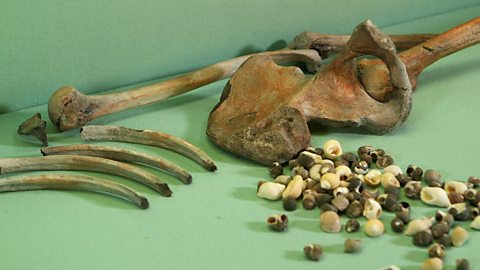
Discovering Stone Age tools made of flint video
Raksha explores the importance of flint to Stone Age man. A modern day worker makes a replica of a Stone Age arrow, showing us how skilled Stone Age people were in their use of flint.