BLEATING
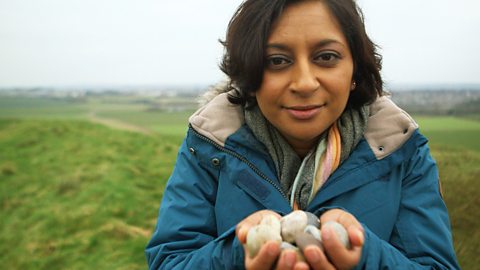
RAKSHA DAVE: A very long time ago in ancient Britain, there were no written words. This was the time before history was recorded. It's prehistory. The only clues to life back then come from the objects, burials, cave paintings, and monuments which speak to us about Britain's ancient past. My name is Raksha Dave. I'm an archaeologist and I'm in search of Britain's Ancient Voices. My job as an archaeologist means I spend a lot of my time searching for clues about ancient Britain. And sometimes, if I'm lucky, I get to find something like this. You might be mistaken for thinking that this is just a lump of rock, but in fact it's a very carefully-shaped tool called a hand axe, made out of flint. These tools were made a very, very long time ago. Over 10,000 years ago, in what we now call the Stone Age. And to show how long ago that is, I'm going to walk back in time.
This is today. Imagine that every step I took was equal to 100 years, then to go back to the Stone Age, I'd have to take 100 steps. This could take quite a while. One, two, three, four, five… After taking 20 steps, I've gone back 2,000 years. This is the first time that history was written down, and now I'm going back into prehistory. And 100 steps back in time is 10,000 years ago. This is the Stone Age. Britain looked very different back then. There was no internet, there were no houses that were built out of brick, no cars, there wasn't even any metal. Just thick, dark forests with animals hiding in them, so Stone Age people needed sharp, strong tools to cut trees down and to hunt the animals for food. And this is where a stone called flint came in.
There's a real skill to making tools out of flint.
IAN DENNIS: A Stone Age man could work these fantastically into all sorts of tools to do with everyday life. First thing we would do is take a small piece of flint, and if you want to take a flake off like this, as you can see one's come off here, you would hit it with a stone what we call the hammerstone. So you aim and you'll strike here and you'll get a little flake, OK?
RAKSHA: So I hold it like this.
IAN: Tight.
RAKSHA: And then I need to aim for - is it this bit here?
IAN: Yeah, just on the ridge there.
RAKSHA: OK.
IAN: That's it. That's it. There you go. Sounded quite good to me!
RAKSHA: Oh!
IAN: There you go. One little flake.
RAKSHA: Excellent. So this is actually really skilled work, this.
IAN: Yes, the people in the Stone Age, they knew everything about how to strike that flint off.
RAKSHA: The flakes that we've actually managed to knock off, they're actually really sharp, aren't they?
IAN: They are indeed, and we can actually drag a piece of flint…
RAKSHA: Wow!
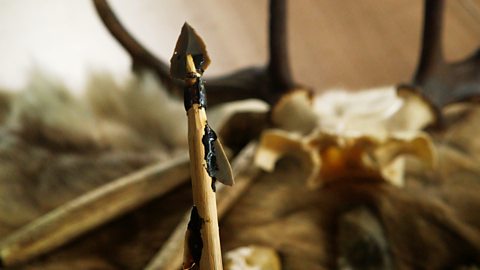
IAN: …straight through. Once you've knocked off all your flakes, you can make a nice arrow.
RAKSHA: They look rather deadly, but what I'm wondering is how do you actually stick these pieces on? Is this Stone Age glue?
IAN: It is a Stone Age glue and it's actually made from pine resin and beeswax, mixed with a bit of charcoal and this would be very effective at killing the deer to bring home your dinner for your family or your tribe.
RAKSHA: So, hang on, that would kill a large deer?
IAN: Easily.
RAKSHA: That's pretty impressive.
IAN: Easily.
RAKSHA: Animals were very important to Stone Age people and not just for food. Their skins were used for clothes, bags, and their bones were particularly useful for small things like tools, jewellery, and even instruments. But none of this would've been possible without the people who made tools out of stone.
Video summary
An archaeologist explores the importance of flint to Stone Age man.
A modern day worker makes a replica of a Stone Age arrow, showing us how skilled Stone Age people were in their use of flint.
He even makes a Stone Age glue from pine resin, beeswax and charcoal to hold the arrowhead in place.
There was, at that time, no knowledge of metal or metal-working so survival depended on making these tools and weapons.
This clip is from the series Ancient Voices.
Teacher Notes
Could be used to explore Stone Age technology – what tools did they use and how were they made?
By realising how skilled flint workers were, pupils can be made to appreciate the competence of people at the time and how well-adapted they were to their environment.
This clip will be relevant for teaching History and Social Studies at KS2 in England, Wales and Northern Ireland and 2nd Level in Scotland.
What does Stonehenge Gold tell us about the Bronze Age? video
Raksha explores Maiden Castle – the biggest Iron Age Hill Fort in Britain. We find out how it was built and about the weapons they used to defend the entrance.
Discovering iron in Iron Age Britain. video
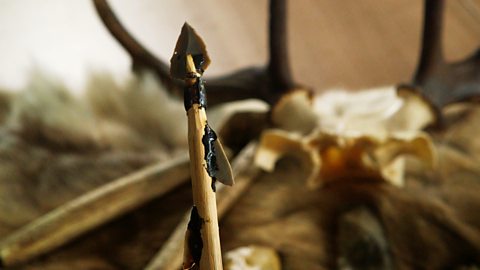
Raksha visits an Iron Age mine in the Forest of Dean and explores iron mining. Iron mining in the Forest of Dean dates back nearly 2,500 years where iron ore was found near the surface.
Iron Age daily life video
Archaeologist Raksha Dave explores Maiden Castle, the biggest Iron Age Hill Fort in Britain, to try and piece together what it would have looked like 2,500 years ago.
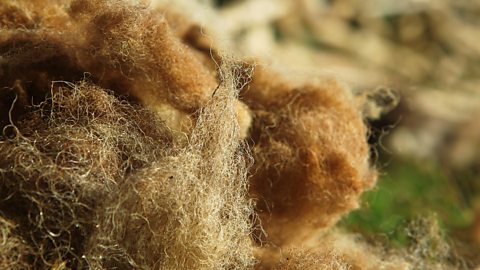
Discovering wool in Bronze Age Britain. video
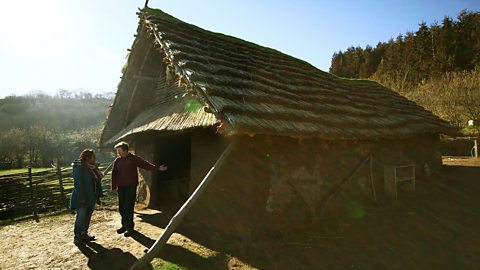
Raksha visits Butser Ancient Farm and learns how woollen cloth was made in the Bronze Age, a re-enactor at the farm shows her how to use a spindle and loom.
Discovering metalwork in Bronze Age Britain. video
Raksha visits Butser Ancient Farm to look at the beginning of the Bronze Age and construct a Bronze Age axe head in exactly the same way Bronze Age man would have done.
Iron Age forts and tribes. video
Raksha explores Maiden Castle – the biggest Iron Age Hill Fort in Britain.We find out how it was built and about the weapons they used to defend the entrance.
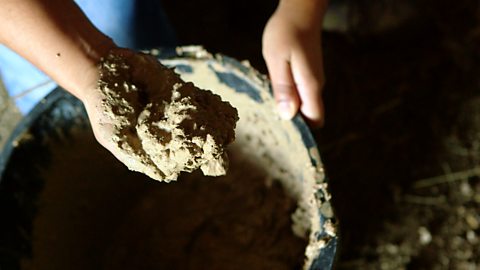
Stone Age farming and homes. video
Raksha explores life in Britain during the Stone Age first by looking at hunter-gatherers who lived by hunting animals and collecting fruit and nuts, and then moves on to explore the first farmers
What do ancient bones tell us about the Stone Age? video
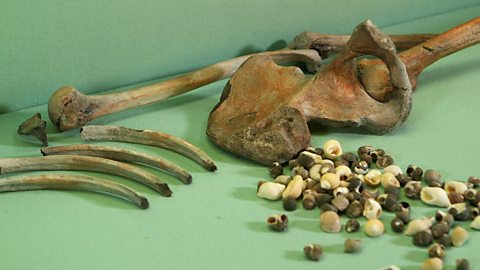
Raksha gives us a real insight into the life and times of higher status hunter-gatherers in the Old Stone Age by looking at The Red Lady of Paviland, one of the oldest skeletons found in Britain.