Full programme transcript >> Full programme transcript >>
Itching
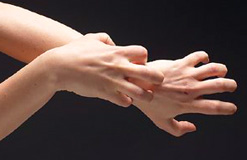
In this episode of Check Up, Barbara Myers takes listeners' calls on forms of itching which can be a particular problem during hot summers.
Her guest in the studio is dermatologist Dr Tony Bewley.
Prickly Heat
Prickly heat occurs when dead skin cells and bacteria block the sweat glands, causing the sweat to become trapped.
This causes inflammation and then red, itchy spots, and sometimes blisters appear on the skin.
Sufferers also endure a burning or prickling sensation, hence the name.
There are several treatments for prickly heat, including phototherapy, antihistamine creams or steroids.
Polymorphic Light Eruption
This is a delayed-onset, spotty, itchy eruption appears on the skin, which may take between five to ten days to clear.
About 10 to 20 per cent of the northern European population is affected by PLE, which is more common in females than in males.
It is not the same as prickly heat and is related to overheating, particularly in areas where there is friction due to clothing.
Solar Urticaria
Solar Urticaria (SU) is an abnormal reaction to sunlight that is not fully understood.
It's thought that when a sufferer is exposed to sunlight, histamines are released into the skin causing red patches to appear and itchiness.
While the weals may only last an hour, if a large enough area of the body is affected the loss of fluid into the skin can cause light-headedness and nausea.
As with prickly heat, those who know they are likely to have SU can arrange phototherapy in advance of the summer.
Sufferers should also avoid sunlight and tight clothes. Antihistamine and steroid treatment can help as well.
Bites and Stings
Many of us enjoy a walk in the woods or a trip to a local beauty spot, but often nature has a sting in the tail, in the form of nettles, insect bites and other itchy hazards.
While for some a rub with a dock leaf or applying anti-histamine ointment will relieve the itching, but for others stings can cause a severe allergic reaction.
This can result in anaphylactic shock, when an itchy rash spreads across the whole body, their soft tissues swell and breathing becomes difficult. This reaction happens very rapidly.
If this occurs, an adrenaline shock must be administered as soon as possible.
Recurrent skin conditions in summer
The sun can bring mixed blessings for those who suffer from long-term skin conditions such as eczema and psoriasis.
Some psoriasis sufferers may find that exposing their skin to the sun can relieve their symptoms.
However, sweating can exacerbate eczema.
Contact the Programme
Check Up is your opportunity to ask an expert about the condition. If you have a question, contact us by calling 0870 010 0444 from 1.30pm - 3.30pm on the day of broadcast or by emailing the programme - see 'Contact Check Up' link above.
Next Week
Next week’s topic is memory. |





 30 min