|

| |
The Final Judgement
 Listen to programme 3 Listen to programme 3
Read the transcript of programme 3
Families of an estimated 40,000 people missing since the war in Bosnia and Herzegovina are finally seeing justice done thanks to revolutionary DNA technology designed to identify human remains in under a second.
In the third programme in the series about the future role and relevance of the United Nations, Edward Stourton reveals how justice is being delivered on the ground in Bosnia.
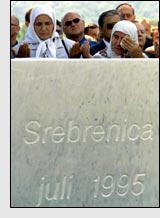 The programme follows the work of officials from the UN International Criminal Tribunal for former Yugoslavia, exhuming bodies buried in mass graves, re-associating body parts of those killed in the Srebrenica massacre and visiting the laboratory which has developed pioneering DNA technology to identify the victims of war crimes. The programme follows the work of officials from the UN International Criminal Tribunal for former Yugoslavia, exhuming bodies buried in mass graves, re-associating body parts of those killed in the Srebrenica massacre and visiting the laboratory which has developed pioneering DNA technology to identify the victims of war crimes.
The BBC has also been given unique access to the War Crimes Tribunal in the Hague, hearing from inside the Prosecutor's office, the judges chamber and the courtrooms.
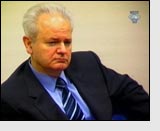 The programme examines the work of the UN as arbiter of international justice from the Nuremberg trials in the aftermath of the Second World War to today's prosecution of Slobodan Milosevic in the Hague. The programme examines the work of the UN as arbiter of international justice from the Nuremberg trials in the aftermath of the Second World War to today's prosecution of Slobodan Milosevic in the Hague.
The establishment by the United Nations of international tribunals for the former Yugoslavia and Rwanda marked the first time the international community (as opposed to merely the victor's in a particular conflict) had sanctioned international criminal courts to hold individuals responsible for the perpetration of war crimes, genocide and crimes against humanity.
It was an unprecedented milestone in the history of the United Nations' efforts to deal with its original central mission; namely, the limitation and prevention of war.
The programme includes contributions from Madeleine Albright (US Secretary of State under Clinton), Carla del Ponte (chief prosecutor for the Yugoslav and Rwanda tribunals), Lord Ashdown (High Representative of Bosnia & Herzegovina), Richard Holbrooke (US Special envoy to the Balkans under Clinton) and Mary Robinson (former UN High Commissioner for Human Rights).
| | | |
| |
| | |