World cancer day: Meet di scientist wey dey use genetics to prevent breast cancer
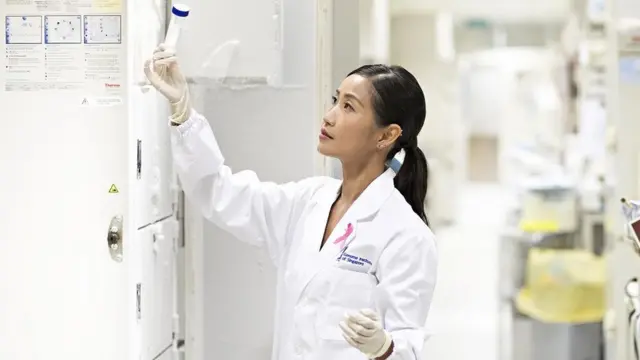
Wia dis foto come from, University of Singapore
- Author, Lara Owen
- Role, Women's Affairs East Asia, BBC World Service
- Published
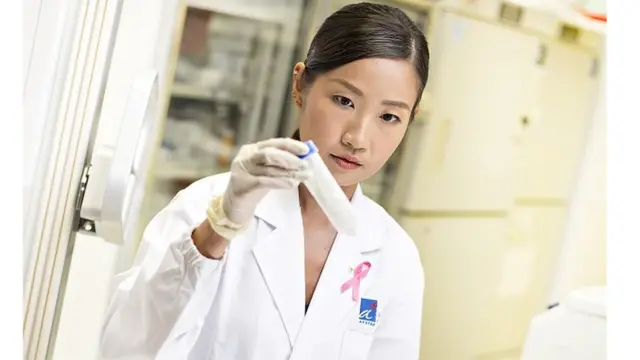
"I be woman for science wey dey do science for women." Dr Jingmei Li na Senior Research Scientist for di Genome Institute of Singapore, wia she dey use genetics improve women health and prevent breast cancer.
Breast cancer na di most common cancer for di world and na im be di second cancer wey dey kill women pass for America, although cases dey low for Asia pass di west. Na breast cancer still be di female cancer wey common pass for dat part of di world.
According to research wey sabi pipo International Agency for Research on Cancer (IARC) do, dem say Africa currently get di highest age-standardized breast cancer death rate for di world.
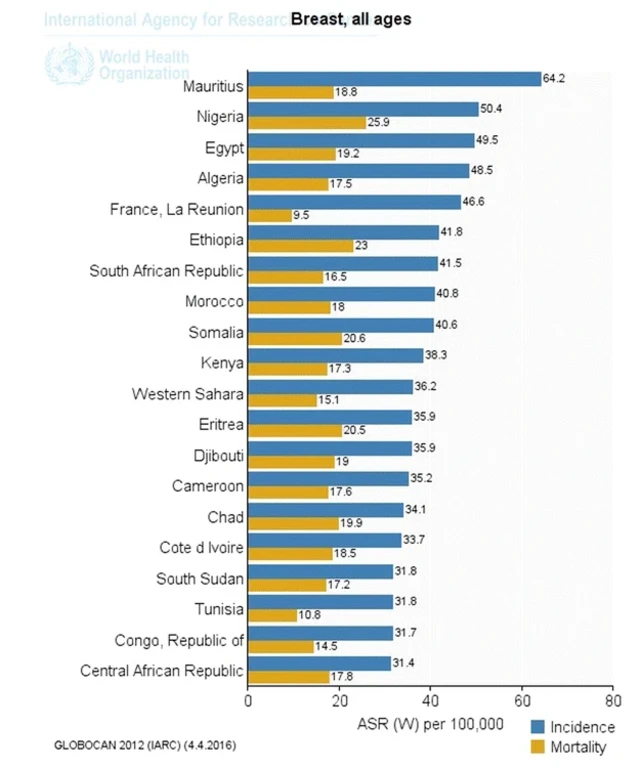
Wia dis foto come from, GLOBOCAN
Award winning scientist Dr Li tok say pipo dey shock wen dem meet her. "We dey expect make scientist dey older, make dem look like wise pesin," I dey hear from pipo.
As scientist wey be Asian, female and young, I dey often face challenge and judgement.
Plenti experiments till date don identify 313 common genetic variants wey connect to breast cancer. As a researcher for Sweden, Dr Li dey involved for ogbonge science wey identify di first 77 different genes.
Hospitals for all ova di world dey only test for gene variants wey connect to breast cancer. Di most high case na America actor, Angelina Jolie for 2013 wey dem test for mutations for di BRCA1 and BRCA2 genes wey fit stop di body ability to repair damage to DNA for cells.
Jolie later decide to do double mastectomy to help prevent am.



End of Di one wey oda users dey read well well
"My desire na to discover di new susceptibility markers and mechanism, wey be di small-small puzzle wey we go use solve di disease," she tok.
Wia dis foto come from, University of Singapore
Wetin be di challenges
Na only preventions genetics fit do, because research dey suggest say na only 30% of breast cancer cases genes dey cause.
But Dr Li say make dem no hold di importance of genetics with small hand: "na still di only way we fit give women beta chance and tell dem if dia risk high."
For plenti kontris screening dey only start with women wey be 50 years-old and e dey happun evri two to three years.
Wia dis foto come from, Getty Images
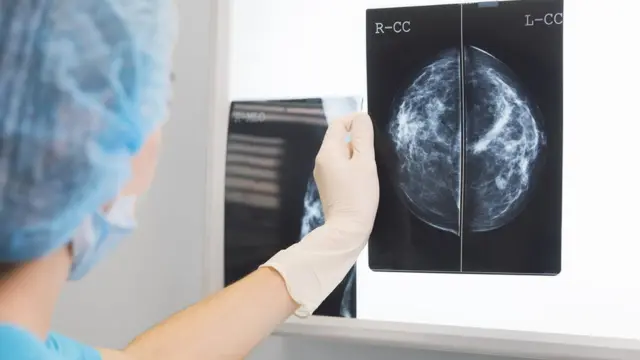
To dey do mammography scans get im own disadvantage including to dey expose dem to radiation and di risk of fake positive results.
Clinics fit dey use family history to identify patients wey get high risk of breast cancer - but family history fit no correct, e fit dey hard to check say di relevant informate dey correct including wetin cause di disease. For example, one family member fit don die from bone cancer but di disease fit don start from breast cancer.
Why e matter?
Anoda problem, Dr Li explain am say, na for many kontris wey dey East Asia, wia dia culture fit stop dem to do check-up.
"We no dey like to talk about di disease. if di need no dey we no dey go see di doctor," she tok.
"For some cultures dem tink di disease and cancer na di will of God, so dem no dey go for treatment until e don bad.
"Breast cancer awareness month for October dey great but maybe di message no dey clear about di personal risk of women and information about di disease imsef."
By di time you go feel di tumour, di tin don already dey plenti. Dr Li still tok say dis na why e dey important to put culture aside, make dem do regular mammography scans.
"Every cancer dey different, if you get 10,000 cancers you go need 10,000 cures," Dr Li tok. Dat na why she dey see prevention and early detection as di most effective way instead of make dem dey find cure.