Vaccine: How low trust for vaccination dey cause global wahala
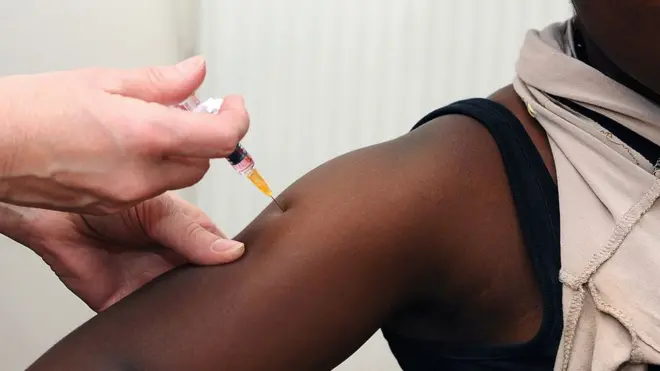
Wia dis foto come from, Getty Images
Sabi pipo dey warn say trust wey no dey from di public on vaccines mean say di world dey draw dia leg on di fight against deadly but infectious diseases wey get prevention.
Di biggest global study wey torchlight attitudes on immunisation suggest say confidence dey low for some regions.
Di Wellcome Trust analysis include response from more than 140,000 pipo for over 140 kontris.
World Health Organization say di way pipo dey refuse vaccine na one of di top 10 threats to good health.
You go need modern browser (wey get JavaScript support) to fit see dis tin.
Pipo for your kontri trust vaccine?
Search for one kontri:
Search for one kontri:
Dem bin ask pipo how much dem agree wit di statement.
Select one statement make you see result
Total fit no reach 100%
Di research also ask pipo wetin dem think about tins wey concern science. Wellcome study dia ansa, come group am under five main kweshions, dem come calculate di "trust sabi pipo" index on to high, medium or low trust.
High
Medium
Low
No opinion
High
Medium
Low
No opinion
Source: Wellcome Global Monitor, Gallup World Poll 2018
Sorry, no informate dey for dis location
No internet connection. Please try again
Di global survey reveal di number of pipo wey say dem get little confidence or trust for vaccination.
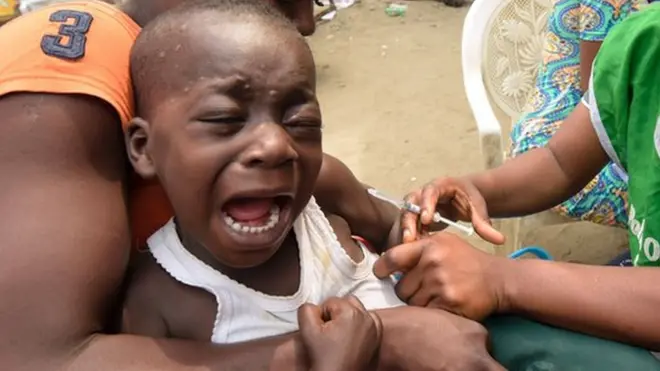
Vaccine dey protect billions of pipo around di world. Because of disease like smallpox no dey again and dey bring di world close to eliminate odas like polio.
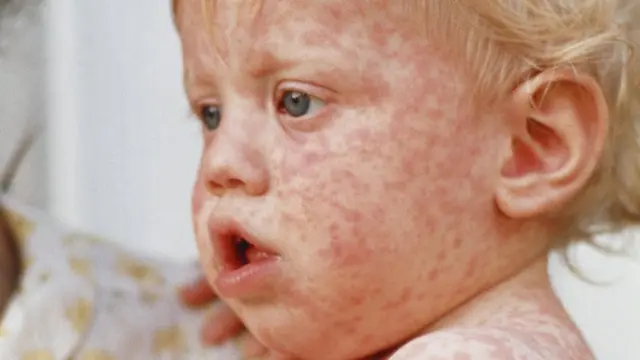
But some oda disease dem, like measles, don increase again and experts say pipo wey dey avoid vaccine sake of fear and wrong information na one of di causes.
Dr Ann Lindstrand wey be immunisation expert for WHO say di current situation dey very-very ova serious.
"To refuse to take vaccine fit, at least for some places, really prevent di very real progress di world don make to control diseases wey vaccine fit prevent," na so she tok.
"Any time dis diseases come back na step backwards wey dey unacceptable."
What of measles?
Kontris wey been dey cose to eliminate measles don dey see laerge outbreaks.
Information show increase inside cases for almost every region of di world, with 30% more cases for 2017 than 2016.
Decision not to take vaccine, for whatever reason, put risk to odas as well as di individual from to catch infection demselves.
If enough pipo dey vaccinated, e go stop di disease from spreading to many pipo - something wey sabi pipo dey call "herd immunity".
Imran Khan, from di Wellcome Trust say: "We dey really concerned at di moment because of measles, anytin less of 95% coverage fit lead to outbreak and dat na wetin we dey see."
Wia trust low?
Some pipo wey dey live for plenti high income regions dey among di least pipo wey dey sure of vaccine safety.
For France - wey be kontri among several European ones wey dey experience outbreak of measles - one in three disagree say vaccines dey safe, according to di survey. Dat na di highest percentage for any kontri worldwide.
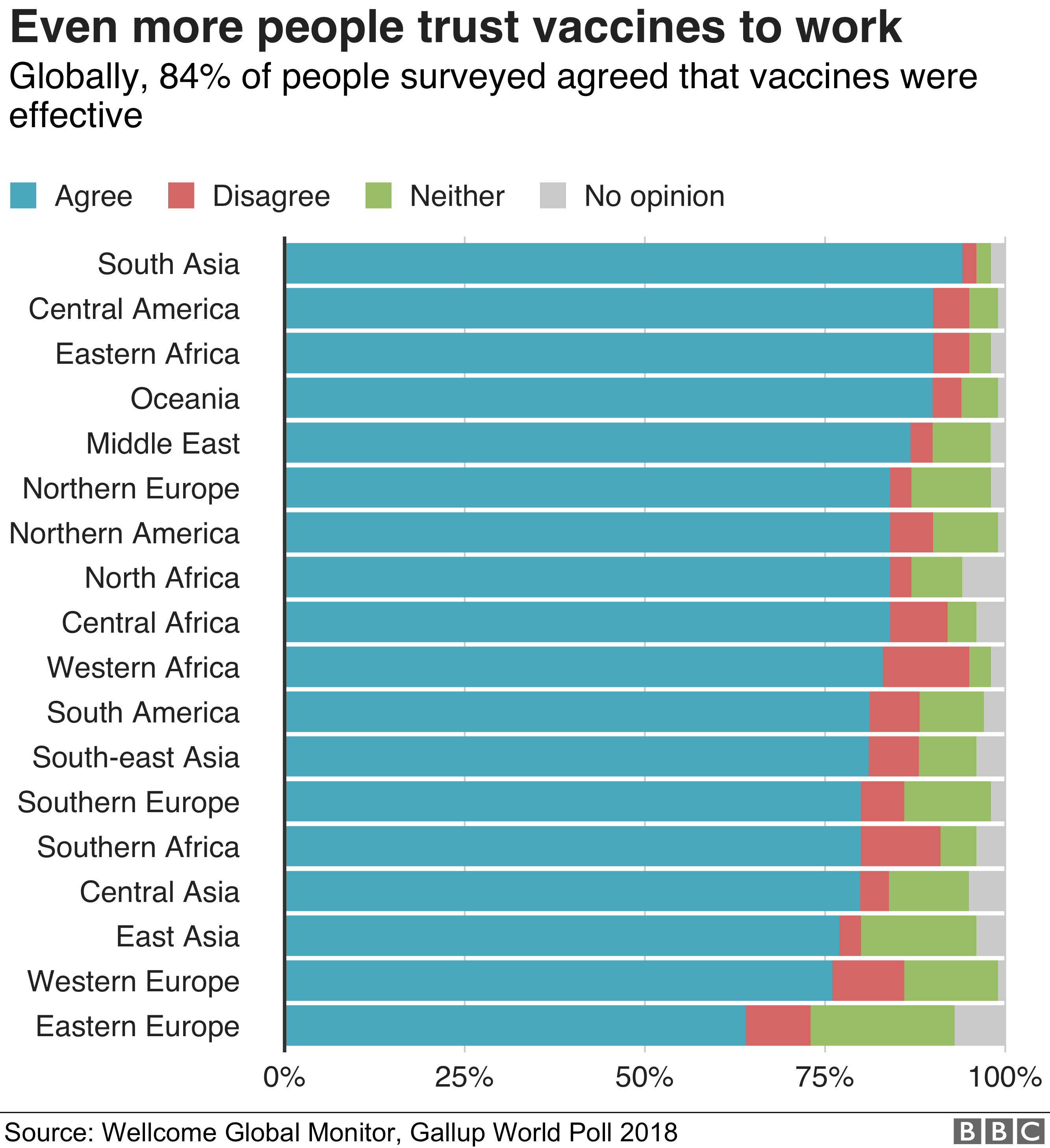
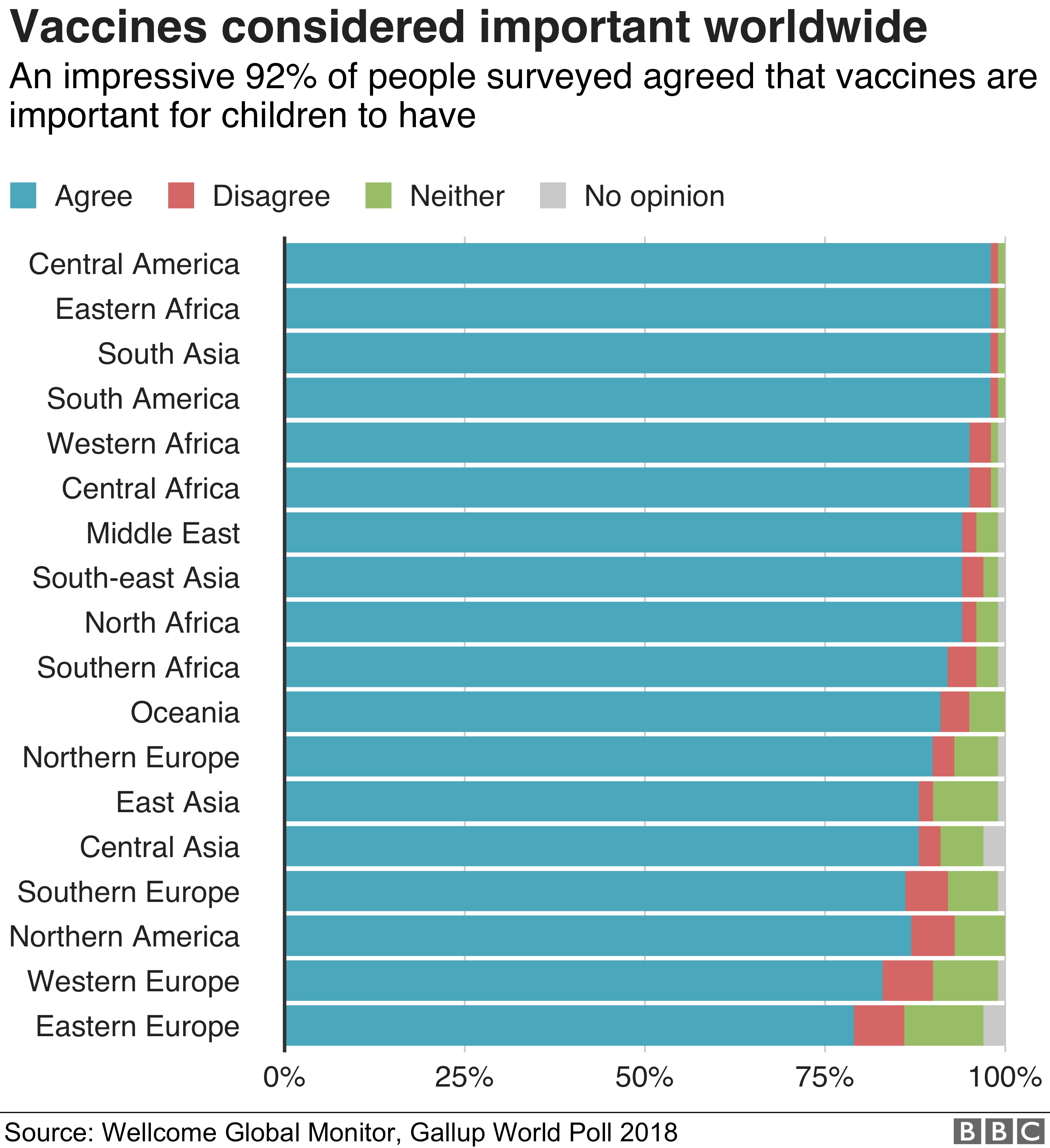
Pipo for France dey also among di most likely to disagree say vaccines dey effective, at 19%, and to disagree say vaccines dey important for children to get, for 10%.
Di French goment now don add eight more compulsory vaccination to di three children for di kontri already dey receive.
Neighbours Italy - wia 76% agree vaccines dey safe - recently pass law wey go allow schools to ban children wey never collect vaccination, or fine dia parents, after immunisation rates reduce.
Di UK never go dis far but Health Secretary Matt Hancock ton tok say im "no go rule out" di idea to introduce compulsory vaccinations if necessary.
America don also dey experience e own measles outbreak - di biggest to hit di kontri in years, with more dan 980 confirmed cases for 26 states for 2019 to date.
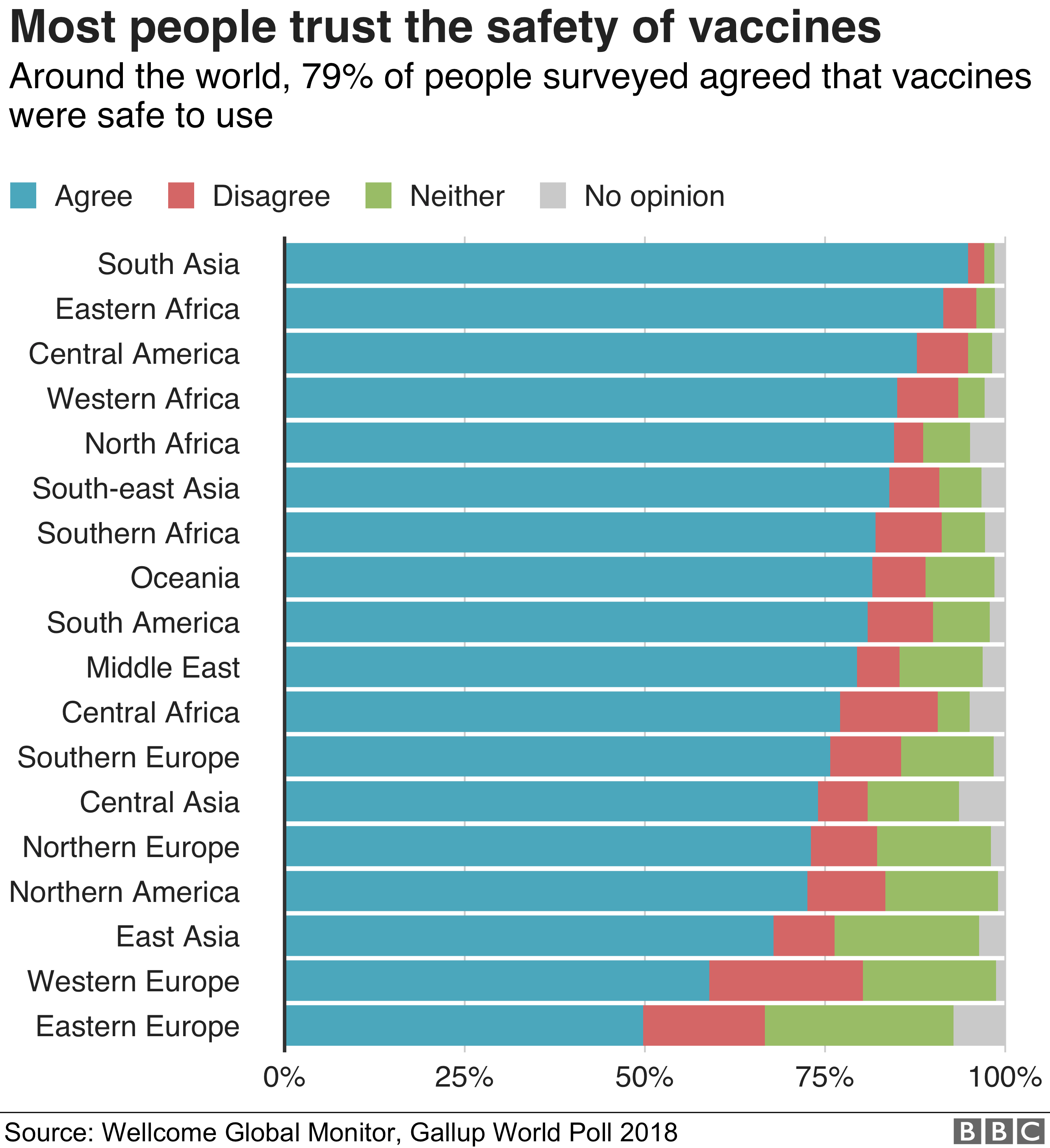
For North America and Southern and Northern Europe, just over 70% of pipo agree say vaccine dey safe.
Di figure dey as low as 59% for Western Europe, and 50% for Eastern Europe.
For Ukraine, wey record di highest number of measles cases for Europe last year (53,218 in total) - only 50% of pipo agree say vaccines dey effective. Dis figure dey 46% for Belarus, 49% for Moldova and 62% for Russia.
Wia trust dey high?
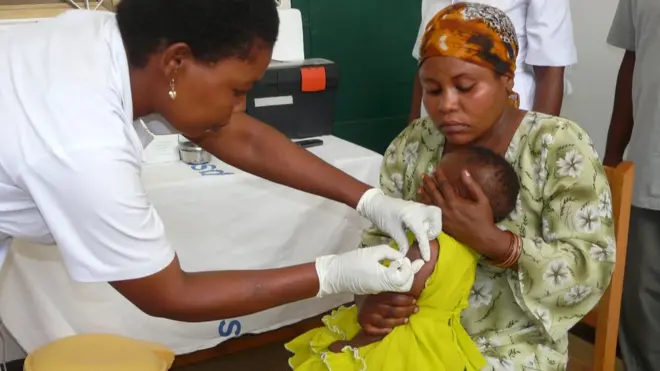
Most pipo for lower in-income areas agreed say vaccines dey safe. Di highest number dey South Asia, wia 95% of pipo agreed, followed by Eastern Africa wia di figure dey 92%.
Bangladesh and Rwanda get nearly universal agreement about di safety and effectiveness and don achieve very high immunisation rates despite many challenges to physically get vaccines to pipo.
Rwanda na di world first low-income kontri to provide young women universal access to di HPV vaccine wey dey protect against cervical cancer.
Mr Khan to say: "E show wetin dem fit achieve with better effort to improve vaccine uptake."
Wetin dey make pipo doubt?
For di survey pipo with more trust in scientist, doctors and nurses na dem dey more likely to agree say vaccines dey safe. Those wey don go find information about science, medicine or health recently appear to dey less likely to agree.
Di Wellcome report no look all di reasons behind low confidence but researchers say if e be say many factors dey involved.
Some of it fit be laziness - if a disease don dey less common, den di need to get immunization fit feel less important wen you weigh di benefit against any possible risk.
All medicines, including vaccines fit get side-effects. But dem dey seriously check vaccines before to check say dem dey safe and effective.
Di internet means pipo fit share beliefs and concerns about vaccines instantly, to spread informate wey no dey based on fact.
For Japan, concern about di HPV vaccine and a link with brain problems go viral, which sabi pipo tink say reduce di confidence in immunisation in general.
Similarly, for France, controversy been dey about widespread influenza vaccine - accuse come say di goment buy high quantities of di vaccine and claim without proof say dem make di vaccine too quickly and so e no dey safe.
For UK, informate wey no dey true dey about di MMR jab and autism.
Dr Lindstrand say: "One of di most important intervention to counter doubts and worries about vaccines na to get well trained health workers and ble to recommend vaccinations based on scientific truth and to dey able to respond correctly to questions and concerns wey parents and communities get."